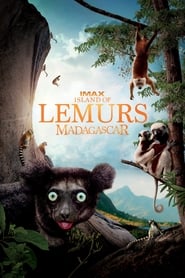
Island of Lemurs: Madagascar
Download English Subtitle
Release info
Tags
English subtitle preview
The first 110 lines.
If you're wondering who you are...
you're not alone.
You're no monkey's uncle.
But you are rather peculiar.
Where did you come from and who were your ancestors?
Nope.
Guess again.
That's right.
The story of lemurs begins over 60 million years ago.
Back in the time of the dinosaurs.
Long before monkeys, apes, or humans ever existed.
Lemurs were small nocturnal creatures
and survived the asteroid that killed the dinosaurs.
They were living in Africa...
when a massive storm blew a tangled raft of trees out to sea...
and turned a family of tiny lemurs...
into some of the greatest explorers in the history of life on Earth.
The lemurs landed on Madagascar.
A vast island isolated from the rest of the world.
For millions of years, there were no other mammals, or even birds.
With no predators to fear...
lemurs emerged into the daylight.
And over time they evolved into a wild variety of new shapes and sizes.
Their ancestors went extinct in Africa.
But in Madagascar, lemurs thrived...
and became the rulers of their glorious new world.
Lemurs are the most ancient primate alive today.
And Madagascar is the only place on Earth where they live.
For a scientist seeking to preserve our planet's rich biodiversity...
Madagascar is Treasure Island.
Dr. Patricia Wright is a primatologist from New York's Stony Brook University.
She's an expert in finding rare and elusive lemurs.
As a young scientist, her destiny was changed by a journey to Madagascar.
Back then, the country was changing fast.
And the lemurs' good luck was running out.
I first came to Madagascar to solve a mystery...
about a lemur that we feared had gone extinct.
My mission was to find it.
The greater bamboo lemur once lived throughout Madagascar...
but hadn't been seen in 50 years.
I searched for months and never saw a single one.
I had almost given up, when I got to Ranomafana.
Then one morning...
there he was.
Alive.
Feasting on his favorite treat:
Crunchy, young bamboo shoots.
After her discovery...
Patricia helped save this rain forest as a national park.
And she devoted her life to protecting the wild places of Madagascar...
and all the animals that call it home.
The word lemur means "wandering spirit."
And there is something otherworldly about the lemurs of this forest.
These lemurs are sacred in Madagascar.
There is a legend about two brothers who lived in the forest.
One ran off and became the first human.
The other stayed and became...
an indri.
There were once lemurs as big as gorillas.
But those were hunted to extinction just a few hundred years ago.
Indri are the largest lemurs that remain.
Indri live in small family groups that have their own territories.
They trade news with each other by singing haunting duets.
Each family member adds their part...
to a chorus that travels deep into the forest.
The song of indri once echoed loudly across the eastern rain forest...
but now it's fading away.
No indri has ever survived in captivity.
You can only meet one here...
in Madagascar.
The town of Ranomafana is on the edge of the ancient rainforest...
where I found the greater bamboo lemurs.
The people in the surrounding villages benefit from the park.
But they still rely on the land to survive.
Before I was a scientist, I was a social worker in Brooklyn.
It's my nature to solve problems.
And in Madagascar, humans and lemurs have the same problem:
Limited resources that they both need.
Madagascar was one of the last places on Earth settled by humans.
They brought a small breed of cattle called zebu...
that need open space for grazing.
Since their arrival 2000 years ago...
people have burned down over 90 percent of Madagascar's forests...
to clear land for grazing and farming.
Every dry season...
thousands of fires still burn across the island.
The fires are set in fields, but grow out of control...
and spread to the forests where lemurs live.
It's the biggest threat to wildlife in Madagascar.
Many lemur species are dwindling as their forests disappear.
But one crafty lemur has bet its survival...
on the ability to adapt to changing conditions.
Beyond the reach of fire...
gangs of ring-tailed lemurs have found their perfect hideout.
Ring-tails live in groups of extended families.
And it's easy to observe one of the things that makes all lemurs special among primates.
The females are in charge.
The alpha female decides where they go and what they eat.
This troop's leader is hobbled by a broken hand...
but that doesn't affect her position at the top.
Even the smallest female...
is dominant over every male.
Females inherit their power from their mother.
They keep it through experience and attitude.
Ring-tails once covered much wider territory in Madagascar.
But as humans spread out, the ring-tails...
retreated into the cracks of this natural fortress.
Like lemur outlaws...
they live on the edge of civilization and launch raids on the farms below.
At night, the day's squabbles are forgotten.
Island of Lemurs: Madagascar subtitles in other languages
More English subtitles for Island of Lemurs: Madagascar
- Island of Lemurs Madagascar 2014 DOCU 720p BluRay x264-NODLABS · 23 downloads · 2015-04-03
- Island of Lemurs Madagascar 2014 DOCU 720p BluRay x264-NODLABS · 26 downloads · 2015-04-02
Comments
No comments yet. Be the first to leave one.