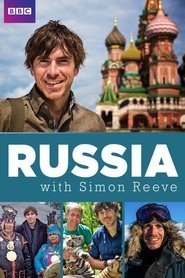
Russia with Simon Reeve
Download English Subtitle
Release info
Tags
English subtitle preview
The first 200 lines.
I'm starting a huge journey.
This time it's the big one,
I'm travelling across the largest country of them all, Russia.
I'm in Kamchatka, in the very, very far east of Russia.
This is a land of utter extremes.
This is where heaven and hell are said to collide,
where ice meets fire.
Yes, that is an erupting volcano over there.
The scale of this place is just mind-blowing.
The same could be said for Russia as a whole, I suppose.
But I am looking forward to this journey
as much as anywhere I've ever been.
This is a proper chance to explore
and try to understand this vast country.
I'll be travelling right across Russia,
from Kamchatka in the far east,
more than 4,000 miles to Russia's western border.
It's a journey that will take me
through some of the remotest parts of the planet...
Where on earth are we going? I love it.
..across vast wilderness...
..and natural wonders...
This is glorious.
..to the heart
of one of the world's most magnificent cities.
Saint Petersburg was designed to impress.
A century on from the Russian Revolution,
I'll discover a country that is more diverse...
..more challenging...
So, there's just no doubt that we are being followed.
..and more surprising than I ever imagined.
It is extraordinarily beautiful here.
The Kamchatka Peninsula is one of
the world's last great wilderness areas.
It used to take more than six months of travel
to get here from Moscow.
Nowadays, it's still a nine-hour flight.
I'm travelling here with mountain guide Igor Sesterov.
The chopper could only take us so far.
It's a bit tricky to move around here.
So look what they brought with us.
You've got to admit, that's pretty good.
Ready? Get set.
2017 is a huge anniversary,
100 years since the Russian Revolution,
which overthrew the rule of the tsars.
It was one of the most significant events of the 20th century,
ushering in decades of communist control in Russia,
Central Asia and Eastern Europe,
much of which formed the Soviet Union,
one of the biggest empires the world has ever seen.
In the frozen wastes of Kamchatka,
this was one of its most easterly outposts.
Igor, what...? What was this place?
It's completely abandoned? There's nobody here at all?
It's actually really helpful to me, in a strange way,
to come here at the start of this journey, because
it reminds me so much of what has happened
in this country in recent decades.
This is a memorial, in many ways, to the death of an empire.
To the end of the Soviet Union.
If you want to go inside...
Yeah, of course.
Through the window.
Moscow is 4,000 miles away.
But here in Kamchatka,
we are a shortish missile flight from America.
When the two nuclear superpowers went eyeball to eyeball
during the Cold War,
places like this were on the frontline.
Gas mask.
God knows what we're breathing in here!
The Soviet empire collapsed in 1991,
Russia was on its own.
Many military bases were abandoned,
left to wilder inhabitants.
It looks like something has tried to claw its way through the door there.
- Igor? - Yes?
- Look at that, Igor. - It's like wolverine! - A wolverine?
- Wolverine, yes. - As long as it's not still in here.
Where were the submarines moored here?
Are you from here originally?
It feels a little bit sad to me, to see this base.
How does it feel for you?
Of course, it wasn't just military bases that disappeared after the
collapse of the Soviet Union.
The 1990s were a chaotic and difficult time in Russia.
Central government support for many remote communities
here in the far east disappeared.
The population of Kamchatka has dropped by a third.
But there are still people who continue
to eke out an existence here.
I was visiting just before spring,
temperatures were between minus 25 and a balmy minus ten.
Russia is home to more than 100 different ethnic groups.
Reindeer herder Alexei Solodikov is one of the Even people.
I'd love some.
Tea with fish?
Yes.
OK. Are the reindeer far, Alexei?
Alexei and his family are one of the
few still living a nomadic life,
following their reindeer herd.
In Soviet times, herders like Alexei
used to be guaranteed an income by the government.
Now, reindeer meat is sold on the open market.
It's a more precarious way of life.
So, Alexei, are they all yours?
I'd give myself three days, actually.
So, look, this is what they're after.
During summer, reindeer feed on grass.
In winter, they survive by rummaging under the snow for lichen.
It's a fragile existence.
And in recent years,
the consequences of our changing climate have been devastating.
The weather here is now much less predictable,
they've had warm spells when it should be minus 30.
Instead of snow, they've had rain,
which can freeze on the ground,
making it hard for reindeer to get at the lichen.
Are you saying that reindeer are starving to death?
Across northern Russia,
many reindeer populations are in steep decline
because of climate change.
Tens of thousands of reindeer have died.
People and wildlife who survive at the edge of existence
are already feeling the effects of our warming world.
Alexei and his wife Galina are finding it
harder and harder to make a living out here.
Is this reindeer meat?
Thank you very much indeed.
Thank you, Galina.
Mm!
That is really good.
What do you think the future holds for the Even people?
Have you got children?
Are any of them working as herders?
What does it mean for the future of the Even people,
if your community aren't herding reindeer?
Goodbye, my friends!
It's been a hell of a day.
I'm slightly reeling from...
..just the extremes that we're seeing here.
The landscape, the temperature.
I've got my little inflatable pillow.
And a couple of sleeping bags.
Oh!
I should be all right.
It got very, very, very cold.
And slightly uncomfortable.
The thing is, the cold is a real killer for camera batteries.
So we all had to have some of them inside our sleeping bags.
I've got bags of these in here.
We've got a long journey today.
And not by a comfortable four-wheel-drive vehicle.
Alexei!
Thank you very much indeed for having us.
I'd ordered a cab, or what counts for one around here.
I was sad to leave Alexei and Galina and travel on,
their way of life seemed to be hanging on a thread.
There's few roads in Kamchatka,
and none linking the region to the rest of Russia.
That isolation is part of what threatens
the very existence of these remote communities,
and Russia's grip on its far east.
After a whiplash-inducing eight-hour ride in temperatures of minus 25,
I finally reach the only town for hundreds of miles around.
This is the small community of Esso.
It's rather nice, actually.
Nice, but sleepy.
The population of Kamchatka is falling,
a problem affecting the whole of eastern Russia.
But I'd arrived on the biggest day in the local calendar,
the start of an event called Beringia,
one of the longest dog sled races in the world.
It is actually quite a big government-sponsored event.
They pay a huge amount of money into it.
I suppose it's quite good at promoting mother Russia
in very remote parts of the country.
And the winner gets about 40,000 quid!
Organisers of the race hope it will attract tourists to Kamchatka,
boost the local economy,
and help reverse the declining population.
It's part of an effort by the government
of President Vladimir Putin to keep Russians living in this area.
I have come to meet one of the best mushers in the village.
Vladislav Revenok has been taking part in the event for ten years.
Simon.
THEY ALL PRAY
Just to be clear, Vladislav, you're a Russian Orthodox priest,
who is also a dog musher?
OK. He's got to go.
We wish you good luck, and Godspeed.
That's it. He's gone.
Off for three weeks into this...
Even the priests are tough here!
We often think of Russia as a European country.
But two thirds of it is actually in Asia.
My journey on across Russia took me to Vladivostok,
just 40 miles from China.
Russia with Simon Reeve subtitles in other languages
More English subtitles for Russia with Simon Reeve
- BBC Russia with Simon Reeve 3of3 720p HDTV x264 AAC MVGroup org · 13 downloads · 2019-07-18
- BBC Russia with Simon Reeve 2of3 720p HDTV x264 AAC MVGroup org · 13 downloads · 2019-07-18
Comments
No comments yet. Be the first to leave one.