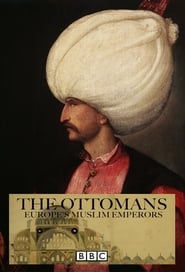
The Ottomans: Europe's Muslim Emperors
Download English Subtitle
Release info
Tags
English subtitle preview
The first 200 lines.
On the edge of Europe
is the city that was once the heart of a mighty empire.
From here in Istanbul,
the glories of the Ottoman Empire came to match those of Ancient Rome.
Ottoman rulers were of course known for their lavish lifestyles
and their sumptuous buildings.
For 600 years, from the Middle Ages to the 20th century,
one dynasty of Ottoman sultans from a single family
ruled across huge swathes of the world.
This is an empire of a million square miles,
staggeringly wealthy because it's staggeringly well organized.
The empire stretched south to Baghdad and Cairo,
controlling the holiest sites of Islam.
But it also reached deep into Europe
taking in Sarajevo and threatening the gates of Vienna.
It was the cradle of a civilisation and a culture
which has infused Europe
to Europe's benefit. Europe is the richer for it.
In this series, I'm discovering why the Ottoman Empire seems to have
vanished from our understanding of the history of Europe,
why its story is exciting global interest once more
and how this year, struggles at the heart of the Ottoman story
have reignited on the streets they once ruled,
from Syria to Turkey and Egypt.
It's remarkable how some of the most important, yet unresolved, issues
confronting us today, were also faced by the Ottomans -
the conflicts between the Christian West and the Muslim East,
the need to reconcile secular politics with religious ideology
and balancing the demands of the clergy
with the ambitions of the generals. All this was faced by one dynasty
that ruled for 600 years, across three continents.
In this episode, I'm going to explore the huge contrasts
in the times of two very different Ottoman sultans...
..the most famous - Suleiman the Magnificent in the 16th century...
..and the troubled reign of Abdul Hamid II
in the 19th century.
I want to know what a Muslim world, run from Europe was really like
and how it has shaped the relationship
between Islam and Europe today.
Across the continents,
down the centuries,
I'll be trying to get to grips with what we all need to know today
about Europe's Muslim Emperors.
This is the magnificent Topkapi Palace,
the nerve centre of the most powerful Muslim empire
the world has ever seen.
It was built by the Ottoman Sultan Mehmet II
in the middle of the 15th century.
Its commanding position overlooks Istanbul,
the imperial capital he conquered from the Byzantines in 1453,
declaring the Ottomans successors of the Roman Empire.
And this is what the Ottoman sultans would have seen when they walk out
onto this incredible balcony next to the Treasury Room
in the Topkapi Palace. They would have been able to see in one view
two of the three continents upon which their empire was built -
Europe on that side and Asia on that side -
separated only by the narrow waters of the Bosphorus
and it just simply takes your breath away.
Inside are a set of rooms which tell the story
of the rise of the Ottoman Empire.
The home of the hareem,
where Christian slave girls captured in Europe
provided heirs for the dynasty.
The home of the Treasury where the empire's vast wealth was secured.
The home of the sacred treasures of Islam,
symbols of the Ottoman leadership of the Muslim world.
This was the epicentre, the heart and soul of Ottoman imperial power.
In 1520, 70 years after it was built,
all this was inherited by the most famous of all the Ottoman sultans
who led the Ottomans into their golden age -
Suleiman the Magnificent.
Suleiman was a figure and a name to be conjured with
in London as in every other capital city of Europe.
Suleiman's name came up in Shakespeare,
Suleiman's name was probably on the lips of everybody in the pub.
A war leader and a great administrator,
a man of considerable cultural achievement,
a man who was interested in learning,
Suleiman is one of the most impressive figures of the age.
The empire Suleiman inherited had just expanded dramatically.
After two centuries of Ottoman conquests in Christian Europe
his father had taken control of new lands
across Africa and the Arab Muslim world.
The capture of two cities unlocked vast lands.
Defeating the Mamluk Empire in modern day Syria
gave the Ottomans lands extending to the sacred city of Jerusalem.
Taking Cairo gave them territory as far as the holiest sites of Islam -
Mecca and Medina.
The Ottoman sultans now ruled over a vast Muslim population.
And it altered the equilibrium of the state
which had up until that point been predominantly Christian.
It was a change that sealed the future direction of the empire.
For the Ottomans to take charge of the Arab Muslim world
was a seismic shift.
They'd emerged in the late 13th century in what's now Turkey
as mercenary horsemen whose ancestors had converted to Islam
centuries after most Arabs
and who had traditionally worn their religion lightly.
For the Arab world,
the Ottoman conquest opened a whole new page in their history.
Now, for the first time, they found themselves ruled
not from one of their own cities, but from distant Istanbul.
The Ottoman conquest led to a shift of the centre of gravity
away from the Arab world.
Suleiman had to assert the Ottoman's right to rule Arab Muslims
from a European capital, which 70 years before his accession,
was still a Christian city.
Istanbul's culture, its language and its history
were all quite different from those of Arab Muslims.
The first mosque ever built by the Ottomans here shows how soon after
they conquered the city, they tried to give their imperial capital
a direct connection to the founder of the faith.
Just as the tradition of St Peter coming to Rome
and being buried there gave the Pope his legitimacy in that city,
the Ottomans discovered their own equivalent on this site.
Except the remains found here
were said to be those of a famous close companion
of the Prophet Muhammad - the Sahaba or disciple-like figure -
Ayyub Ansari.
The site of Ayyub Ansari's supposed grave
became very important for the Ottomans all through their history.
It still has a great magic about it.
Ayyub Ansari died, according to tradition,
during a 7th century attempt on Istanbul
proposed by the Prophet himself.
Then, 800 years later,
Sultan Mehmet II's conquering regime
miraculously found his remains.
It's just a legend.
Probably they did not find anything
related to Ayyub Ansari,
but to make this newly taken Christian city
the Islamic centre of the world,
they "found",
"discovered" the tomb of Ayyub al-Ansari
and it worked.
In time it became customary for new sultans to walk along this path
to the shrine as part of their accession ceremony.
Hence its name - Accession Road.
If Rome, a city 1,400 miles from Jerusalem,
could become the centre of Christian authority,
then for the Ottomans, Istanbul, 2,000 miles from Mecca,
could become the new centre of Muslim authority.
And as the Christian world had its Pope,
the Muslim world had from the time of the Prophet a similar position -
the Caliph,
a title that thanks to his father's conquests,
Suleiman now inherited.
They were sultans but they also gave themselves the title of Caliph.
In doing, so they made themselves
not just the political leaders of the Muslim world,
but the spiritual leaders, too.
The word Caliph means "successor" in Arabic.
Basically, when Prophet Muhammad died, Muslims sat down and said,
"What are we going to do now?" I mean, they had a political community.
"Who will be the leader, who will lead us?"
The Ottomans, Ottoman sultans, defined themselves as Caliphs
as successors to Prophet Muhammad.
The title still resonated across the Muslim world.
To support their claim to the title of Caliph
the Ottomans seized from their conquered Arab lands
sacred treasures of unimaginable importance to Muslims.
They took all the relics associated with the Prophet Muhammad
from Mecca as well as from Cairo to bring back as a very sacred booty,
that would give the high seat of religiosity
that the Ottomans required.
Tradition has it that this ornate trunk,
kept here in the Palace of the Sultans,
contains the mantel of the Prophet.
A cloak that had belonged to the founder of the faith.
After the Prophet's death,
Muslim leaders had used the cloak to legitimize their power.
Now the Ottomans did the same.
Even in the modern age, the symbolism of the cloak,
and its connection to the Prophet, has a powerful appeal.
Here in Kandahar, in 1996, as the Taliban overran Afghanistan,
the Taliban leader, Mullah Omar, brandished another cloak,
claiming it had once belonged to the Prophet Muhammad.
Sacred artefacts and the title Caliph
strengthened the Ottoman's legitimacy
within the Muslim world and beyond.
As a universal title, the Caliph was historically considered
as a patron, if not a ruler,
of all Muslims and the Ottomans very much play
on this notion of patronage,
that they become the patrons and protectors of Muslims everywhere.
The Ottomans called themselves the guardians of the holy places.
Now, that's just words,
but they followed up on their words,
by putting a distinctive architectural stamp
on Mecca, Medina and Jerusalem.
Suleiman the Magnificent spent millions
putting a new coat of decoration on the Dome of the Rock.
It glistened and shone in the sun, it was brand new, it was sparkling
and it was very warmly received.
And above all, it's an act of possession,
it's an act of appropriation, it says
there's a new boss and this is his mark.
And that was a message to the rest of the Islamic world.
Suleiman was Caliph but he wasn't only interested in defining
The Ottomans: Europe's Muslim Emperors subtitles in other languages
More English subtitles for The Ottomans: Europe's Muslim Emperors
- BBC The Ottomans Europe's Muslim Emperors 1 of 3 x264 AC3 · 32 downloads · 2013-10-19
Comments
No comments yet. Be the first to leave one.