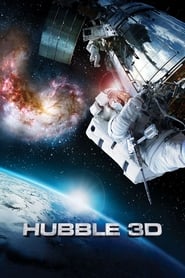
Hubble 3D (IMAX Hubble)
Download English-german Subtitle
Release info
Tags
Download English-german Subtitle Files for Mobile (2)
English-german subtitle preview
The first 200 lines.
Seven brave astronauts are about to launch...
...on the most challenging and risky mission ever flown in space.
It's an interesting emotion when you're sitting there...
...and realizing the clock is ticking.
-All the preparation time is over. -Fee| okay, sir?
It's time to go out there and do it.
All right. Okay, good.
It's not a foolhardy risk.
It's not roller-skating down Massachusetts Avenue in rush hour.
If there's some risk that goes along with achieving a dream...
...I think it's worth it, and that's what I would wanna tell my kids.
Dreams do come true.
Okay.
It felt a lot like Christmas morning.
You know, going to get to open your presents.
I got up, big smile on my face.
And marched down to have my breakfast and just really felt great.
Right now the thing I'm looking forward to most...
...is the solid rocket booster ignition. I wanna get started.
I think it was my grandfather that had the most profound influence on me.
He'd bring out the binoculars and he'd teach us about the sky.
No idea that I would be traveling to the stars.
But here I am.
| go through the mission in my mind, and ask, "Okay...
...what could go wrong?" And | ask myself, "Are we ready to handle that?"
This is the last chance to save the Hubble Space Telescope.
Here we are, cocooned on our beautiful planet Earth...
...Warmed by the light of our nearest star, the sun.
When you see our home like this, you think:
"Out there in all that black space...
...Could there be another place like it?
Is there anybody else out there?"
The nearest of those stars is billions of miles away...
...but that hasn’t stopped us from exploring them.
Galileo was the first.
Centuries later, we built a truly magical machine...
...the likes of which Galileo could never have imagined.
Nice and slow.
The Hubble Space Telescope.
It took more than 10 years and 10,000 people to build.
Keep coming.
And it would be the first of its kind to be launched into orbit around the Earth.
Okay, stop. Okay, hold it steady.
This astronaut crew was chosen to ferry the telescope to space.
Hello, hello, hello.
They launched from the Kennedy Space Center aboard the shuttle Discovery.
T-minus 10, go for main engine start.
We are go for main engine start.
T-minus six, five, four...
...three, two, one.
And liftoff.
With the sea and Clouds of Earth reflecting on its door...
...the great silver bird was released to soar in orbit 320 miles above us.
Soon it would be sending images back to us.
Could we finally unlock the secrets of the universe?
Would we discover other worlds like ours?
The whole world waited for Hubble to open its enormous eye.
Engineers have discovered that the giant telescope has a warped mirror.
One of the mirrors in the Hubble Space Telescope is out of shape, and as a result...
...the pictures it's sending back are no better than those from the ground.
You've got a go to open the doors.
Okay, swinging.
It would be three long years before astronauts could return...
...With a remedy for the ailing Hubble.
I'm not even pulling it, I'm just coaxing it with my fingertips.
Pitch, pitch up a little.
They installed two instruments...
...each containing a huge contact lens.
Scientists hoped the new lenses would sharpen the telescope's blurry vision.
Good work, guys.
Above the splendor of Africa ’3 Cape of Good Hope...
...Hubble was launched once again.
In the next 10 years, three more astronaut crews...
...would repair and enhance Hubble 's vision even further...
...transpon‘ing us to places we could only have dreamed about.
In a stream of staggering images...
...Hubble revealed the powerful prolonged aurora on Saturn.
The haunting gaze of a dying star, the Helix Nebula.
The awesome Eagle Nebula, known as the pillars of creation...
...a birthplace of stars.
And the Mice...
...a pair of galaxies twisted and torn by their gravitational dance.
Hubble captured imagery so complex...
...We can actually travel through it.
This is real star travel.
The bright star passing by is Sirius.
It's one of the nearest to Earth, a mere 50 trillion miles away.
We 're now heading towards the three little stars in a slanted row there...
...ca/led Orion '3 Belt.
Distances here are so vast, they're measured in light-years.
A single light-year is almost six trillion miles.
Orion is 1500 light-years away.
That means we 're traveling at 150 trillion miles a second.
We 're going to explore that rose-colored cloud just below the belt.
It's called the Orion Nebula.
There are amazing things happening inside these Clouds.
As we look through Hubble’s eye...
...We're getting to see them as never before.
We 're descending into a gargantuan canyon of Clouds.
It's 90 trillion miles across.
It's a star nursery.
The biggest of the young stars are right in the center of the nursery.
Their energy creates unbelievably strong Winds. ..
...howling down this vast canyon at five million miles an hour.
The winds have blasted out a huge bowl-shaped cavity...
...in the side of the cloud facing the Earth...
...giving Hubble and us...
...a window on the secret life of the stars inside.
The biggest star here is surrounded by a flock of baby stars...
...each nested in its own cocoon.
The Wind from the giant star is blowing so hard against these little ones...
...it creates shock waves on their near sides, and long tails behind.
That’s why astronomers have nicknamed these strange objects "tadpoles. "
Inside each cocoon is an infant solar system.
These tadpoles might turn into full-grown solar systems one day...
...but the continuous blast of Wind may stunt their growth.
But tucked away in a calmer part of Orion '3 nursery...
...Hubble has found confirmation...
...that planets are forming around other stars.
Our own solar system may have looked just like this...
...when the sun had formed, but the Earth did not yet exist.
Perhaps this is how we and our own world began.
The once-ailing Hubble Space Telescope...
...offered its greatest performance yet...
...a glimpse of time and space astronomers had previously only dreamed about.
But for the Hubble, time is running out...
...amid new concerns about safety in space.
In early 2003, the tragic loss of space shuttle Columbia...
...forced NASA to rethink its program.
NASA has canceled Hubble's final service mission.
In Washington, Senator Barbara Mikulski led the charge to review the decision...
...questioning NASA Administrator Sean O'Keefe's January claim...
...that keeping Hubble alive wasn't worth the cost or the risk.
Hubble is not a piece of techno-junk that's creaky, tattered and worn.
If we do nothing, then within about two years...
...either its gyroscopes or its batteries will die...
...and it'll tumble out of control.
But flight designers came up with a daring plan to reduce the risk.
If the shuttle was damaged during launch...
...another one could come up and rescue the stranded crew.
They could shimmy from one to the other down the arm, fireman style.
We 7/ let them try it first.
We are going to add a shuttle servicing mission...
...to the Hubble Space Telescope, to the shuttle's manifest...
...to be flown before it retires.
The final mission is a go...
...and for the first time, a second orbiter stands ready...
...in case there's a call for help.
Just weeks to launch, the Hubble crew is training hard.
The spacewalkers practice in this six million gal/on pool...
...at the Johnson Space Center.
It's the closest they can get to zero gravity.
Motion is stopped for the stanchion.
Okay.
Four stories underwater...
...there’s an entire shuttle cargo bay and a life-size model of Hubble.
A big thing about this telescope...
...is it can point really, really accurately...
...and hold its position, and it's the gyros that allow you to do that.
But they're in a tough spot.
Got them? I got your legs.
I'm gonna move in a little bit.
We'll stick Mass, my spacewalking partner...
...up inside the telescope, in the bowels of the science instruments.
We gotta be really careful around them.
And I'm a big goon and I've gotta get inside of there.
So this is the problem, how to get me inside of this really cramped place.
He's gotta work in there, but he has to be perfectly still.
And he can only work with one hand...
...right there amongst the fixed-head star trackers.
They don't like to be bumped. And, you know...
...you knock them off their axes and they're useless.
Then the whole telescope's useless.
Mike Massimino...
...otherwise known as Mass, has serviced Hubble once before.
-Got it. -Fun today?
John Grunsfe/d, on the left, is an astrophysicist and mountaineer.
He '3 had more visits to Hubble than anyone else.
Boy, are we having fun this time?
This'll be the first trip to space for Mike Good, known as Bueno.
He enjoys a slightly soggy hug from his Wife Joan.
Soon they'll be saying their goodbyes to families and friends.
Shuttle arm operator Megan McArthur describes the last hours before launch.
| always loved being by the ocean...
...surrounded by dunes and, you know, seaside plants.
It's very calming for me, down at Kennedy.
And it's just a nice place to go kind of relax...
...and let your mind wander a little bit...
...and relieve you from the different cares about getting ready to launch.
Launch day is finally here.
It's no secret that space is a dangerous place.
In the last two decades, 32 astronauts have put their own lives on the line...
...to give life to Hubble.
Each one of these men and women is a true hero.
T-minus five minutes and counting.
Go for orbiter APU start.
PLT, perform APU start.
OTC, PLT and mark.
SRO. SRO is go.
-You have a range Clear to launch. And CDR.
Hubble 3D subtitles in other languages
Comments
No comments yet. Be the first to leave one.