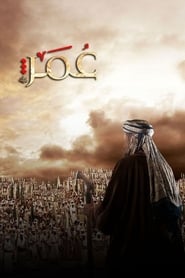
Omar
Download English Subtitle
English subtitle preview
The first 200 lines.
"Antioch, Year 13 AH"
You know, gentlemen, that there are four armies
stationed at Hums, Damascus, Busra and Arabah in Palestine.
Each army is between seven and ten thousand.
In total they number no more than thirty thousand.
They are lightly armed: swords, spears and arrows.
They ride horses and camels. Their loads and supplies of food are not plentiful.
Their capital is too far to supply them with food after they have entered our land.
Why have they divided themselves in four armies and four areas
when their numbers are small in relation to our armies?
They know that numerically we have much larger forces.
They felt that by dividing themselves in this way,
they force us to divide our forces. They are lighter of movement than us.
Therefore, it will be easy for them to change their positions
as suits the situation they are facing. It is easy for one army to join another
at a suitable moment.
This time they are not after booty. They want to take our land.
Shall we, then, divide our forces to face theirs,
fighting each one of their armies at its position,
cutting the roads between them to prevent their assembly?
This is what they want.
My plan is to keep our first army in Palestine where it is. It is 70.000-strong. Its task...
is to restrict their army now in Arabah and Palestine and prevent its movement.
It should also try to finish it off.
Our second army stationed in Antioch should move in its full force, 200.000,
to face their three other armies, one at a time.
Amr Ibn Al-Aas was right
when he advised that our armies should congregate at Busra and Yarmuk,
before the Byzantines attacked them one at a time.
Were they to remain apart, none could be a match to such a large force.
Their quick movement has helped them to congregate
before the Byzantines could reach any of them, except for Amr's army.
The Byzantine army stationed in Palestine restricted its movement and prevented it
from joining Abu Ubaidah, Yazeed and Shurahbeel
at the plain where they are stationed at Yarmuk.
It was only a short while before the larger Byzantine army arrived
and encamped in a nearby plain.
Why have the two armies refrained from fighting so far?
I do not know. Perhaps both are apprehensive,
content to launch a raid and maintain their grounds.
I suspect that Abu Ubaidah is hoping that Amr may be able to manoeuvre
his way to join him, giving him good reinforcement.
Yes, and may be the Byzantines...
are waiting for their army in Palestine to finish Amr's army and join them.
I shall make the Byzantines forget who they are, sending them Khalid Ibn Al-Waleed.
Do you mean to dispatch Khalid from Al-Heerah to Syria?
I will do, right now.
What about Iraq: who will hold it after Khalid?
Al-Muthanna Ibn Harithah.
I will order Khalid to divide the army between the two of them.
They are no more than twenty thousand there.
Can Al-Muthanna hold Iraq with ten thousand men only?
Until we have finished with the Byzantines.
We will then return the forces that come with Khalid.
And if the Syrian affair takes too long?
It may be that God is giving us a great opportunity
bringing the bulk of the Byzantine forces into Yarmuk
so that it will be a great decisive battle.
If we win, we would have broken their force in one go,
unlike the case of the Persians. - I am not sure.
I fear that if Al-Muthanna is left with half the army,
the Persians might be tempted to attack him.
We could lose what we have gained there.
Well, we are not in riches.
We have to take things as they are,
weighing up the pros and cons of each alternative.
The Byzantines have amassed all their forces against us,
and most of our forces are there. We do not have much time.
Should the Byzantines prevail, God forbids,
we do not know what will happen to us after that.
Such a defeat will undermine our people's confidence here and in Iraq,
and the Persians will get the message.
But if we defeat the Byzantines, the present superpower,
the Persians will be demoralized further.
We can then send them one army after another, as will suit us.
You are certainly right, Caliph.
But, who will be the overall commander if Khalid joins our forces in Syria?
Khalid. - You make him commander...
when Abu Ubaidah, the trustee of our nation, is among them?
And over myself and you in war, Umar.
I know that Abu Ubaidah is better than Khalid
and he has the advantage of joining Islam early,
but Khalid has an insight in war that eludes Abu Ubaidah
and all other commanders. Abu Ubaidah is a man with a soft heart.
He has no fear of death,
but my fear is that he might take a precipitate action that may lead to a loss.
Amr Ibn Al-Aas is a wise schemer,
but the fear is that he may spend too long in calculating risks.
His action might then be too slow. Ikrimah, Yazeed and Shurahbeel are all very daring,
but none is like Khalid in planning and managing situations.
Besides, none of them fought a major decisive battle, as Khalid did.
Khalid, on the other hand, combines a cat's patience with a lion's leap.
He is fast and daring but not rash. He perfects his plan...
and fights well. Why wouldn't I give him the command?
Abu Ubaidah will not feel aggrieved to be under Khalid.
He is one who looks for no personal gain in this life.
He has set out to fight for God's cause, not to be a commander.
We need to consider two things together:
a shorter distance so that we can reach our brothers in Busra as quickly as possible,
The other consideration is that the route should have no enemy forces...
and no populated areas, so that I can move behind the Byzantine forces.
Let us now consider the possible routes and choose the most suitable.
The fourth route goes through Ain Al-Nimr, Qaraqir, Suwa, Arak, Palmyra, Al-Qaryatain,
Al-Ghootah, Busra.
There are neither Byzantine nor Persian forts on this route.
We can reach Busra without encountering the enemy. It is also a short route,
but it means that we will have to go through barren desert,
without water or meadows, for five days and nights
until we reach Suwa. After that it will be easy.
You seem to prefer this last route? - I know that it is very risky.
Our great enemy here is the burning sun and the lack of water or meadows
for five days.
But if we can find a way to help us against this enemy,
it is the best route to take us to our destination in the shortest possible time.
If we are held up on the way and the enemy attacks our brothers in Syria,
the calamity, if they lose the battle, will be greater than our own calamity.
Rafi', what do you think? You are our guide.
I went through this route once with my father, when I was a young lad.
By God, a single rider fears for his life.
How can it be tolerated by an army with its horses and heavy loads?
Let us find a solution for the problem of water.
Nothing else stops us from taking this route.
I am not sure. The water is needed for us and for the horses,
and we cannot carry enough water for both purposes.
If our mounts perish, we perish with them.
I am not sure.
Tell us what you are thinking of; may God guide you.
We may be able to carry the water we need to drink.
We can economise in what we drink until we reach Suwa.
There's water in it. As for the water for the horses,
let us choose fat camels and keep them thirsty for a few days,
then we take them to the water to drink their fill.
We will then tighten their lips and cover their mouths so that they do not regurgitate.
When the need arises, we slaughter some of them.
The soldiers will eat their meat and we give the water inside them to the horses
to drink after we mix it with some of their milk.
"Yarmuk"
Peace be to you with God's mercy. - And to you be peace with God's mercy.
Has Khalid sent you? How is he? When will he arrive, God willing?
He sent me from Al-Heerah before he began his march.
To Abu Ubaidah Ibn Al-Jarrah from Khalid Ibn Al-Waleed. Peace be to you.
I received the Caliph's letter in which he has ordered me to march to Syria
and to command its armies.
By God, I neither sought nor wished this. Nor did I write to him regarding this.
You stay in the same position you have: your orders are obeyed
and your views are upheld. No matter will be decided without consulting you.
You are a leading figure among the Muslims whose standing is undeniable
and whose views are indispensable. May God perfect to you and me His blessings
and may He spare us the torment of hell. Peace be to you with God's blessings.
We have already received the Caliph's order.
May God bless what he has decided and all greetings are due to Khalid.
What is this? - It is from Khalid to all soldiers.
Read it to the people.
To God's soldiers in Syria, from Khalid Ibn Al-Waleed.
I received the Caliph's letter instructing me to come and join you.
I have already started on my way.
It will not be long before my horses will appear amidst you, with our men.
So be steadfast and expect the fulfillment of God's promise and His rich reward.
May God protect us all by good faith, and may He strengthen our belief in Islam.
Peace be to you all.
Rejoice and glorify God.
God is supreme. God is supreme.
God is supreme. God is supreme.
God is supreme. God is supreme.
Abu Sulaiman has not disappointed me. All praise be to God.
I continued to pray to God to enable him to reach his destination
before the Byzantines attack our people there. Now my worries are over.
How ingenious! No army ever went through that route.
He managed to reach the people in 18 days.
He covered that barren stretch in five nights.
No one other than Khalid could have done that.
God guided you to do the right thing by him, Abu Bakr.
Certainly, none other than Khalid will do that.
I do praise God, as you do, for enabling him to reach his destination
before the Byzantines attack our people.
God spared his army the great danger involved in crossing that area.
Had he consulted me, I would have counseled him against it.
Khalid, however, takes his own decisions with little care.
But he got through it by God's grace, losing not a single soldier.
They were on the verge of death, had it not been for God's grace.
God gave them the water. - We praise God for that.
The one who does not thank people is ungrateful to God.
Indeed. I do admire Khalid's dedication, intelligence and far-sightedness.
Had he been alone, I would not have felt anything but admiration towards him.
He requires people to do what he can do, but they may be unable to do that,
as they include some who are weak.
Therefore, I admire his ability
and feel sympathy for his men because of his excessive daring and bravery.
They have come through grave danger this time, and I cannot be sure the next time.
If his daring is combined with Abu Ubaidah's kindness, the two will be moderated.
Like Abu Bakr is moderated by Umar Ibn Al-Khattab.
By God, he is so much like you. Limitless is God in His glory,
two similar persons may meet but move in opposite directions.
Umar,
Where is the man who combines all perfect qualities?
They were combined in the person of God's messenger (peace be upon him).
As for us, we try our best, and one of us moderates the other.
This is what we did when we sent Khalid to Syria,
to combine his daring and military talent with Abu Ubaidah's rational kindness.
This would have been fine, had Abu Ubaidah been the overall leader
Omar subtitles in other languages
More English subtitles for Omar
- FaroukOmar-S01 · 126 downloads · 2023-12-23
- OmarIbnAl-Khattab(FaroukOmar)-season1 · 73 downloads · 2023-12-09
- OmarIbnKhattab-31 · 59 downloads · 2023-04-19
- Hz Omer(FaroukOmar)-Ep 30 en · 52 downloads · 2020-05-22
- MBC TVRip Season 1 Complete (By Hz Omer) · 216 downloads · 2020-05-22
- MBC Farouk Omar 2012 HDTV 720p IMDB 2063241 abouammar · 121 downloads · 2017-09-19
- OmarBinKhattab-Ep 29 en · 40 downloads · 2016-04-14
- Omar Bin Khattab-Ep 28 en · 81 downloads · 2016-04-05
Comments
No comments yet. Be the first to leave one.