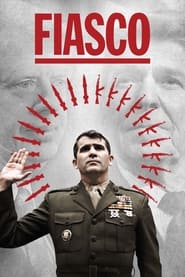
Fiasco
Download English Subtitle
Release info
Tags
English subtitle preview
The first 186 lines.
President Reagan's national security advisor,
Robert "Bud" McFarlane,
begins negotiations with Iran
and agrees to exchange weapons
for the release of American hostages.
The deal generates millions of dollars
that Oliver North and Richard Secord
divert towards the Contra War.
But after many shipments of weapons,
only one hostage is released,
and McFarlane loses faith and abruptly resigns,
only to be called out of retirement
for a top secret, face-to-face meeting
with Iranian delegates in Tehran.
The trip is a disaster that leaves the Americans
frustrated, demoralized,
and desperate for a new strategy.
As you know by now, there are plenty of twists and turns
in the story Americans know as Iran-Contra.
- -
There was one twist in particular
that caught everyone by surprise.
Hello?
This is Hassan Sabra,
and he's kind of responsible
for breaking Iran-Contra wide open.
He did it in the pages of a Lebanese magazine
calledAsh-Shiraa.
In the fall of 1986,
two secret operatives came to Sabra's office
with a tip that would change his life.
The article appeared
in the Lebanese weekly Ash-Shiraa
published in Beirut.
The editor, Hassan Sabra, explained
what he thought the Iranians want.
The news that Ronald Reagan
secretly traded Iran military equipment for hostages
is only the latest.
Trouble is, secrets don't keep very well.
And when they come out,
the damage to an administration's credibility
can last a very long time.
How would Reagan's administration react
when a little-known magazine editor in Beirut
stumbled upon the secrets they had been trying to hide?
Mr. President, is it true that you authorized
sending military supplies to Iran?
I've never heard such dissemination
of misinformation
since I've been here
as has been going on in the last several days.
They wanted us also to help
with the freeing of other hostages.
What would happen to those who exposed
all those secrets and upset the carefully laid plans
of the powerful people involved?
I'm Leon Neyfakh.
This isFiasco.
The story of Iran-Contra.
While members of his administration were in Tehran
negotiating the release of American hostages...
- -Thank you.
Really is great to be back on the campaign trail.
It almost feels like 1980 all over again.
...Ronald Reagan focused on the home front.
We love Ron! We love Ron!
We love Ron!
The president spent the 1986 midterms
traveling around the country, rallying support
for Republicans running for Congress.
Ladies and gentlemen,
the president of the United States,
President Ronald Reagan.
I need a congressman who will support me
instead of someone who opposes me 60% of the time.
During the second midterm,
congressional election is very, very tough.
You're really worn out by then,
and the opposing party has a lot to say.
Write it down.
Next January there'll be 53 Democrats
in the United States Senate
and 47 Republicans.
But, you know,
this talking about political differences and all
reminds me of a story.
It was a Democratic fundraiser at a downtown hotel.
And when they came out of the fundraiser,
there was a kid with some puppies,
and he was selling them.
"Buy a Democrat puppy. Buy a Democrat puppy."
But two weeks later,
the Republicans held a fundraiser in the same place.
When they came out, the same kid was there--
"Buy a Republican puppy. Buy a Republican puppy."
Kid says, "Now they got their eyes open."
Reagan's team had struggled
to come up with a message to campaign on.
They found one in a star-studded crusade
spearheaded by the president's wife, Nancy.
See this cute little vial here?
It's crack, rock cocaine, the most addictive form.
You think it's the glamour drug of the '80s?
Well, that's the point of this friendly little reminder.
It can kill you.
Well, the...
the decision to run that campaign was not mine.
But the decision to work on that speech was.
I met with the Reagans in California to hear them out
and listen to what they wanted to say.
And it was very, very important to her
and very, very important to him
to get that message across.
Now you can see why drug abuse concerns every one of us,
all the American family.
With the crack epidemic
surging in America's cities,
Reagan's anti-drug message
struck a chord with his base of voters
who believed in God and family values.
Are you afraid when you go out on the street
-at night? -Yes.
Why?
There's a lot of drug dealers.
They be shooting.
Drugs take away the dream
from every child's heart and replace it with a nightmare.
Each of us has to put our principles
and consciences on the line.
There's no moral middle ground.
Indifference is not an option.
I can't help but see all the young people
who are here in the audience,
and I have a special message to you from my roommate.
She said to tell you,
"When it comes to drugs, please, for yourselves,
"for your families, for your future,
"and for your country,
just say no."
I mean, if the Reagan administration
had "just said no"
to Contra drug smuggling
and to cavorting and collaborating
with drug smugglers,
they would never have been tarred and feathered.
My name is Martha Honey.
My name is Tony Avrigan.
And we lived and reported out of Central America,
based in Costa Rica for the 1980s.
We went down to Costa Rica
and really fell in love with it.
It seemed like a good place
to raise our kids and...
And so we decided to move there.
The only thing we didn't know was
our moving there sort of coincided
almost exactly with the CIA's taking a look at Costa Rica
and saying, "Hmm."
Martha Honey and Tony Avrigan
started to notice the Nicaraguan rebel force,
the Contras, setting up shop in Costa Rica.
And I remember one night,
soon after we moved there,
driving through a neighborhood,
and you'd look in the front window,
and there would be a Costa Rican family
having dinner, and then the next one,
a Costa Rican family sitting around the television,
and then the next one,
all these guys in kind of partial military uniforms
standing over a mimeograph machine,
and that was a Contra operation going on.
There began to be reports in the local press
that the U.S. government was involved
in facilitating operations out of there.
But our editors were very skeptical and said,
"Well, that's not what the State Department's telling us.
"They are telling us that the U.S.
is not involved militarily in Costa Rica."
Something wasn't quite adding up.
The waning days of the last session of Congress,
we passed the Boland Amendment.
Remember the Boland Amendment?
The House Intelligence Committee today
voted to cut off U.S. funds
More English subtitles for Fiasco
- Fiasco S01E06 XviD-AFG · 25 downloads · 2021-10-26
- Fiasco S01E06 XviD-AFG · 14 downloads · 2021-10-26
- Fiasco S01E05 XviD-AFG · 17 downloads · 2021-10-20
- Fiasco S01E04 XviD-AFG · 19 downloads · 2021-10-10
- Fiasco S01E04 XviD-AFG · 21 downloads · 2021-10-10
- Fiasco S01E03 XviD-AFG · 16 downloads · 2021-10-10
- Fiasco S01E03 XviD-AFG · 17 downloads · 2021-10-10
- Fiasco S01E02 480p x264-mSD · 19 downloads · 2021-10-01
Comments
No comments yet. Be the first to leave one.