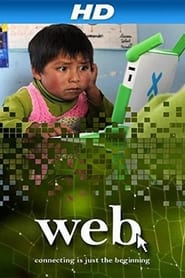
Web
Download English Subtitle
English subtitle preview
The first 173 lines.
I would argue to all of you that
we are in a new turning point of history
for our nation and the world.
For the first time in all human history
we have the opportunity to bring people together
across the planet in common cause for common good.
We live in an age of interdependence.
But that can be good or bad.
It simply means that we cannot escape each other.
Last year I read a book that described the way
the world works in ways better than I can.
The title of this book is "Nonzero,"
the author is Robert Wright, and if you haven't read it
I urge you to get it, and read it.
If you look at the progression of human history there's
an experiment involving how broadly can people collaborate,
to what extent can different kinds of people
separated by great distance get together and solve problems,
pursue common interests without succumbing
to the darker side of human nature
that might lead the planet to dissolve into chaos.
Gosh, you know, you look at all of human history
and you have, you know, a good like, 40,000 years
of just talking face-to-face interaction, and then you get
the first writing, and then, just a few thousand years later,
in the grand scheme of things just a few thousand years,
right, you get the printing press, and then 500 years
you get electronic communication and then, you know,
now it just-- gosh, every day there's probably
five or six new applications that are of some significance.
At least once a year or maybe once every other year
we get a big one, you know, Twitter, Facebook, YouTube,
and it changes the way everybody's connecting.
You've gotta tell us before we look at this video
what is an internet, would you mind just, you know,
sharing that with us for the-- for the four or five people
that don't know what an internet is would you tell us?
Uh, I don't believe we have the time to go into that.
Okay, so, uh, this internet thing gets its start
from an experiment that was done in 1969
to design something called the Advanced Research Projects
Agency Network.
The internet is defined in different ways
by different people.
For me, as an engineer,
it starts out being a set of standards for communication,
that if you observe those standards,
if you implement those standards, then all kinds
of devices and networks can be made to interwork.
So the internet was literally that, a system for connecting
between networks, uh, supporting inter-net transportation
of information.
It is now possible, in theory, to communicate
with every human being on the planet.
One way of thinking about the 21st century world
is exactly a world that is ever more connected
through the internet.
But then if you're disconnected, you are more
isolated than ever before.
Thank you, very much, very happy to be here
and present a $100 laptop that we have invented at MIT
and worked jointly with a nonprofit
whose job will be to make these and distribute them
to developing countries around the world
on the basis of one laptop per child,
and...thank you.
One Laptop Per Child is about eliminating poverty
by providing primary education to the poorest
and most remote kids in the world.
And the way we achieve it is by giving them
connected laptops, each one that they own, they take home,
they use for school, they use it for play,
they use it for everything in their life seamlessly.
It's a window to the rest of the world.
We're at a cusp in history that has to do with
how you learn.
For the past 200 years we've assumed
that the way you learn is you go to school,
and that somebody teaches you, and it's the first time
that learning can happen without teaching.
That, sort of, cusp happened because of computing,
because of the internet, because of interactivity,
because of a lot of things.
And so you add that to the fact that the world right now
is in a situation where as many 300, 400 million children
around the world aren't getting any education,
they don't go to school, and so you have to leverage
the children, you can't just train more teachers
and build schools, you've got to go back,
and say to yourself, well, can the children be part of this
versus just the objects of teaching.
The idea is quite simple, let a child learn mathematics
by speaking in mathematics about things
that really matter to him.
So at MIT we've given computers the power to turn motors,
to make sounds, to draw pictures,
and we've found ways of giving children
the power to control the computer.
So that the child can make the computer do anything
that he can describe in a suitable
mathematical language by typing on a keyboard like this.
The initial ideas came in the late 1960s
and early '70s when a man named Seymour Papert
made a very simple observation and that was that children
learn differently when they write computer programs
because the act of writing a computer program
is the closest you can come to thinking about thinking.
What produces involvement, engagement,
what grabs the individual?
Education has very little to do with explanation,
it has to do with engagement, with falling in love
with the material.
Seymour Papert was a student of Piaget's back
in the late '50s, early '60s, and he got a--
this idea in his head that computation's
a thing to think with.
The simplest way I know of to talk about learning
is you learn through doing.
So if you want more learning, you want more doing.
It's really that simple.
What Seymour brought to this was this idea of the children
constructing knowledge, not just receiving knowledge,
having the computer be a wonderful vehicle,
or catalyst, or haven for that kind of construction.
And, uh, then for the next 40 years, uh, at MIT
we were exploring the space and doing pilots.
With One Laptop Per Child, we said, you know what, enough,
we can do pilot, after pilot, after pilot
but now it's time to actually get these ideas into the world.
So One Laptop Per Child is all about how do you take
40 years worth of research around technology and learning
and bring it to scale.
The telecommunications was ready, the computers were ready,
the internet existed quite widely spread,
and the time was right in the beginning of 2005
to build a laptop that was child centric, affordable,
connected, and something that could be read in the sun,
and was very robust, and that is the evolution.
Well, there've been a couple of waves in human history
of globalization.
This is probably the third or fourth wave of globalization,
and every time, uh, it occurred, people thought
the world was becoming one.
I think this time it may actually be happening.
Uh, the ease of international travel,
the ease of international communications,
and the ease of international commerce,
uh, are much, much greater than they were
20 years ago, 30 years ago.
And so we begin now to think, really, as a global society,
which we didn't before.
Almost everyone comes to the conclusion
that whatever their time is is a critical time
in human history, so I'm not sure that I would buy
an absolute argument.
But I think it's fair to say that we're at a tipping point
in terms of people's access to computer-based information,
to computer-mediated communication.
With about a quarter of the world's population
online in one form or another, there is something fairly major
happening in, uh, our information society,
if you like.
There are an estimated 1.8 billion people online.
There are about 740 million in Asia,
250 million in North America, 450 million in Europe,
and the numbers get smaller in other parts of the world.
The interesting thing is that as we get
more and more of the population up on the internet,
the avenues for interaction will become much richer,
and here I am not capable of predicting
what the outcome will be when six billion people
are online, sharing their knowledge with each other,
so I don't see this as being a particularly distinct point
More English subtitles for Web
- Web 2013 WEBRip x264-ION10 English · 12 downloads · 2020-02-17
- Web 2013 WEBRip x264-ION10 · 18 downloads · 2018-05-05
Comments
No comments yet. Be the first to leave one.