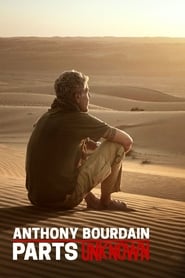
Anthony Bourdain: Parts Unknown
Download English Subtitle
Release info
Tags
English subtitle preview
The first 199 lines.
New York City during the 1970s
was a beautiful, ravaged slag...
Impoverished and neglected
after suffering from decades of abuse and battery.
She stunk of sewage, sex,
rotting fish, and day-old diapers.
She leaked from every pore.
No wave was the waste product of "Taxi Driver,"
Times Square, the Son of Sam, the blackout of '77...
The desperate need to violently rebel
against the complacency of a zombie nation
dumbed down by sitcoms and disco.
We were howling with delight,
laughing like lunatics
in the madhouse that was New York City...
Thrilled to be rubbing up against the freaks
and other outcasts who somehow...
for some unknowable reason,
had all decided to run to land's end
and, all at once, scream their bloody heads off.
It's our fucking park!
Nothing but a bunch of crack heads,
Dope fiends and motherfuckers
This is a show about a very special place...
A very special time...
And some very special people.
So much happened, so much began
on New York's Lower East Side.
Those buildings are still there.
Yeah, all of them.
Yeah, I mean, I know every corner I ever drank
by order of, like, preference, you know,
'cause there was some, you know,
you'd really rather not to go to.
That was, like, sort of, like, you know, a last resort.
Yeah.
Somewhere, uh...
there was a hole, a big hole in the wall right there.
Basically like a car-sized hole in a wall.
You'd step into an abandoned space.
I didn't know any spots down there.
I mean, people would take me, of course.
- Yeah, yeah. - But it was not my regular.
My regular was here, at Executive and Laredo
were my preferred.
But for a while, I had to go specifically...
- Hot zone. - Yeah.
The Lower East Side was in many ways
the cradle of New York.
The Lower East Side was in many ways
the cradle of New York,
where new arrivals first settled,
built communities, and later, moved on,
only to be replaced by others.
In the New York City of the '70s,
nearly bankrupt, riddled with corruption,
the Lower East Side, particularly Alphabet City,
was left to fend for itself.
Huge swaths of it abandoned, ruined, or simply empty.
Much of it became an open-air supermarket for drugs,
whole blocks taken over by organized drug gangs.
Rents were cheap, and the neighborhood started
to attract a newer, highly energized,
and creative group of people who wanted to make things...
Music, poetry, movies, and art.
It seemed at the time, everybody was a star
and, for a while at least, that it was a golden time.
But it was dangerous.
You lived down here, you had to be tough
and talented and often very quick.
Now...
things are different...
very different.
Everybody together. Ready?
One, two, three.
Pick those feet up six inches and hold.
Bring that arm over. Pin the wrist, let's go.
Is everybody clear? Yes.
- I can't hear you. - Yes!
Okay, on three. One, two, three, let's go.
So, I mean, this is pretty much some of the last remnants
of what the Lower East Side
kind of used to be like, you know?
Good, old-school, no elevator.
You didn't live in this building?
No, this wasn't the building I lived in.
This is a squat, though, that actually became legal.
I was actually in that building right there.
When I lived in it, it was...
You know, we had no windows, no front doors, you know?
You'd find a door in the street.
You'd put it up and chain it up yourself, you know?
No running water, I used to...
bathe in the fire hydrant in front of the building,
and I used to sleep with my pit bull
so rats wouldn't get too close to me at night.
- Right? - You know?
You actually grew up here.
What was that like growing up... Growing up here?
Being a little kid here?
My main problem growing up down here
was that I lived on a gang block.
- Right. - The gang on my block
was called the Hitmen,
and, you know, they were no joke, right?
And I remember, they would be hanging out on the stoop
on the church across the street, smoking dust.
All of them with their golf clubs
and 007 knives, and everybody'd be listening to...
of all things, Kraftwerk. Right.
- "Trans-Euro Express." - Right.
They'd be out there screaming "we're going to kill"
the next that comes out of that building,
and I'm laying there,
thinking, "Oh, I got to go to school tomorrow, man."
I was never a violent person.
You know, Christ, I was raised by hippies,
but I was thrown into a crazy environment
where I had no choice but to fight my way through it.
I always had a cue ball and a sock in my pocket.
I'd split your head open
quicker than you could say "What the..."
And it did turn me into a bit
of a problem as a teenager, you know?
I would guess.
Wait a minute, I don't have to guess, I know.
The first time I saw you,
you were, famously, that 12-year-old drummer
in the Stimulators.
Your aunt was in the band. Yeah.
That was the only reason we were allowed to play
at most of the clubs is because
I had a "relative" who was basically my legal guardian.
I need to get a vanilla egg cream.
What are you getting? Chocolate egg cream.
- Chocolate egg cream. - Yeah.
One vanilla, one chocolate.
I got PTSD, man. It's like, I just feel like
I'm seeing ghosts when I'm down here, man.
I miss it, though. I tell you... As much as I paint it
as this horror story, which it was, I loved it.
You know, it'll always be a part of who I am.
My man. Cheers.
All right, Ray, thanks for the egg cream.
That is a superb egg cream.
They don't make them no better.
You're always talking about what?
I had a signed "The Last"...
What is it? "The Last Words of Dutch Schultz."
You came here first as a writer, as a poet.
New York, in your mind, was where the writer's life was?
Yeah, well, it was just the place
that had the most stimulation.
Was music even in the back of your head,
or was poetry and writing?
My model was Dylan Thomas when I was a teenager.
You know, so being a drunken womanizer,
that was my ambition.
You woke up in your own lifetime,
open up a paper, and realized,
"There's, like, a million kids in Britain dressing like me
and cutting their hair like me."
And you have this inadvertent, tectonic effect
on kids all over the world.
Well, it wasn't inadvertent, but it was indirect.
I mean, I wanted to have that effect.
Other bands who responded
to the way I was doing things got famous,
so it ended up having this huge impact and influence.
When I first saw a picture of the Sex Pistols,
it was like... I just had to laugh.
That's a charitable interpretation of events.
Malcolm McLaren came to New York and saw the Voidoids
and went back and built a boy band,
and said, "You're going to dress like that guy."
Yeah, I don't really look at it that way.
Yeah.
- All right. - I mean, ideas are free.
I never resented that. Mmhmm.
But it was funny and strange.
Cheap rent brought a lot of people together.
It wasn't just living spaces were cheap.
There were venues where you could put
whatever it was you did out there.
Yeah, CBGB's didn't exist until we created it.
I mean, we went and proposed
that we be the house band there.
This next number is called
"I Belong To The Blank Generation"
One, two, three!
And then your band, the Voidoids...
What were your expectations?
I wanted everything
that anybody who starts a band wants,
but I didn't even quite realize
how weird and uncommercial I was.
I thought what I was doing was really catchy.
Do we over-romanticize that period?
Was it special?
Anthony Bourdain: Parts Unknown subtitles in other languages
More English subtitles for Anthony Bourdain: Parts Unknown
- Anthony Bourdain goes to Iran 1080p H 264 (moviesbyrizzo documentaries upl) · 67 downloads · 2020-12-27
- Anthony Bourdain Parts Unknown S06E02 Marseille 1080p NF WEB-DL DDP2 0 x264-NTb · 140 downloads · 2020-05-07
- Anthony Bourdain Parts Unknown S06E01 Cuba 1080p NF WEB-DL DDP2 0 x264-NTb · 137 downloads · 2020-05-06
- anthony bourdain parts unknown s12e06 behind the scenes 720p AMZN WEBRip DDP2 0 x264-AJP69 · 79 downloads · 2018-10-29
- anthony bourdain parts unknown s12e05 far west texas 720p AMZN WEB-DL DD+2 0 H 264-AJP69 · 90 downloads · 2018-10-22
- anthony bourdain parts unknown s12e04 bourdains impact 720p AMZN WEBRip DDP2 0 x264-AJP69 · 80 downloads · 2018-10-15
- anthony bourdain parts unknown s12e02 asturias spain 720p AMZN WEBRip DD+2 0 H 264-AJP69 · 76 downloads · 2018-10-09
- anthony bourdain parts unknown s12e03 indonesia 720p AMZN WEB-DL DD+2 0 H 264-AJP69 · 82 downloads · 2018-10-08
Comments
No comments yet. Be the first to leave one.