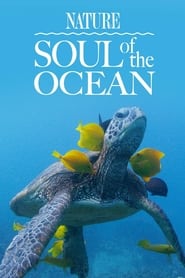
Soul of the Ocean
Download English Subtitle
Release info
Tags
English subtitle preview
The first 170 lines.
In these waters lies a complex world...
a natural realm built on relationships.
It's an ancient system of give-and-take...
where communities of life cooperate.
The diversity of creatures here is dazzling.
And everyone must play their part
to maintain the delicate balance.
Take a deep breath and discover...
the Soul of the Ocean.
Hold your breath.
Listen.
Watch.
Understand.
The more you look...
the more it changes your perspective.
Animals and places reach out to you.
They are all part of a global and ancient system
that could explain everything.
Hold your breath...
dive...
into a better world.
Sound travels further underwater,
and whale songs can cross an ocean.
Humpback whales have left Antarctica
and are heading for French Polynesia
in the middle of the Pacific.
The humpbacks come 4,000 miles to this reef
to give birth and sing.
Males escort each family, hoping to mate.
There's constant communication.
A calf nurses, sloppily, 50 gallons of milk a day.
The milk is so rich that it doesn't dissolve in the water,
but forms white droplets.
The humpback bulls sing on their heads.
We don't know why.
The songs are complex,
constantly changing as part of a rich culture.
There are elements of music and language,
but their meaning to each other we don't yet understand.
The song spreads from Polynesia
and echoes across thousands of miles of ocean.
Tides and currents, ripples and upwellings
connect the furthest reaches.
The ocean transports nutrients and animals
in a way impossible on land.
This is a single home, miles deep,
and full of life that can link almost anywhere.
In November, when the calves are strong enough,
the families return south to feed.
Humpback whales connect the ocean,
but the coral reef is where their song starts.
Each reef is a global city,
with waves of traffic and sounds and tastes,
even cultures,
moving back and forth over thousands of miles.
The city is fueled by an extraordinary alliance
between sunlight and coral.
Coral polyps are animals,
and living inside them are plants --
photosynthetic algae.
The algae are powered by sunlight to build sugars,
and the coral polyps gather nutrients and proteins.
This cosmopolitan community is built on relationships,
on creatures working together.
Each species of anemone fish has its own anemone,
a symbiotic friendship that neither can live without.
The stinging arms defend their personal clownfish
from reef predators like moray eels.
If an anemone fish feels really threatened,
it even can hide in the anemone's stomach.
It's also a safe home to a porcelain crab.
And specialist shrimp and baby damselfish
make it their home.
Companionships are everywhere you look.
An urchin and a crab.
Pygmy seahorses hide on gorgonian corals.
They've evolved to match their home.
Different kinds of fan corals
have different kinds of seahorses.
If a fan coral goes, its seahorses die, too.
Each species is like a cell in a body,
working together and part of a vast system
that only can exist because everything is connected.
It's different from land,
with its isolated islands and habitats.
The consequences of this are only beginning to be understood.
Beyond the reef, cooperation
can become even more personal.
Offshore of the Philippines,
a shrimp goby guards a burrow in the coral rubble.
A companion shrimp excavates and does the housework.
Gobies have good eyesight.
They scan for predators.
The shrimp is almost blind
and will only venture to the entranceway
if he, or she, can touch the goby with its antenna.
The physical contact between lifelong friends
is the heart of the relationship.
How they originally find each other to set up home
is a puzzle.
They are never seen living alone.
There are dozens of different species,
and each partnership is specific.
Both shrimp and goby usually have a mate,
and the couples get along well.
They may also take in lodgers. These ones are dartfish.
The shrimp never leaves the burrow, so what does he eat?
Well, the goby's food is... recycled to the shrimp.
Perfect.
At least one shrimp antenna
is always in contact with one goby.
They both react as one.
Relationships are not always so balanced.
Sharing the same reef is a family of convict blennies,
living in a burrow.
The baby blennies mimic venomous striped catfish,
and their disguise is convincing enough
to discourage predators from eating them.
The youngsters feed on plankton above the reef
without any danger.
Meanwhile, the adults hide.
They stay at home and clean and maintain the burrow.
They have never been seen to eat.
Only the youngsters feed,
on life drifting in from maybe thousands of miles away.
How the parents survive has long puzzled scientists.
Researchers studying them now believe
that the seemingly perfect parents
actually eat a few of their babies each night.
Cooperation raises some difficult questions.
In nature, there is dark, as well as light...
and all shades in between.
In communities full of competing interests,
hunger, and betrayal,
why would a shrimp go near a dangerous moray eel?
It's a cleaner shrimp.
The moray holds its breath.
Cleaner shrimps dedicate their lives to others,
and an extraordinary trust has built up
between them and the moray eels.
Everywhere you look, animals are not eating each other,
but cleaning each other.
Fish travel to a particular cleaning station
and often change color as a signal
that they're hoping to be cleaned.
They come far more often than they need to.
There's something about it that they like
and keeps them coming back.
Specialist cleaning stations
are on every reef across the Pacific.
Around Hawaii, green turtles come regularly,
often from hundreds of miles away.
Surgeonfish remove a green fuzz of algae.
The fuzz slows a turtle down, so a clean shell is important.
This turtle cleaning station is a very specific outcrop.
50 feet from here, surgeonfish have other jobs
and ignore the turtles.
There are service centers like this all over.
It's a global network.
3,000 miles to the east, off Mexico,
Clarion angelfish wait for a different customer.
A manta ray may have traveled thousands of miles
between appointments.
Injuries are tended to...
and tiny parasites or algae removed.
The angelfish gets a meal,
but that can't quite explain the relationship completely.
There's a much older alchemy, an ancient biochemistry
that creates a physiological buzz
out of doing things together.
Soul of the Ocean subtitles in other languages
Comments
No comments yet. Be the first to leave one.