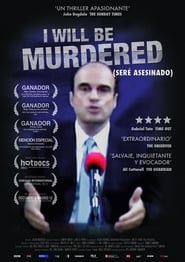
I Will Be Murdered
Download English Subtitle
Release info
Tags
English subtitle preview
The first 179 lines.
- I think that my father was somebody who was willing
to go an extra mile for anybody who was in need.
I think my father turned impossible situations
into possible situations for many people who came
looking for his aid.
And something like the video for me
is something that would go completely in character with him.
And the fact that he would put his life on the line
for a truth to be known for somebody
that he cared deeply about
is something that I would definitely consider
part of my father's character.
I didn't know about the video,
but I did know he was conducting an investigation which at
the end of the day involved certain parts of the government
or people who worked in government.
So that was as far as I knew.
The funeral was horrible.
It was horrible, it was horrible, horrible.
I think it's something that nobody expected
and since nobody expected it,
it made such a profound effect as well.
There was also the murmur and the what had happened
and why was my father killed?
I mean, nobody expected this to happen.
I got up, I spoke, I thank everybody who was there
and helped us and accompanied us in our grieving process.
That's when Luis Mendizabal, a very good friend of my father
he asked me for permission if he could say something.
And he said, "all of us who are here loved Rodrigo very,
"very much, if you wanna know the truth about what happened
"to Rodrigo, then here is his testimony."
The news spread very quickly about it.
Before I knew it, my phone was ringing off the hook.
"Listen, I just saw the video."
And they were just speechless and that was all that they
managed to say is, "I saw the video."
- The radio station was playing it already when
I was on my way to the newsroom.
The media was all over.
I mean, everybody was listening to the headphones.
I won't ever forget the first lines.
I think nobody can forget the first lines of that video.
"If you are watching this video,
"it's because the president killed me."
- The reaction was "what's going on, what happened?"
And I remember someone say it like, "if he is dead,
"I mean, this is the truth."
- Then in that video Rodrigo had the video uploaded
immediately and the site crashed.
- The result of that video, all the demonstrations,
was pretty shocking.
Demonstrations are not as spontaneous anymore.
It's not common to see the youth
involved in claims of justice.
That's another casualty of war.
We lost the value of life.
But that day, even a 15-years-old kid
is talking about justice.
I thought, something is going to happen.
- That video showed my father in one of his best moments.
The ideas that were conveyed in his message
were so powerful.
The way that he was able to transmit that
we are living a hypocritical lie.
We cannot go about saying that everything is okay
when it is not okay.
There is no excuse, there is no justification why
you are to behave in a way that it is not
consistent with your upmost ideals.
And I think it spoke to the very heart
of the person that he was.
As I was clearing up my father's office,
where you would expect to find the most important things,
the most confidential things ever, I found a file
for each of his kids where he had pictures
from when we were young, report cards from his children.
Full of all the things that I think
that he felt most precious.
He actually had love letters from my great-grandfather
to my great-grandmother.
He told me that for him, true love actually did exist,
and that it was part of any person's goal to find it
and to fight for it and to be happy and to be content
when you find love.
My father was a lawyer and I was born in England
where my father was getting his Masters Degree in law
in Cambridge.
Then after that we went to Boston.
And we came back here to Guatemala and that's where
my father lived ever since.
We shared the same office space.
We worked together, we were just nextdoor to each other.
So I had the chance to spend time with him, so much,
probably more than almost anybody else.
He wanted to have a role as a lawyer where as he can...
He was able to make a contribution in something good.
That's why he always stayed away from courts and
political intervention and intervention with government
and dealings with government because it's frequently
very corrupt.
My father prided himself on being a person
who was never corrupt, who was incorruptible.
I think that the fact that him living through the war made
him be very aware about how polarized our society really is.
Because after 36 years of internal conflict,
it's not just the time, it's a complete mindset.
Entire generations were born with a culture of conflict.
I believe that my father did feel the need to
promote a change in that sense.
To be honest, I really didn't even know
who Carlos Castresana was.
On Tuesday I just walked into the office and my father's
partner told me, "listen, CICIG wants to talk to you."
- We went over to CICIG headquarters on Tuesday,
and we started saying everything we know about.
"Listen, my father was doing this,
"he was investigating that."
He needed to check my father's files and my father's
personal archives and he said he needed access
to his personal folders and computers.
After a while, Carlos Castresana said,
"You can rest assured that if we need to
"impeach the president, we will impeach him,
"and we will prosecute him if he is indeed responsible for,
"for what has happened."
Immediately after we had this meeting, we went over to my
father's office and we delivered his two personal laptops.
His office computer and his laptop.
CICIG got full access.
- My father was very respected for being a very
impeccable businessman.
And my sister, she dedicated herself to work,
and her daughters and very sociable, you know?
She was like an angel wherever she was.
They left around 15 to one.
I left two minutes later.
Like three blocks from here, I saw my sister car had crashed
in a post, but I thought, it cannot be my sister.
And I parked and I called her.
When the phone rang and rang and nobody answered,
then I knew.
My father was attacked from the right side,
and one of the bullets shot my sister.
They both died immediately.
- At first glance and when it first happened,
nobody really understood what was going on.
And when I heard about the story
and when I read about the story in the paper and you see,
it was something like 15 shots were fired
into Khalil Musa's body.
And she was just, well apparently, collateral damage
to the incident.
- Rodrigo was very shocked with the killings
of my father and my sister.
So the day that my sister was buried,
he called me that afternoon, and he said,
"I need to talk to you," and I went to his apartment.
And he said, "I want you to know that I will be doing
"the investigation."
I was afraid that something would happen to him,
so I said, "please, Rodrigo, just don't go ahead with this
"because we suffered enough,"
but he said, "no, I will go on."
- Ever since Khalil and Marjorie Musa's death,
he started on a path where he was decided
he was not going to simply accept
what we are used to accepting in our society
when something terrible happens.
And he was determined to take this to the last consequences.
He went to Luis Mendizabal.
I recall my father speaking of Luis Mendizabal as this
person who had a lot of information about what was going on
in Guatemala, in government.
Somebody my dad trusted implicitly.
- This used to be my father's apartment.
About a year later after he died, I moved in.
For me the presence of my dad was always the,
the fact that he always came back from work
Comments
No comments yet. Be the first to leave one.