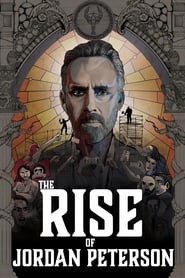
The Rise of Jordan Peterson
Download English Subtitle
Release info
Tags
English subtitle preview
The first 200 lines.
- Jordan Peterson. - Jordan Peterson.
- Jordan Peterson. -Jordan B. Peterson.
-Jordan Peterson. - Welcome back, Mr. Peterson.
The Canadian psychology professor is somebody
people love or love to hate.
Despite what you think about him,
there is no denying the professor's impact.
He's undeniably one of the greatest
intellectual phenomenons on the planet right now.
People were coming up to me and saying, "This book
-saved my life." - He's the ultimate father figure.
I've spent so much time in the dark. It's not easy to find,
not so much heroes, but people that can be so helpful.
-Shame, shame, shame. - So, you're anti-justice.
Are you a Batman villain? I watched the professor against political correctness video
and I was just so disappointed, I guess.
His thoughts aren't quick.
They're long and drawn out and they're a story,
everything he says is a story, so you have to be there for the whole story
to find out what is there at the end.
"A man does not live by bread alone."
Right, and the spiritual bread that's the story.
If you're going to have millions of people who are listening to everything you say,
I think that you have take some responsibility to help them understand what you mean.
So, this is what I actually look like
and then this is what people who don't like me think I look like.
- -
- Which one is real? - Yeah, that's a good question.
Well, I would say they're both real.
Peterson! Peterson! Peterson!
Yeah, and he sang at my mom's funeral.
That's when he started to play the piano
as opposed to playing the guitar.
And he did it and sent it before he left.
- Answer. - One to five?
Yes. Strongly agree is five,
-strongly disagree is one. Okay. - Okay.
- Seldom feel blue? -That's the kind of question I don't know how to answer--
Just guess. Guess and then mom and I will tell you if you're off...
-Five is strongly agree? -Yeah.
-Four. -Avoid philosophical discussions?
- -One.
Change my mood a lot?
-He is Gemini. -I don't know. That's another one that's tough for me.
-What would you say? -I'd say one, but that's wrong.
He changes his mood often. I'd say yes.
-Yeah, probably four. -You know, he can be...
-Not a five? ...deeply immersed on the telephone, then he can say,
-"Where's my wallet?" And-- -Okay, okay. Five.
And then get out on the street and complain about the car and--
Keep my emotions under control?
- Three. -Okay.
-No way. Come on, really? -Is that what you think?
You have no idea how irritated I actually am.
-That isn't-- that's not the question. -One, apparently.
Weren't you yelling at a computer?
-Yeah. -Rarely feel depressed?
When I'm not depressed, I don't feel depressed at all,
but when I'm depressed, I feel depressed. That's another one I don't know how to answer.
- Love a good fight? - You mean an argument?
Yeah, a conflict.
- -You love them more than me.
They agitate the hell out of me, but I won't back away
from one. Three.
Hard to get to know?
-Three. -You went on TV talking about depression.
- What was the question? -Well, that's different.
Not really. Hard to get to know.
- Show business. - Hard to get to know.
-Know how to captivate people? -Five.
-Get deeply immersed in music? -Five.
-Think quickly? -Five.
Not easily annoyed?
- One. Thanks, Mom. -
Seek conflict?
Seek it.
When you're speaking about existential personality theory,
it's important to place the individual in a broader context.
Jung famously claimed that people didn't have ideas,
that ideas had people.
Politics was really something that had always been at the base
of what he was worried about.
Why do people fight wars
and why are people willing to sacrifice themselves?
I've been studying authoritarianism for a very long time.
It's been my life's work to inoculate people against ideological possession.
It's the lesson that I try to teach people in my Maps of Meaning course.
And then I've been keeping an eye on what's been going on with political correctness
since, well since the 1990s when I was down in--
I taught at Harvard for seven years.
And there was a big resurgence of political correctness
in the 1990s, but it sort of died off.
But then something changed about five or six years ago.
I noticed it, in the speech codes, and the sexual harassment codes,
and the idea of rape culture. My graduate student's comments that they're nervous
about teaching anything that has to do with gender or biology of gender
because they're afraid of the potential kickback from students
or afraid of speaking out in public about their research
on political psychology and personality.
It's just an endless array of details
indicating that the requirement to speak
in the politically correct manner
is becoming overwhelming.
It just so happened that it was the trans pronoun issue
that brought in this restrictive legislation
that had forced speech content,
which I think is very bad idea in principle,
very, very dangerous idea.
And I've entitled this talk,
"Professor Against Political Correctness."
There are continually things happening in the universities
and in the broader political world that make me very nervous.
It's becoming increasingly difficult for professors
and students to even say what they think.
And I think that some of the things that I say in my lectures
now might be sufficient for me to be brought before
the Ontario Human Rights Commission under their amended hate speech laws.
And that scares me as well.
And it scares me that I think that because it sounds paranoid
and there is a first reading of legislation
in the Federal House in Canada about a bill called C-16.
I'm very proud that on May the 17th
we introduced bill C-16,
an act to amend the Canadian Human Rights Act
and the criminal code.
The bill addresses a fundamental issue
of equality and human rights,
the discrimination and hate crimes experienced
by trans and gender diverse Canadians.
Definition of discrimination and harassment.
Now, these are truly terrifying.
Discrimination happens when a person experiences
negative treatment or impact intentional or not.
Intent matters, this is a painful thing that human beings have learned.
It's at the base of our modern legal systems.
If I accidentally run into you,
that's way different than if I run into you on purpose.
And so, this policy is designed to reverse that.
So, this is the scenario I've been running through my head.
I can envision a student or a colleague
insisting that I call them using gender neutral pronouns.
I'm not doing that. I'm not doing that.
I don't recognize another person's right to determine
what pronouns I use to address them. I won't do it.
Now, my decision might be illegal and maybe it's even a decision of hate,
but I'm not doing it.
But I'm not doing it.
I watched the video and then was in danger
of vomiting all over my keyboard.
I started tweeting about it and I made a number of comments
basically calling out Peterson for being transphobic.
But I just sort of felt that I could speak perhaps to having
a little bit of lived experience as a non-binary and a trans person on campus.
I wanted to try to stick up for students
who felt under fire from Peterson's remarks.
I wrote to someone in the administration and asking,
"Gosh, what are we going to do about this?"
And it, sort of, snowballed from there.
Why are you against the use of alternate pronouns?
I'm against the use of-- of legislation to determine
what words are that myself and other people are required to utter.
Bill C-16 is actually not about cisgender people.
It's about protections for transgender people.
Peterson frames this as a free speech issue
just because you can't speak exactly what you want to say it,
when you want to say it, where you want to say it,
doesn't mean you get to throw a big tantrum.
You've accused him of abusing students
by not using the pronouns they want to be addressed by.
That's how I see it, absolutely.
That is tantamount to abuse in your view?
Absolutely. Many global documents, many organiza--
How about violence? Is it tantamount to violence?
-Yes, absolutely. -How about hate speech?
-Is it tantamount hate speech? -Yes. It's hate speech--
Fine, that's--
One of the things that I studied, for example,
with regards to the way events went during the Holocaust is that
we went this far. It was like, "Okay, no problem."
But then we went this far. That was okay, no problem.
It's like, "Oh, it's okay. It's okay. We can do that.
We can go that one step further." It's like--
The funny thing too is, is if you draw a line in the sand,
which is what I did, all hell breaks loose because,
"Well, why did you draw it there? That's arbitrary."
It's like, "Yeah, there's an element of arbitrariness to it."
That's why people won't draw the line, they don't want
to take the heat for the arbitrary element,
the arbitrary nature of the act because
whatever people happen to be directly affected by that arbitrary line,
they come out and say, "Well, you're a horrible person."
"Yeah. Oh, well. No, but I get your point."
There's a demonstration plan for tomorrow.
They call it a rally and teach-in,
so I'm going to have to make this very straightforward and simple.
I don't disbelieve in the existence of non-binary people.
Okay? Do you want me to say that again?
Obviously, people who don't fit into
standard binary categories of sexual identity,
however you decide to construe that
The Rise of Jordan Peterson subtitles in other languages
Comments
No comments yet. Be the first to leave one.