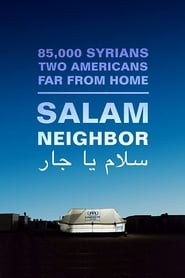
Salam Neighbor
Download English Subtitle
Release info
Tags
English subtitle preview
The first 200 lines.
Good evening. These uprisings,
The citizen revolutions we've been covering
From the middle east over to north africa,
Have been popping up like thunderstorms.
a situation is unfolding in libya.
Witnesses are hearing gunfire and blasts
From rocket-propelled grenades.
you have these moments
When an old world dies
And a new one is not yet born.
And this is a very dangerous
And perilous moment.
the whole region
Seems to be on fire right now.
Now it's syria.
Syria exploded.
thousands of syrians have lost their lives
In the conflict between forces
Loyal to president bashar al-assad
And fighters opposed to his rule.
the insurgency has taken a turn
Towards a much more significant islamic radicalization.
-Isis... -Isis... -Isis militants...
syria's newest conflict--
It's war within a war.
for three years, we've been watching the bloodshed in syria.
The same images of war and violence
Seem to spread across every channel
And every headline.
The result is fear.
Fear of terrorism, fear of islam,
Fear of the middle east.
Drowned out was the coverage
Of the 3 million syrians
Who have been forced to flee their country,
Creating the largest refugee crisis since world war ii.
As filmmakers, we immerse ourselves in humanitarian issues,
Living the reality we are attempting to understand.
And in 2010, we created a nonprofit
To help bring these stories to life.
We hope to do this with the syrian refugee crisis,
To take the time to hear from refugees firsthand.
When the world is turning away
And they've lost everything,
What does their future look like?
It took over a year to make it possible,
But with jordan's approval,
The un agreed to register us
And give us a tent inside a refugee camp in jordan.
It was the first time that has ever been done.
of all districts, where to put you?
We don't want to put you in a congested area,
'cause that would just be crazy, so we're staying here.
The project that you're doing
I don't think has been done before
In a refugee camp anywhere in the world.
for want of a better term, as a sociological experiment
Or as a piece of research,
In terms of how refugee camps operate and run,
I think it'll be very useful...
In a way that will help unhcr and other agencies
Understand the dynamics
And the life and the beat of a camp.
Your interactions with people
May not always be positive and good.
Just be sensible.
we were traveling to jordan,
A country that has taken in
An estimated 1.4 million syrians
In just four years--
The equivalent of the us providing refuge
For half the population of mexico.
And jordan is a small country,
About the size of indiana.
On its northern border
Is the second largest refugee camp in the world.
Just seven miles from syria,
It's providing shelter to 85,000 refugees.
Am binsawir.
Do you have any kind of id, identification?
These are the documents.
we were going to be living in za'atari
For the next month.
Aside from paying for what we received,
We were registered in the same way
And given the same supplies as refugees.
It would be up to us to figure out
How to navigate life here.
I'm gonna get so lost around this camp.
- is this home? -Yes.
We don't want to anger anyone on our first day. Is there a problem?
right off the bat, we had some anger and confusion
About zach and me filming women
And what we were doing next to the kitchen
Where the women hang out.
But once we promised we wouldn't film anyone without permission,
Things quickly calmed down.
Right away, people came to help us set up our tent.
We couldn't tell if they were refugees or aid workers,
But it turned out they lived in the tents and trailers
Right next door.
Ah.
-It's like-- -so, like this?
Here, you hold the shovel.
Okay, watch me.
You want to try?
Yeah.
Yes, very good. Very good.
I think they're making fun of my hammering skills,
But you know.
Okay.
-Oh, it needs a cylinder. -Yeah, yeah.
He has a solution for you.
He could us something like--
They call it a melon. It looks like a melon.
He's our neighbor.
Yeah, he said that we are neighbors, and we should--
He will give us-- he will give us--
Oh, look at this.
Good thing we all forgot toothpaste.
So that's helpful.
he's teaching you how to use them.
I know how to use that, raouf.
Oh, this is...
oh, uh, mice can open this
And they start eating.
Let's put this back inside.
Let's see what we know.
this is za'atari camp.
It's about 2 1/2 miles by 1 1/2 miles,
And it's broken into 12 districts here.
And then our tent is here in district 5.
These camps like za'atar exist all over the world
In 40 different countries.
Wherever the camps are, they have to follow the laws
Of that host country,
Even though many are set up and managed
By the united nations.
In za'atari, the un works
With over 33 nonprofits to run the camp.
It's a massive operation to provide tents and trailers,
Trucks of clean water, daily food distributions,
Hospitals and community centers,
And even school up to the 12th grade.
Za'atari is patrolled by the jordanian police,
And they have the final say on security in the camp.
Why are they telling us it's too dangerous now?
That was just security...
That stopped by our tent.
And...
They're saying it's too dangerous
For us to stay overnight.
So...
Um, the one person we can talk to
Is the local district leader.
Just gotta pack our stuff up
And go to his tent.
Is there any way you can ask security
To let us stay overnight in the camp?
Do you have any idea why they would've changed their minds?
after all of our planning,
Security changed their mind,
And we couldn't stay overnight in the camp.
Good-bye, district 5.
It was for our own safety.
We had to head to the town of mafraq,
About seven miles from za'atari.
It was disappointing, but it actually showed us
A completely different side of the refugee crisis in jordan.
80% of refugees here live outside of camps,
In urban cities,
Relying on jordanian generosity.
But in a country with high unemployment and limited resources,
How long can people continue to welcome in new refugees?
We had a hard time finding anywhere to stay.
The city was so crowded with syrians,
Rent prices had tripled
Since the war began three years ago.
Luckily, ibraheem found us a storage room
In the back of an office building
Where we could spend our nights for the next month.
-Thank you. -We're making some tea for you.
it wasn't long
Before people started coming into our tent
To ask us questions
Or just say hi.
Right away, we were a new source of amusement
For raouf and his friends.
Oh! Yeah!
It really started to feel like a routine.
Every day we'd leave from mafraq late a night...
And then be back in the camp again
By 6 a.M.
one of the first people we became close with
Was this guy named ismail, and it was--
It was wild, because ismail looked just like my dad in college.
And even acted like him.
They both love to cook.
What?
You're a master.
Salam Neighbor subtitles in other languages
Comments
No comments yet. Be the first to leave one.