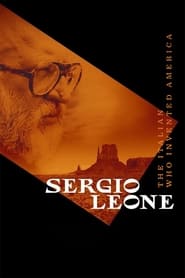
Sergio Leone: The Italian Who Invented America
Sergio Leone - L'italiano che inventò l'America
Download English Subtitle
Release info
Tags
English subtitle preview
The first 200 lines.
Clapperboard, please.
Serata America, interview with Leone.
One, first.
One moment. Good.
Cinema for me is above all a big show
where events of the masked life are proposed.
It is a vehicle for recounting one’s own experiences
historical, or psychological experiences
always through the fable and the myth
through the show.
I was born in cinema.
I live on cinema, I read cinema, I see cinema.
For me, cinema is life and vice versa.
How can one forget the world of childhood?
All my films are permeated with these feelings
from "A fistful of dollars" to "Once upon a time in the west".
After all, in my films, the world is judged by children.
Do you see those little pillars up there?
They didn't used to be there.
Instead of columns, there were us
10- to 12-year-old boys with big paddles
coming down like Taboga at 50 to 60 kilometers per hour.
A blue avalanche finding down then unwelcome guests.
The neighborhood was swarming with Germans.
This is '42/'45. My first western.
I can say that I was born almost on a movie set
because my mother was a young actress with Galli.
When I was a child
my father was making his last film
after many years of absence due to fascism.
He was an anti-fascist
and therefore was politically persecuted.
He was the favorite director of Francesca Bertini
who was the star of Italian cinema
and for a few years the star of world cinema.
He direct Bice Waleran who would later become his wife
also a great silent film diva.
When Italian cinema began to go into crisis
Vincenzo Leone or Roberto Roberti directed
some of the most spectacular Italian films of the 1920s
such as "Fra' Diavolo".
Vincenzo Leone wanted to make a popular cinema
accessible to everyone and ennobled by that.
I have the impression
that Sergio walked on the same path of his father.
The only time I saw Sergio on the brink of speaking
in tears
was when he was talking about his father.
A film festival of old Italian films was taking place.
One of his father's movie was playing in another room.
He left the room, he went to see his father's film
and didn't want to talk afterwards.
He left in tears.
I was born with my father's frustration
of not doing what he wanted to do
however, living on cinema from morning to night
talking about movies, he would vent to me.
So, when I turned 14, at first
I had a total aversion to this environment, this craft.
When my father decided to retire
to the hometown of Torrella dei Lombardi in Irpinia
I strangely felt a great urge to continue what he was doing.
It came upon me almost as an obligation.
THE COLOSSUS OF RHODES
He understood that his way was the epic film
the movies about the absolute hero protagonist.
I want to debunk a concept.
"The Colossus of Rhodes" is an ironic film.
The character is a playboy.
- What is this perfume? - Roses, my grandson.
Rhodes is also the island of roses.
And of beautiful women, I see.
From the set photos we have
we can see he's already the master of the set.
I really dictated the epic comedy genre.
Clint Eastwood was a swimming instructor.
Then, for many years he had been the second actor
in a western series called "Rawhide".
When they sent him to me
to see one of these subjects, "The Black Sheep"
he did not speak, he did not say a word.
I wrote the script in 15 days.
It all started with my viewing of "Yojimbo".
The thing that intrigued me most about 'Yojimbo' was the fact
that it had been taken from an American novel
a mystery series.
Kurosawa had transported the idea to his samurai.
I wanted to bring this idea back.
The thing that struck me about this boy was his indolence.
He was a real cat-man, born lazy.
He seemed to sleep as he walked.
But then, when it was time
he gained a curious speed and dynamics.
This gave me a very specific cliché
a charm to the character.
The work he is able to do on Eastwood is wonderful.
If Eastwood had been remained the one of American cinema
he might never have become Clint.
He took away that divine aspect
that made him utterly improbable.
Greetings, my friend.
He made him a God among men.
He managed to bring and transfer the Roman indolence
inside Clint Eastwood's body, in the attitudes, the mannerisms
that being sly
and at the same time awake, cunning, smart.
- Ciak, first. - Montaldo. - Here I am.
I was in the Papi-Colombo film
because I had to make my first film with them.
My debut was in the room
where the two producers had their studio.
I heard noises.
Noises and voices. At one point, I hear making…
And then, here they come.
It was Sergio Leone
telling the producers about the movie with the shooting.
The beauty and charm with which he told things were impressive.
A FISTFUL OF DOLLARS
The idea was
Harlequin serves the two masters.
He puts himself in the middle
and sells himself to one and the other
without the two knowing it
and turning them against each other.
In Ford's films, when an actor opens the window
it is always to look at the immense future ahead.
In mine, when they open the window
they only have the terror and the fear
of getting shot between the eyes.
The movie was released in Florence.
On Friday gained 600,000 liras, 800 on Saturday
a million and three on Sunday.
On Monday, it was expected 100,000 liras.
It made a million and a half. The myth had arrived in Rome.
For me, the west is mostly fairy tales and fantasy.
There are historical characters,
but they are also linked to myth, legend, fairy tale.
THE BAD
THE UGLY
My latest film "The Good the Bad, and the Ugly"
is an epic picaresque western
because it's the story
of 3 magnificent and sympathetic rogues
set in the context of the Civil War.
He used to take us with him.
He had a passion for us.
There was a feeling
that family was above everything else.
I have just some childhood memories.
I remember these deserted, dusty lands
where there were no children, only adults.
We had to be quiet because he was shooting.
For a child, it was a very boring thing.
I have beautiful memories.
For a child, being brought on a set is a fantastic game.
The greatest joy was being dressed
to play extras in the film.
He had a strong bond with the family.
Having spent many months at home before shooting "Un sacco bello"
I saw the relationship between him, his wife and his children.
He was in love
with his two daughters, Andrea and his wife Carla.
It was a lovely family.
People in Dad’s crew often came over our house
they were friends.
There wasn't a shocking impact of being in a strange place
it was a familiar place.
For me, it was a great game, a nice journey.
It was a way to get together on vacation.
It was a different vacation from those of my friends
who had a quieter and normal life.
In Libération, about 30 years ago,
there was a questionnaire.
It was asked to 200 directors, or something like that.
The question was: "Why do you shoot?"
One answer that stood out for me was that of David Lynch
who replied, "To create universes and see if it works."
"For me, Sergio Leone creates a universe and it works".
We are here working on the research of two motifs
for my last film called "Duck, You Sucker!"
Dad had landmarks from which he would never deviate.
You could tell him the coolest singer in the world was there
he would say, "He can do a song, but Ennio does the soundtrack".
There was no discussion.
I remember, when I made my first film
"For a Fistful of Dollars"
I didn't want Ennio Morricone, because I didn't know him
I was used to working with another musician.
We met two days later
because the producers wanted us to meet.
And at that moment, we recognized each other.
Now I think we have to work, my dear friend Ennio.
Let's go in.
They were in complete harmony.
Dad and Ennio were working
on the score of ''Duck, You Sucker!".
Ennio plays something and Dad says
"Yes, but make it a bit sweeter here".
Make it a bit sweeter, it's about kids.
There was an all-around collaboration
Sergio Leone: The Italian Who Invented America subtitles in other languages
Comments
No comments yet. Be the first to leave one.