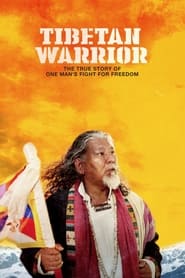
Tibetan Warrior
Download English Subtitle
English subtitle preview
The first 188 lines.
[serene instrumental music playing]
Tibetans are showing an example to the rest of the world,
that a difficult struggle can be carried out,
in accordance with non-violent principles.
We Tibetans, have been trying to get freedom for the last 50 years.
And because it is so bad in Tibet, in the last one year,
more than 35 young Tibetans, they have set their bodies on fire.
Free Tibet!
Free Tibet!
Free Tibet!
Free Tibet!
Free Tibet!
Free Tibet!
Austria, thanks for welcoming us...
[soft instrumental music playing]
Sometimes I think that I am a perfect specimen for a Tibetan.
Because I am born in exile, grew up 25 years in India.
And now I am 50, so 25 years I am living in Switzerland, in the west.
So I am combining them together, my experiences in both cultures.
He hit the goal post! Then kicked again. And goal!
Did you see that? Onto the crossbar, then into the goal.
Let's offer the meal prayer.
I take refuge in Guru, I take refuge in Buddha,
I take refuge in Dharma...
My kids, they live with the mother,
but they come to my place two to three times in the week.
And I cook for them.
They say to me, "Pala, your momo is the best momo."
In Tibet, China is...
Dad, I know.
I know, but I want to remind you.
I won't be seeing you for the next two months.
So, I have to tell you why I'm making this march.
It's something I must do.
Many Tibetans in Tibet are going through immense suffering in prison.
While here we are free and happy.
I ask myself, how can we be so indifferent
when Tibetans inside Tibet are going through so much?
So it's good for you to know what your Dad is doing.
Give me a big hug.
We'll soon see each other again. Take care.
Wait a minute...
Dad, give me two francs.
Wait, I will give you more.
Take care of this chain.
Here you are, 20 francs.
Thank you.
Buy some sweets.
Give me a kiss. Be good, okay?
Nyima, give me a kiss! Okay? Thank you.
Twenty-five years ago, when I first came to Switzerland,
I was thinking, what can I do for my country?
And then I realized, that the best thing that I have,
is that I can sing.
I had to decide, If I sing, I cannot work.
And if I work, I cannot sing.
And then I made a pledge to myself that,
even if I have just bread to eat and water to drink, I will just sing.
And so basically I try to make my living with singing,
and at the same time, I am trying to dedicate my life
for the cause of Tibet.
But now, now I cannot go on living as a musician or as a father,
with all these pictures of self-immolations deep in my heart.
Dear friends, I have decided to do this walk from Bern to Geneva.
Bern being the heart of the Swiss politics,
and Geneva being the head office of the United Nations for human rights.
I have this coffin, and this coffin symbolizes
the slow dying of my country.
In the last one year, 35 Tibetans, they have set fire on their bodies.
Actually, I feel today that I am just a messenger of these 35 brave Tibetans.
They are craving for freedom,
and they want His Holiness, The Dalai Lama,
to come back to Tibet and sit on his throne and in Potala Palace.
- I go to Geneva. - Walking?
Yeah, walk.
The situation in Tibet is very, very bad.
Yes, yes.
So that's why on the way, I meet people like you,
and then I go to Geneva. And then in Geneva,
in front of the United Nations, I bring this coffin.
And then, very good musicians, from all over the world
they come and sing for Tibet.
Say, Free Tibet!
Free Tibet, man.
Yes, yes.
At that time, when my mother was dying,
I wanted to go to India but I was refused visa.
So now after seven years I got a visa,
and I am back to the place where I grew up.
This is home number two, and here I grew up.
And I think I lived in this place almost for 15 years.
All my childhood life I lived here.
My parents are still here, although I believe
that they are reincarnated.
But I feel the spirit, you know, the kindness
in each of these trees and flowers here.
My mother and my father were foster parents.
Because most of the children I lived with together,
during those days, they were all orphans.
We were like 30 to 40 children.
And my mother and my father looked to everyone equally.
Even though if I was their child, they really treated us all equal.
Unfortunately, my father and mother, their wish was to die in Tibet.
In their own country, where they were born.
But they died here.
Was it difficult, when my mother died?
Not at all.
Was she able to say her prayers?
Yes, she was.
- And the morning prayers? - Yes.
It was around 2 o' clock in the afternoon.
When she died?
- Do you still have her remains? - I do.
Can I see them?
Are these the last remains of my mother?
- Are these her ashes? - Yes, they are.
And this is the clay sculpture.
The clay sculpture made from my mother's ashes?
Yes.
And the rest of the ashes?
We scattered them in the river.
Which river?
The Ganges.
Are you taking that back to Switzerland?
The little clay sculpture I will take back to Switzerland.
The rest I will scatter in the river.
In the Ganges?
Maybe the Ganges. Or another river.
Perhaps another river nearby.
The Ganges may be a very holy river, but these days it's very dirty.
Everyone knows that.
So it would be better to take them to the mountains instead.
Hello.
Hello, auntie.
Who are you? I don't know you.
You don't know me?
I don't think so.
My mother was Sodon, your sister.
You are my aunt.
Oh, so I am your aunt.
Yes, yes.
- Now do you know who I am? - Yes, I do.
I am your nephew, Lobsang Tenzin.
It's a pleasure to meet you.
Thank you very much.
Please have a seat.
You cannot know me, because we never met before.
Didn't you call me once in Lhasa?
Yes, I did.
Yes, when I was in Lhasa, you called.
You were in Tibet at that time?
- Yes. - But we didn't talk much.
Then I told you who I was, and you said,
"Aunt, we will meet one day."
Please have a seat.
Here, have some biscuits.
You look very well.
Doesn't she resemble my mother?
Everyone in Tibet was facing problems.
Were you humiliated by the Chinese?
Thanks to people who worked for us,
I was not beaten at that time.
But they forced me
to kneel in front of 4000 people,
me, along with my mother and another lady.
We were all made to kneel down.
Many of our elders were killed.
Really!
Yes, the Tibetans suffered so much.
How were they killed? Were they shot?
No, they were beaten to death.
All the aristocrats were arrested.
We witnessed hell with our own yes.
Was your husband killed by the Chinese?
Yes, he was beaten to death when he was 40.
Many people, especially those people in the West,
have an illusion that Tibet used to be a holy land,
is a pure land, for everybody has freedom of speech.
What kind of a institution is there?
Actually it is not a pure land or this kind of very holy land.
It has not existing at that time.
Because this is a society, a social system event hough this is old.
But there is a social system, this is he feudal serfdom system.
For centuries, Tibetan serfs
were tied to their owners land and enslaved.
Day in and day out, they endured terrible conditions
and extremely heavy toil.
The seemingly endless dark days came to an end, 51 years ago,
Tibetan Warrior subtitles in other languages
Comments
No comments yet. Be the first to leave one.