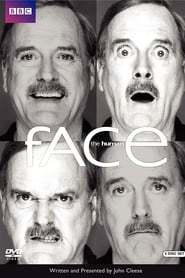
The Human Face
Download English Subtitle
Release info
Tags
Download English Subtitle Files for Mobile (4)
English subtitle preview
The first 200 lines.
Standing around enjoying yourself with friends
There is nothing quite like it
Catching up, joshing each other, having a laugh,
seeing them laugh, just enjoying their company face-to-face
Yet in today's world
all too often we cut ourselves off from other people
We forget the benefits of being with others
I'll be finding out why being face-to-face is so very important
and why making expressions connects us with other people
and how facial expressions can alter the way we feel
Our facial expressions promote facial expressions from other people
When I smile at you, almost immediately,
there is a smile comes back to me
We'll see how transforming your expressions can transform your marriage
and we'll explore the benefits of a good laugh
And now live from the heart of London's West End its
Secrets Of The Face
Good evening Tonight I shall be demonstrating
how to make and read facial expressions
with help from my assistant Janet
Hello. That's a smile
But first a question
Why is it that so few soap operas feature crocodiles?
Hello love
Hello dear
You look fed up
How can you tell? I was just guessing
The problem with crocodiles as dramatic actors
is that they only have one expression
and that's three less than Michael Palin
They are solitary creatures that
don't need to be able to communicate subtly with their fellow crocs
Most humans however are interested in slightly
more than just sex and violence
We like to communicate
In fact, we like it so much
we can create over 7000 different facial expressions
And Janet will now demonstrate a selection of them
Sadness
Contempt
Melancholic resignation with undertones of knowingfulness moderated
by envy and puzzlement mixed with guilty compassion plus a hint of irony
No, that's helpless astonishment
I told them to get Judi Dench
Never mind. Moving on
Now, the reason that the human face can produce so many expressions
is the way that it is constructed
The face consists of 44 muscles and two bones:
the skull and the jaw
But unlike any other part of the body these muscles are not attached to the bone
and so they are able to float freely
giving them the huge mobility that gives us facial expression
Now most of us can make expressions easily and effortlessly
Can I have my face back please?
Certainly
Give you the chance to practise with it
So, it comes as a shock to discover that
some people have great difficulty doing this
Lauren Deveney suffers from Mobius syndrome
The nerves that make her facial muscles move are paralysed
so she can't really make any expressions at all
We found out she had Mobius
about an hour and a half after she was born
There was apparently a very wonderful neonatologist
on the staff at that time
and she came and told us
and it all sounded horrid and awful and she wouldn't do this, she wouldn't do that
The way we explain it to people who just,
on the street or in the grocery store, or people who don't know about Lauren,
she was born with Mobius syndrome which gives her several characteristics:
she does have full facial paralysis,
her eyes do not move left to right,
she doesn't blink as often
and her eyes do not close all the way
It's hard to imagine not being able to move your face
I've tried to imagine it several hundreds of thousands of times and it's just,
nearly impossible to imagine how would your face feel if you couldn't move it
Lauren's parents are really worried about
how she is going to get on with other kids
I'm just afraid that, you know, she may get teased a lot and,
that whole social scene and friends and cliques and all that type of thing
I think that without facial expression they will perceive her
as being retarded, stupid, not paying attention, not interested
It's amazing that you don't realise how much your face does express your feelings
But Sharon and Dan have found a surgeon in Canada
who may be able to put a smile on Lauren's face
I would definitely like her to be able to smile the first day of school
It would be a lot less pressure on her
It would be a lot less pressure on everyone, basically
Lauren and her family
drive to Toronto for her operation
I hear there is an ice skating rink near our hotel
Do you think we should go ice skating before your surgery? Yeah
We'll have to go before your surgery
because you'll be in the hospital room afterwards
All right, round the corner there
So this is our room
You can open your eyes
Dr Ronald Zuker has helped pioneer
an operation that can give facial movement
to people like Lauren
Our facial expressions promote facial expressions from other people
So for example, when I smile at you,
almost immediately, there is a smile that comes back to me
and if you are unable to make a smile
then you are unable to have that interaction
And that interaction is crucial for the development of self-esteem
Now I want you to give me the biggest smile at you can
Big smile. Lots of teeth
Okay, now I want you to squint as hard as you can,
squint your eyes closed as hard as you can
I want you to turn around and face that monkey now
You see that monkey over there?
Now give me another big smile
Look at that monkey
I just want you to look at the monkey and give me a smile. Smile at the monkey
We take a segment of the muscle from the thigh
and we transplant it to the face, supporting the lower lip,
which improves drooling, supporting the corner of the mouth,
which also helps with oral competence,
and putting it into the corner of the mouth and upper lip so that
when it contracts it will lift up the lower lip and help with speech and,
perhaps most importantly,
it will lift up the corner of the mouth and upper lip and simulate a smile
Okay, here she comes. Sit still Here it is, you see, it is warm. Okay?
By the summer she'll have a full smile
and then for the first day of school, it would be September,
and that will be an amazing day, I think, for her to go to school
and have a smile to show how happy she is
Were going to take you in now, okay? Say bye to mummy
I love you. Good girl
Okay. Here we go
It will be six months before Sharon will find out
if Lauren's surgery will make her smile.
It's not going to be a natural smile
It's going to be black or white, you know,
she is either smiling or she has her porcelain face
But I think that even that, as small as it is,
is going to be a very great thing for her
Lauren's inability to make expressions means that
she's unable to send out signals
we'll use to communicate how we're feeling
Facial and body language say more about us the words ever do
but faces are also more ambiguous in a meaning
What is she thinking? Or him?
Now he certainly doesn't look very friendly
She's completely different, obviously thinking happy thoughts
What about this guy?
Look at the way he is doing his hair, he is clearly full of himself.
Oh no, he's a happy man about to make a success of his day
Happy! That man? Oh don't be so silly and pompous
You always make yourself sound so ridiculous
So, suspicion,
apprehension,
what?
Hurt resentment
Yes, very good
So this is our problem isn't it?
Our facial expressions are supposed to communicate our feelings
but communication only takes place if the other person reads our face correctly
And often human beings are not very good at that
That's an excuse, it doesn't matter, you said twice a year
That's what you told me But why would I worry about, I've told you
It's true It isn't.
It is It isn't
Well what is it then?
On the 29th of February she proposed to me
but I had a good idea she would
and I actually had a ring ready for her
and I accepted
We used to make each other laugh all the time
We were always having a laugh and a joke
Recently I haven't, I don't know, I've not been happy at all
And neither has he, eventually, come down to the fact that he wasn't either
And we are just getting nowhere at all
I think the business is a massive strain on us
Yeah, maybe
I try and make sure there's nobody there when he comes home from work
because I know he doesn't like people there
Now... But then if there is...
Now it's better But it wasn't like that before.
Yeah, but there wasn't for a while, and all of a sudden there was, a one-day,
and you flipped. It wasn't one-day, it was three days on the trot.
But that's because they were waiting for a lift home
You know, it is my house as well
You don't have complete control like you think you do
No, that's excuses It isn't
Dr John Gottman, a psychologist at the University of Seattle,
believes that when couples argue
it's not what they say
but what is shown on their faces that really matters
The way it works is almost unconscious,
I mean, a lot of times people don't really realise that,
you know, when they look at their partners brow,
you know, that they see distress their,
you know, and they don't register that's distress in a conscious way
they just realise that, you know,
they feel uncomfortable,
they'd like to leave, you know, or they feel fed up,
or they're tired of this response,
More English subtitles for The Human Face
- DVDRip-HigHoT · 36 downloads · 2009-08-27
Comments
No comments yet. Be the first to leave one.