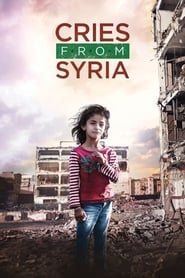
Cries from Syria
Download English Subtitle
Release info
Tags
English subtitle preview
The first 174 lines.
There were 12 of us and the boat was overloaded.
The boat capsized into the sea.
I tried to catch my wife and my children in my arms.
But one by one they drowned.
1963, the Socialist Ba'ath Party's regime is installed in Syria
as a result of a coup.
1971, the Ba'ath's party member and military officer, Hafez Al-Assad,
comes to power in a wake of a military coup, persecuting his opponents.
For thirty years he rules the country with an iron fist,
crushing any sign of dissent.
1982, residents of Hama rise up against Assad's Ba'ath party.
The Syrian Army besieges the city for 27 days,
killing an estimated 40,000 people.
The Hama massacre has been called the single deadliest act by any Arab government
against its own people in the modern Middle East.
In 2000, Hafez al-Assad dies.
Power is handed over to his son, Bashar,
a British- trained ophthalmologist,
largely seen as a reformer, and a hope for change.
In 2010, a series of public protests engulfs the Middle East.
It is called The Arab Spring.
Dictatorial regimes in Tunisia, Libya, and finally, Egypt, fall.
In Syria, people watch these developments with anticipation and hope.
Syria is a very ancient and beautiful country.
It's one of the most ancient countries all over the world.
It's called the cradle of civilization.
The first alphabet came from Syria.
But unfortunately,
we Syrians have been living under dictatorship for 40 years.
When Bashar al-Assad became the president of Syria,
we all thought that he's better than his father, Hafez al-Assad.
But he was even worse, because anyone who'd joke about him, or his father,
or the Assad family, or the whole government,
he will just disappear, or he will die.
No one was able to say anything about Al-Assad's regime.
You would be imprisoned, or killed, or imprisoned for life.
We are scared in this country.
Even in our private lives
we cannot talk about politics.
People wanted to get rid of the regime.
The revolution started in Tunisia.
And most of the youth and the people who were not satisfied with the regime,
or were treated unjustly by the regime
they started to wonder if a revolution will happen in Syria.
But we were so optimistic that the revolution will, sooner or later, start in Syria.
We used to sit next to our school
and watch the demonstrations and what happened in Tunisia.
So my friends and I decided to write
"It's your turn, Doctor." on the school wall.
So we did.
They wrote, "It's your turn, Doctor."
Because the head of the Syrian regime, Bashar al-Assad,
was trained as a doctor in the UK.
The next day, the school found out and reported us.
They told my father, "You have 24 hours to give Samer to us,
or we will take his mother or his sister until he surrenders to us."
So my father handed me in. About 14 cars came.
Then they sent us to the Criminal Security Department.
They tied us up, and hung us on the wall,
and beat us hard.
They kept us in tires.
Investigation, beating, torture.
We were in prison for two months.
After that they set us free.
Slowly, some of the kids were released.
But still, number of them are still missing.
How on earth a regime can torture these kids?
Nails have been taken away from their fingers.
And then people started go on the streets
in massive numbers.
- -
The regime started to beat the children of Daraa.
The people reacted to this, "It's time for revolution in Syria."
United, united, united. The Syrian people are united.
- -
We've never expected that the government could bring death to all of us,
only because we protested and we demanded our simplest rights.
And because of that people started to protest more and more.
The parents of Daraa demand the police to release their kids.
The police simply said that,
"If you want children, make new ones, because they are already dead."
And then they sent their bodies to their parents.
Look what the regime in Syria does.
Because he is demanding freedom.
After 22 days of torture, Hamza was released.
He was swollen and all his body was full of bruises
and stitches, it was horrible.
But the thing that added more fire is the reaction of the regime.
And even Hamza Al-Khateeb, the young innocent boy they killed,
and cut his limbs, and cut off his genitals.
The media said he was trying to rape
the officer's wives in the military residence in Daraa.
This little kid has raped women?
How come? And people simply refused to silenced.
Then more and more bodies of the horribly tortured kids started to be released.
Let us show the whole world the reforms of Bashar Al-Assad.
And they were just slaughtered in the detention center.
They were kids, just 11 and 12 years old.
And why? Only because they wrote a sentence on the wall?
My son, Thamir, who is now among the martyrs of God,
which the criminal gangs of Al-Assad caused in the army headquarters.
Because those who did this, are not human.
The real ugly face of the regime had been revealed.
Children of Daraa were a divine message to the Syrian people
to stand against corruption, injustice, oppression.
It started the revolution there.
All over Syria.
- -
We did not have the courage at first to protest.
But we got angry when the regime
tortured children by pulling their nails.
I participated in the revolution from the very beginning
standing on shoulders, demanding freedom.
Do you like Abdul Baset?
Do you love him?
Then kiss Abdul Baset al-Sarout.
One guy, his name is Abdul Baset al-Sarout.
He was really popular because he was a soccer player in our national team.
Abdul Baset al-Sarout was one of the most famous goalkeepers,
but during the revolution, he became one of the most loved icons.
I contribute to this revolution with the peaceful songs I wrote.
The songs document our stories.
The songs encourage people to protest and fight.
At the first protest there was a lot of youth.
That day I felt powerful.
We wanted to make history and change the future.
Ghiath and his friends used to offer
flowers and water bottles to the security checkpoint.
Some of his friends used to tell him, "What are you doing
offering them a flower and water?
They are raising a weapon in your face,
and you are offering them a water bottle and a flower?"
He was like a young Gandhi.
Imagine that. We used to go to the processions holding roses.
Can you imagine how your heartbeat goes quickly, quickly,
watching your people just calling for change, calling for freedom,
and holding roses in their hands?
Tell me, do you want Bashar?
- No we don't! -Anyone else like him?
No we don't!
His goal was revolution after seeing the children of Daraa.
He used to attach to the water bottle and the flower a paper with a note
"You and I are brothers."
"If I were in your place, I would not kill peaceful protesters."
We are brothers! We are brothers, guys!
The majority, the good Syrian, the patriot, the natural people.
But of course you have the infiltration of the terrorists among them.
And our job as the government is to save their lives
through destroying the terrorists.
The head of the regime started to call us terrorists.
We demonstrated holding roses and bottles of water,
and he called us terrorists.
If self-protection is considered as an act of terrorism,
then we are terrorists.
If seeking freedom and civil rights is terrorism,
then we are terrorists.
That was my first time I saw blood.
Blood from people like me.
Very painful for me.
And that time when I heard a whisper,
that was like...
It's Ahmad!
That whisper, that was the voice of the bullet.
which entered into my face.
This regime, they are supposed to protect us from enemies,
but they are not protecting us. They are shooting us.
I had a huge desire to show the world
what happened in Syria.
At least three people died and six injured in initial reports.
Since that day I've continued working with the press
by sending messages to some channels about what's happening
or creating videos of recent events.
- -
From the beginning of the revolution we had a strong weapon.
Cries from Syria subtitles in other languages
More English subtitles for Cries from Syria
- Cries from Syria 2017 1080p NF WEB-DL DDP5 1 x264-MZABI · 79 downloads · 2020-04-05
Comments
No comments yet. Be the first to leave one.