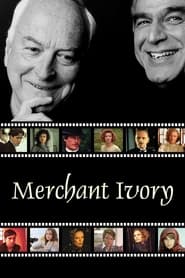
Merchant Ivory
Download English Subtitle
Release info
Tags
English subtitle preview
The first 200 lines.
- The whole lot of them are totally unusual.
It was just like you could have done a, what's the word?
A big dolly shot of Ruth writing in one room,
Ismail shouting in another room, Dick practicing.
They all lived together, they worked together.
It was a really symbiotic relationship,
all those four people.
But then individually they're all utterly unique.
I mean, it all reads like a novel.
That's the thing, is being part of them backstage,
you'd think, "No one would've written this."
And this was reality.
- At the side of the everlasting why, there is a yes.
I first saw a Merchant Ivory,
it was probably "A Room with a View."
- The oddest people, the queerest people,
but we rather liked them, didn't we?
- You know, of course I fell heavily in love
with Julian Sands, and the beauty of that piece,
and the fact that it was just so delicate.
- England has always been disinclined
to accept human nature.
- Both "A Room with a View" and "Maurice"
seemed to be profound works
on how one should live one's life.
Be true to your nature, trust yourself,
as E.M. Forster says, which is, "Only connect."
- We're not odd, really,
we're just over expressive, that's all.
- The more a lady has to say, the better.
- After 25 years, not all films look quite as important
or impressive as "Howard's End" still does.
It really, really works
and I feel hugely privileged to be any part of it.
I'm certain His Lordship
is acting with the highest and noblest motives, sir.
- Don't you see, that's exactly what makes it so abominable.
Of course, in those days
we fancied each other on film sets.
Now everyone's just looking at their phone.
There's no interaction at all.
But in those days, film sets crackled
with subliminal lust.
- I mean, first of all, there's Jim and Ismail.
It was very unlikely that meeting
of minds, and bodies, and love.
There was a love story at first.
- These are two of the most laid back, pleasant,
civilized, literate filmmakers I've ever met,
and their work reflects that.
- The two together are formidable.
One of the most particular things about James
is he's meticulous.
Ismail, to me, represented the finest
of Indian intelligentsia.
Oh, those were the days.
- Have you come to forge a bridge
between east and west?
No.
- I really can't think of any other director and producer
who've made such a variety of films.
I mean, basically they made the films they wanted to make.
- This glamorous couple appeared in our dull Indian lives.
And my father said to my mother,
"Don't have anything to do with them.
"They're crooks and cheats."
And he's still saying that 45 years later.
- For years and years I remember things got so bad,
I wondered how they had the courage to carry on.
But they always did.
- These projects are very special projects
and you have to fight for it, hustle for it, cajole people.
You have to seduce people.
You know, all this is a part of this game.
- You always felt that you were in the presence
of really fascinating pirates
charting their own course, and making their own way,
and making it work somehow.
You could think that it was all bedlam and all that stuff,
but you couldn't stay mad.
- The money, the time, the staffing, and everything.
And the compensations are it's always
gonna be a brilliant script, brilliantly cast,
and probably be something you're wildly proud of.
But time and money both together are fairly tricky.
166, take one.
- You required an immense amount of stamina
to work for Merchant Ivory.
At the end of every movie, everyone says, "Never Again."
Not because they're not wonderful people
who make great movies, but because it's low budget.
It's just tough.
- People worked for very little money.
And Ismail said,
"How can you not want to work for Merchant Ivory?
"Do I not take you to these wonderful places?
"Do I not feed you?"
- He'd cook these incredible meals
and there were lots of sort of raised voices and passion.
Of course there was a dysfunctional element
to a lot of the dynamics,
but it was a very open dysfunction.
- Ismail was particularly keen on this idea
that there was a sense of family about it.
Not in a sort of Norman Rockwell sense,
but family in the sense of a great, big sprawling mass
of people arguing with each other,
but believing in the end we would survive
any argument that we had.
It was extraordinary.
You really didn't want to be around
when you could sense sometimes the friction.
Yes.
Ismail, and Ruth, and Jim, and Dick,
they knew that they produced good shit.
- Ruth Prawer Jhabvala for "Howard's End."
Ah.
- Emma Thompson for "Howard's End."
- Jenny Beavan and John Bright for "A Room with a View."
- And they weren't going to sacrifice that
because of emotions.
- Their personal relationship was very, very volatile.
And when you've got your producer and your director
who are actually a couple.
I wasn't even aware of that. It was so not alluded to.
You could never quite work it out, you know,
the relationship between Dick Robbins, and Ismail, and Jim.
You didn't ask.
You were English. You were too polite.
- And the Oscar goes to-
- James Ivory, "Call Me by Your Name."
Well that's-
- Like personal conflicts.
- Yeah, I don't know whether that was that easily done,
in fact, and whether we...
I think maybe that's something of an overstatement.
Why is love like Rasputin?
Haven't the faintest idea.
Because you can poison it,
and you can stab it,
and you can knock it down in the mud,
but it will always get up again.
Ha.
Don't you think that's good?
Don't you think that's funny?
Love will not die.
It simply will not die.
Just like Rasputin.
- I think we chose certain projects
because they were particularly interesting to us
for all kinds of reasons.
It appeals to you in some kind of way
and you don't really know why perhaps.
And you don't think of it in terms of your own life perhaps,
or that in some sort of deep emotional
or psychological way it's necessary
for you to make such a film.
I mean, I didn't think like that.
And so many of our projects, like adaptations of books,
were just simply the fact that there was a book lying there
and out of curiosity I picked it up
and read it and I liked it.
And then I thought, "Well let's make this into a film.
"This would be a great film." Like as simple as that.
Like "Quartet" was an example of that.
Ruth was reading Jean Rhys' novels one after the other
and she left "Quartet" lying around.
I read it and I thought,
"Well I'd love to make this into a movie."
Ruth was against making it.
She said, "Oh, Jim, it is so low spirited.
"You don't want to make a film out of this book."
And I said, "Yeah, I do."
It was set in Paris in the 1920s.
I've always been interested in Paris in the 1920s.
And we sort of made it less low spirited
by having all those nightclub scenes in it.
- You just want to shut me off and shut me in,
make me into a tame husband.
As if anyone could do that.
- Then later on, after we made it,
I began to see in the film, well there are things going on
in the relationship between the couple
and the whole thing of Marya coming in
and I can identify with all that,
which is to say there have certainly
been convoluted relationships in our lives, so.
- Most audiences associate
Merchant Ivory Productions with their films
from the 1980s and '90s, mostly period pieces,
many British costume dramas.
But before "A Room with a View",
they produced 15 films shot on location
almost entirely in the two homelands
of Merchant and Ivory, India and America.
So it's fitting that they first met
at the Indian Consulate in New York City.
My old neighborhood, this was.
I lived on 62nd but also on East 80th.
I came here in May of 1961.
More English subtitles for Merchant Ivory
- Merchant Ivory 2023 1080p AMZN WEB-DL DDP5 1 H 264 (SDH) · 51 downloads · 2024-11-09
Comments
No comments yet. Be the first to leave one.