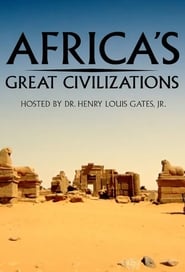
Africa's Great Civilizations
Download English Subtitle
Release info
Tags
English subtitle preview
The first 200 lines.
From the tenth to the 15th century,
north and west Africa underwent a dramatic transformation.
Celebrated cities arose, including Timbuktu...
Marrakesh... And lie Ife.
Great scholars wrote books that filled libraries.
Wealth from trans-Saharan trade
grew on a spectacular scale...
Drawing attention from afar
to the wonders of the African continent.
This is the incredible story
of how farmers, traders, and nomads
from the barren fringes of the Sahara desert
would build some of the most
advanced civilizations in history.
By 1000 A.D.,
Islam, a religion born on the Arabian peninsula,
had become established along the whole north African coast
and deep into the Iberian peninsula.
The western extremity of Islamic civilization,
what's called the Maghreb,
meaning land of the setting sun.
This is where our story begins,
in the city of Marrakesh.
When it was founded in the year 1070,
Marrakesh was a center of politics and law.
But it soon began to attract merchants and craftsmen
from the surrounding regions.
For centuries since,
luxury goods have been traded here.
Spices, gold, and textiles.
In just 50 years, Marrakesh had been transformed
from a collection of mud-brick huts
to a sophisticated Metropolis.
The ancient walled city, the Medina,
is a maze of narrow laneways.
It's easy to get lost.
Seemingly around every corner,
one encounters a fine palace, a great mosque,
or a lush garden.
The origins of much of this splendor
can be traced to the influence
of one charismatic Islamic theologian...
Abdallah ibn Yasin.
Ibn Yasin actually originated from
what's now Southern Morocco.
He was obviously someone who was interested in religious learning
because he made the very difficult journey north
across the high atlas mountains into Spain
to study in Cordoba.
He seems to have had aspirations
to religiously lead a group of tribes,
but then lead them on to greater things
in a political sense as well.
Ibn Yasin was a Berber.
His tribe, the Judala,
was part of the Sanhaja,
a group living in the Sahara desert.
In 1046, ibn Yasin was invited to give the Sanhaja
instruction in the true principles of Islam.
When they rebelled against this harsh interpretation of the law,
he withdrew and founded a movement to convert them.
In 1055, he launched a campaign
to spread his reformist ideas
among the urban centers of Morocco and Ghana.
At that point, the tribes of the Sahara were
fairly superficially islamized,
so, they were Muslim,
but they didn't have a deep knowledge
of the rites and rituals that came with being Muslim...
Nor were they very familiar with Islamic law.
Ibn Yasin's solution
was to go back to basics
and promote a literal and puritanical
form of Islam.
He wanted to bring worshippers back in line
with what he believed was the true Islamic faith.
Ibn Yasin talked about people converting,
but what he actually meant was changing the way
they'd been practicing Islam to the way
he thought it should be practiced.
And he decided that they were effectively deep sinners,
and so, they should give up 1/3
of all their goods to him.
And he was really fond of flogging people.
People left out a word while they were praying,
they got some lashes for that.
If they didn't stand in the right position,
they got lashes for that.
Those joining the movement would be
whipped and scourged for the prayers
they hadn't performed in their past life.
They were in a sense literally being whipped into a frenzy,
and the zeal for the movement was being inculcated in them
through this very intense phase of initiation.
Deep in the desert,
among the Sanhaja Berbers,
his revolutionary message
attracted a fervent following.
His followers were called the Almoravids,
which can be interpreted as
"people of the frontier fortress."
This is one of many movements where
people come along and say, you know, "you're doing it wrong",
and I know the way to do it right."
And it's at that point in the 1050s
that the Almoravids begin to coalesce
as a significant army, as a significant military force,
and began to emerge from their desert territories,
moving northwards, first of all
towards the great caravan city of Sijilmasa.
Sijilmasa was an important trading center
on the edge of the Sahara.
Ibn Yasin demanded that Sijilmasa submit
because of its sins.
When it refused, he attacked.
At the caravan city of Sijilmasa,
the Almoravid army smashed musical instruments
and shut down the wine shops.
Everywhere they conquered,
the Almoravids imposed a fundamentalist regime.
Those who failed to comply risked execution.
Ibn Yasin was motivated
by a number of different factors.
There was obviously the religious factor,
but at the same time, there were commercial and political motives
underpinning his actions.
When they were successful, they believed that meant
that they were religiously right in their approach.
They saw victory as a mark of god's favor.
Taking Sijilmasa brought ibn Yasin and his army
one step closer to a major goal...
control of the trans-Saharan caravan trade,
especially the trade in gold.
To complete that mission, ibn Yasin set off
on the arduous, thousand-mile journey
across one of the largest deserts on the planet...
the Sahara.
The great expanse of the Sahara desert
was an ocean to cross.
It was a barrier that divided Africa
from north to south,
and attempts to navigate it were treacherous.
Long journeys from one oasis to the next oasis
could be quite dangerous, even life-threatening.
The Sahara covers 3 1/2 million formidable square miles.
The Sanhaja lived across the whole of the Sahara,
from Ghana and Takrur on one side
to Sijilmasa on the other.
So, Berbers like them had been
criss-crossing the desert to trade
for more than 1,000 years.
Around the second century,
they adopted a new mode of transportation
which made crossing easier... the camel.
As trans-Saharan trade routes opened up,
demand for west African gold increased dramatically.
The domestication of the camel
would allow traders to conquer the unforgiving heat
and vast distances through seas of sand
with far greater efficiency than ever before.
On the Southern end of the trans-Saharan caravan route
was a resource-rich land called the Sahel,
meaning "shore."
It contained merchant cities that were gateways
to the principal source of gold
for medieval Europe.
One of the largest of these cities
was in modern-day Mauritania... Awdaghust.
Seize it, and the Almoravids
could control the gold trade.
That meant confronting a large sub-Saharan state...
the empire of Ghana.
Ghana emerges as a kind of middleman state
that is going to tap into west Africa mercantile activity
and especially going to control the gold trade
across the desert from sub-Saharan Africa.
Ghana's roots date back
to the very first civilizations
in sub-Saharan west Africa.
Around 1500 B.C., a rich culture arose
in the region of Dhar Tichitt,
in today's Mauritania.
Eventually, this civilization spread south
and founded new settlements along the Niger river,
where it grew into a powerful empire.
Ghana is located right in the middle
between the Senegal river system
and the Niger river system,
and it's in a position strategically
where it can control access to both of those,
at least potentially it can.
Control of the gold trade
generated enormous wealth,
wealth that built empires.
And the kingdom of Ghana was poised to exploit
its perfect location.
Ghana's legendary wealth and strength
would lead the gold coast colony in 1957
to adopt "Ghana" as the name
of its modern-day nation.
More English subtitles for Africa's Great Civilizations
- AfricasGreatCivilizations S01E02 1080p WEBRip AAC2 0-BTN · 60 downloads · 2020-04-20
- Africas Great Civilizations S01E01 1080p WEBRip AAC2 0-BTN · 43 downloads · 2020-04-14
- Africas Great Civilizations Part 5 and 6 HDTV x264-RBB · 13 downloads · 2017-03-06
- Africas Great Civilizations Part 1 Part 2 HDTV x264-W4F · 17 downloads · 2017-03-03
Comments
No comments yet. Be the first to leave one.