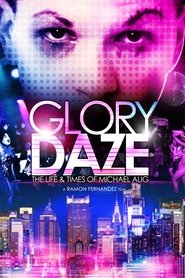
Glory Daze: The Life and Times of Michael Alig
Download English Subtitle
Release info
Tags
English subtitle preview
The first 200 lines.
(electrical buzzing, then a chime)
When Michael woke up that day,
he had no intention of killing anybody.
- You know, it was real biblical,
it was Shakespearian in scope of what happened.
- In the heaven of nightlife, and at the
pinnacle of power in New York City during a certain era,
and then sinking to the greatest depths of hell.
Where is Michael now?
- There was the club kid story.
This is the story of something good
turning into something bad.
There's the innocence lost story.
This horrific crime, the gore element,
the drug element, the decadence.
It's like when you put them all together
into one story, it makes it almost like overload.
- When people speak about New York City
or anywhere in the world, they say
"the city that never sleeps."
At that time, that was true.
It never slept.
- Westside of Manhattan was a cesspool.
Anybody who's in real estate will tell you that waterfront
property can be hugely valuable,
and the fact that it was lying fallow
shows how poorly the city was run.
New York was really run down.
It was 1984.
The subways were an absolute mess,
there was graffiti everywhere,
the city was dirty, and it was kind of lawless and scary.
- It was more like Sodom and Gomorrah back then.
- But it was creative and this was New York when
New York was still scary and you had
very rich and you had very poor.
- Lot more crime, lot more drugs.
- It was still a gritty, gritty place to be.
And it was fabulous.
In the East Village, there was the art
scene that was happening with Jean-Michel Basquiat,
Keith Haring, and there were still long stretches
of alphabet city that were bombed out.
- Most of the buildings on Rivington and Staten,
they were all abandoned.
They were stripped of all the plumbing
and all the wiring by the junkies to sell the copper,
whatever they could get for money for drugs.
- It was a time of rising violence,
rising street gangs.
- It was a city that a lot of people thought was unfixable.
- Drive-by shootings that we never saw
in the history of New York.
- I mean, you'd walk down the street
and you'd have crack vials crushing beneath your feet.
- If you went beyond 8th Avenue, forget it.
It was like a war zone.
There were no lights.
It was insane!
- It still had that seedy element.
Times Square hadn't been Disney-fied.
- Times Square was still kind of raunchy back then.
You didn't really go to Times Square.
- Prostitutes everywhere, wearing outrageous outfits,
or walking around half-naked.
- Tramps or drug dealers and people getting robbed
and stabbed, peepshows everywhere, strip clubs.
- Just neighborhoods today where you
can't even imagine that that would go on.
- So it was a dangerous city, but it was
also an amazingly creative city.
It was a city of subcultures.
It was a city where street culture and fashion and music
were literally bursting through the sidewalks.
We were not enslaved by rent.
We had time to be creative, and do other things
much more important than work.
It was real.
It was the feeling that anything could happen.
It was the feeling that you were living on the edge.
- it was a dangerous time in New York.
It was the height of the AIDS epidemic.
- Painters, poets, and performance artists,
all these people who basically couldn't get arrested
in the legitimate mainstream.
- You would see someone and they'd be fabulous,
and the next month they'd be dead.
It gave an energy and a focus, I think,
to New York that isn't there now.
- Gallery openings and events and fashion shows.
It was just sort of ferment of creativity.
It really was very exciting.
New York was still New York.
- You basically had an open city,
but then again there really weren't many night clubs.
There were underground places where people used to go to.
Nothing large, always hidden.
- You could not find five place in the entire city
that were serving a decent cappuccino.
It didn't happen.
It was only American coffee.
But, on the other hand,
they had maybe 20 or 30 S&M clubs
of the weirdest kind.
- Weird warehouses in the East Village,
or I don't know what they were,
but there were a lot of them.
- I had read Andy Warhol's POPism.
I'd read Edie.
He in a way had created
the first, this idea of a court of superstars.
That weren't Hollywood movie stars, that weren't necessarily
rock stars, they were these alternative people.
- That let me know that there were people like me out there,
people who thought differently,
who dressed differently, who acted differently.
- With his factory and his superstars,
he had created this whole kind
of alternative celebrity culture.
- I certainly remember seeing Andy Warhol in clubs,
because he used to go out a lot.
- At midnight, everyone in the world
who was anyone and wanted to get out,
get photographed, get high or get laid,
was at the back bar of Studio 54.
It was the apex.
It was the center of the world at that time.
- Parties with so many of not just New York celebrities,
but the wealthy of New York, the socialites.
- Halston and Liza Minelli and Baryshnikov,
and Elizabeth Taylor and Truman Capote.
- Salvadore Dali used to come there
with his five drag queens and two madams.
- But you couldn't compete with something like that.
And it had a very short life.
People think it went on forever.
It only lasted 11 months or so.
By the time Rubell and Schrager went to jail,
it was already on the downturn.
Michael came from Indiana,
just a naive, nice kid, charming, nice kid.
- He came from South Bend, Indiana,
which is not a gay-friendly or creatively-friendly place.
Midwestern, um...
- South Bend is the smallest of the
small cities that you can ever imagine.
And it's all Notre Dame and nothing else.
Boring.
It's horrible.
It's everything that people who live in
New York don't want to be part of.
- And for somebody like Alig, gay,
to grow up in South Bend was,
you couldn't be more out of place
than he was in South Bend, Indiana.
- I spent a year there one night.
- I heard that he was being picked on by kids in school.
Where was I?
I was gone, I should have been there
for my brother, but I wasn't.
- I knew why he ran out of that town as quickly as he could.
And he loved the lights and came
to New York and off he went.
- It just seemed to be common knowledge
for people outside of New York.
- If you were gay or different or artistically inclined,
came to New York because that was just the thing to do.
I mean it was either New York or L.A.
- When I got to the city and my first trip down,
I guess it was to St. Mark's place,
I just stumbled upon Patricia Field's store.
- I mean, it's possible I met him
when he first came into my store
- Something was just unreal, unbelievable to me that
actually met Patricia Field that day,
she was my salesperson (laughs).
Down by Cooper all the people selling all
the stuff in the street, it was very carnivalesque
and kind of a little bit dilapidated and decadent.
At that moment I thought whatever college is closest
to this neighborhood is the one
that I'm going to decide to go to.
I got a scholarship to Fordham,
so I went to Fordham.
It was a good thing.
He was going to get an education,
and Michael was a straight-A student all through school.
- Well, the first time I met Michael was at Club Aria,
second time I'd been there,
and it was 157 Hudson.
- The most fabulous club ever in the history of the world.
And they had themes.
So it might be sadomasochism, it might be art.
- And then it'd be fashion, then it would be the Stone Age,
and then it would be futurism.
- At first MIchael was a very well-behaved, nicely dressed,
kind of just sort of almost preppy.
He was this sweet little kid.
And he worked as a busboy at Danceteria.
- 'Cause I remember seeing him and Keoki, his boyfriend,
Comments
No comments yet. Be the first to leave one.