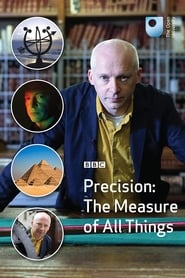
Precision: The Measure of All Things
Download English Subtitle
Release info
Tags
Download English Subtitle Files for Mobile (3)
English subtitle preview
The first 200 lines.
In 1852, clockmaker Edward Dent set out
to construct the largest and most accurate public clock in the world.
It took seven years to build.
A testament to a very human need.
Our modern day lives are completely driven by precise measurement.
Take Big Ben. For over 150 years it's been ringing out
the correct time to the people of London.
When built, it was an engineering marvel
accurate to an incredible one second an hour.
But times have changed.
Today we can build clocks which lose one second in 138 million years.
And now there are plans for a clock accurate to within one second
over the lifetime of the universe.
What is it that drives us to such extremes of ever greater precision?
Why do we feel the need to quantify and measure,
to impose order on the world around us.
Since our ancestors first began to count the passing of the seasons,
successive civilisations have used measurement
to help master the world around them.
It's taken us to the moon and split the atom.
And it fascinates me.
Ever since I was young, I've been obsessed with measuring things,
trying to make sense of the world around me.
But where did these measurements come from?
I mean, who decided a kilo was a kilo, and a second a second?
What we measure, how we measure it,
and how accurately we can measure it are surprisingly complex questions.
Questions which have obsessed generations of great minds,
and created a system that describes everything in our world with
just seven fundamental units of measurement.
And the quest to define those seven units with ever greater precision
has changed our world.
In this series, I want to explore why we measure.
What drives us to try and reduce the chaos
and complexity of the world to just a handful of elementary units.
In this first programme, I'm going to be looking at two of the most
fundamental measurements, namely the metre and the second.
It's likely that time and distance
were the first things people ever tried to measure.
They seem closely linked in our minds.
We even talk about length of time.
And as we'll see, time and distance
are inextricably connected by modern science.
Being able to measure time actually means spotting patterns and
that's actually a very mathematical way of looking at the world.
In fact, measuring time is an incredibly sophisticated act.
So where did it all begin?
Our ancestors would have first picked up
on the patterns of the seasons.
Marking time as the leaves turned brown, or the days got shorter,
when rivers flooded, or berries ripened.
These very practical observations would have helped them
in their daily struggle to survive.
One of the first examples of human's efforts to measure
was discovered here in Southern France by four teenagers
and their dog called Robot.
It was 1940 and the 18-year-old Marcel Ravidat
was exploring these woods
when he came across a hole where a tree had been uprooted by a storm.
He needed some tools to make the hole bigger
so he came back four days later with his three friends,
and they uncovered the entrance to a huge system of unexplored caves.
But what they discovered inside was even more exciting.
Wow!
The boys must have been absolutely staggered to have come here
and see these images painted on the wall.
I mean, these are some of the oldest cave paintings.
Oh, look at this!
All over the wall!
Marcel and his friends had discovered
some of the earliest cave paintings ever found.
These date back 17,000 years and were painted by Cro-Magnon man.
It's beautiful!
You can really feel the energy of these animals
rushing across the walls.
This cave is a replica of the original
which is a few hundred metres from here and is now carefully preserved.
Dr Michael Rappenglueck believes that these paintings
are evidence of man's first attempt to measure time.
This one is very, very beautiful.
To him, this is a giant calendar.
The clues lie in these strange patterns of dots.
Each dot represents a week.
13 dots represent one quarter of the year.
His theory is that each seven day phase of the moon,
what today we'd call a week,
is marked with a dot on the wall to chart the passing of time.
It was a distinctively-shaped cluster of dots
that eventually allowed him to unlock
the full meaning of the paintings.
Look up to the ceiling. You see six dots.
It reminds a little dipper,
and I think this is the star pattern of the Pleiades.
Oh, so these dots are not representing weeks any more,
these are stars up there?
Yes. These are stars, and they serve to start the year.
When our ancestors saw the stars form this same alignment in the sky,
it would mark the start of their year.
Dr Rappenglueck believes the animals have meaning too.
The stag represents autumn equinox
and it's starting a time cycle to the horse.
The horse represents spring time
and you see the horse is pregnant, highly pregnant,
so three-quarters of the year are represented on the wall.
So, it's the star calendar
followed by the calendar marking the weeks that allows them to know
when the stags are rutting, or pregnant animals...
Yes, they synchronised biological rhythms of animals
with astronomical rhythms.
It's an extraordinarily sophisticated system... Yes, it is.
..for 17,000 years ago. It is.
It's amazing!
With the aid of this basic calendar, for the first time,
our ancestors could start to predict what would happen, and when.
They could prepare to hunt when animals migrated close by
or, as agriculture developed, determine the best time to plant crops.
Measurement was making life easier.
But as communities grew, so did the need for more precise timekeeping
beyond the cycles of the moon, the stars and the seasons.
13,000 years after our ancestors painted the caves in Lascaux,
first the Mesopotamians and then the Egyptians
started to tackle the problem of dividing up the day.
And they took their inspiration from the sun.
By observing how the length of a shadow changed through the day,
they found an easy way to measure time.
And they used a device just like this.
This is a replica of an Ancient Egyptian sundial.
It's one of the first instruments ever created to measure time.
Now at midday, this stone here would have cast no shadow.
But, as the day went on, the shadow would get longer and longer,
so the Ancient Egyptians decided to divide the day up into 12 units.
You can see the lines here - we've got one, two, three...
We've got six lines for the afternoon, and six for the morning.
It's just coming up to three o'clock.
By linking time and distance, they could reliably measure
shorter periods of time.
Telling the time, by measuring the length of a shadow.
Although the sundial was a brilliant invention,
it was fundamentally flawed.
It didn't work at night.
Like the cavemen of Lascaux, who used stars to mark the seasons,
the Egyptians went one step further.
They used them to divide up the hours of darkness.
But on a cloudy night, just as on a cloudy day,
they still had no way of telling the time,
and this is where they made a conceptual leap.
This is a water clock.
It's a very simple idea.
Basically, what they did was to take a bucket
and make a hole in the bottom.
Then as night fell, they would fill the bucket with water.
Now, as the water drips out,
they can use lines marked on the side of the bucket
to tell how much time has passed through the night.
They could measure 12 hours
independently of the sun or the stars.
But why count 12 hours at all?
The answer lies in how business was done thousands of years ago.
Throughout the Middle East,
the number 12 and the number 60 were important in commerce.
They're numbers that were familiar to traders in markets just like this.
And the reason they use them is all to do with arithmetic.
As a mathematician, I love the answer
because it's about the mathematical properties of these two numbers.
They're highly divisible.
Take the number 60.
I can divide 60 beans in to six groups of ten beans,
five groups of 12 beans...
..four groups of 15 beans...
..three groups of 20 beans.
Five, there.
Two groups of 30 beans...
..or one group of 60 beans.
But take 100 beans, how can I divide that?
I can divide it into two groups of 50
but divide by three and I've got to start cutting a bean!
Because the numbers 12 and 60 were so familiar to the Egyptians,
it was perhaps no great conceptual leap
for them to come up with a 12-hour night and day.
So the idea stuck.
It wasn't just the measurement of time that the Egyptians needed to tackle.
They also needed to find better ways to measure distance.
Every year the Nile would flood,
bringing great fertility to the land.
But with each flood,
the borders of the farmers' land would be washed away.
So when the waters receded, an accurate way of measuring
field size and re-establishing boundaries was critical.
They needed a reliable and uniform measure of length.
And their solution was this.
It's a cubit rod and it's the Egyptian equivalent of a ruler.
Its length was the distance of the pharaoh's cubit,
which was the length from his elbow to the tip of his middle finger.
So actually, my cubit is slightly shorter than the pharaoh's.
But this led to the Egyptians creating some of the most remarkable buildings the world has ever seen.
This is the great pyramid of Cheops,
built over 4,500 years ago for the fourth dynasty pharaoh, Khufu.
It is said 20,000 men took 20 years to build it,
using over two million limestone blocks,
all meticulously aligned and measured with the cubit rod.
More English subtitles for Precision: The Measure of All Things
- BBC Precision The Measure Of All Things Time and Distance 2013 · 26 downloads · 2013-10-04
Comments
No comments yet. Be the first to leave one.