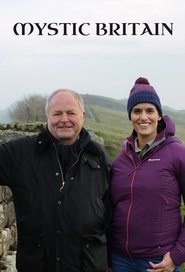
Mystic Britain
Download English Subtitle
Release info
Tags
English subtitle preview
The first 200 lines.
Mummies or not mummies?
It's a tricky one, isn't it?
It's not tricky at all!
This is a mummy.
No, not those ones, Clive.
British mummies.
You've got more dead bodies than a serial killer!
We sink into the mysterious world of the bronze age dead.
Bog to the future, if you like.
To understand if British mummies
were a real thing.
How long would it take to smoke a Clive Anderson-sized human?
And making some unusual discoveries along the way.
So it's a bit like being preserved in red wine or tea.
I'd say tea.
As we try to solve the mystery
of Britain's ancient mummies.
Bog to the future.
Now, that's quality work.
The British isles have a very long history.
People have been living here for tens of thousands of years.
And the further back you go,
the more elusive and mysterious
the lives of those ancient Britons appear to be.
Stonehenge. What's the point?
It's a bit like Lego.
Oh.
Who were these ancient Britons?
What did they believe?
What was their world like?
Are you a fan of human sacrifice?
I don't practice it myself.
As a talk show host, I should know how to ask a good question.
Where are we going to, Mary-Ann?
Clive, we are off on an adventure.
But answers are not really my strong suit.
Well, are they zombies or not?
It is a bit baffling.
The evidence is not clear.
So I've roped in someone
with more insight into the ancient world
than I'll ever have...
Anthropologist Mary-Ann Ochota.
Old bones, looking at the past.
You know everything, don't you?
I like to ask a lot of questions about the past.
Ooh.
Together we're going to unlock the mystic secrets
of the ancient Britons.
I've decided to harness the forces of evil.
Prepare to embrace the very odd indeed.
Right, I'm ready for all comers.
Hello. Now, you may be wondering
why I'm standing around in the British countryside
clutching smoked salmon and beef jerky.
And quite frankly, so am I.
But it's all in the interest of understanding mummification.
Now, these are modern foodstuffs
preserved using ancient practices
of smoking, drying and salting.
But there's a theory that ancient Britons
used those very same practices to preserve their dead.
Their human dead.
Well, it's a startling proposition, mummies in Britain.
But is it true?
Well, frankly I don't really know.
So I'm off in search of somebody who does.
All I know is that when it comes to mummies,
ancient Egypt is the gold standard.
So before we set off on what frankly sounds
like an unlikely search for British mummies,
I'm going to have a look at the competition...
A proper Egyptian mummy.
Tucked away inside this rather spectacular building in Oxford
is the Pitt rivers museum.
It's really one of the weirdest and most wonderful museums
I've ever visited.
There are crystal balls and toy cars,
poison-tipped arrows and AK-47s,
and all manner of bizarre and beautiful objects
from around the world.
But this is what I've come to see...
The mummy of a young woman called Irtarau.
She died over 2,500 years ago in Egypt,
where the mummies come from.
Well, this is what I call a mummy.
It's a real body wrapped up and preserved.
And if you take the wrapping away,
you could still see the flesh on the bones.
There's a human toe.
Leathery maybe, but you're looking at the actual,
the skin of the toe.
This is definitely a mummy.
Real skin, still there after thousands of years.
Could the ancient Britons really have made something like this?
I mean, where would they have put them?
I'm no expert, but I'm pretty confident
bronze age Britain wasn't blessed
with an excess of pyramids.
I think you underestimate
the ancient Britons, Clive.
And I know just the place to prove it.
I'm heading to West Kennet long barrow in Wiltshire.
A thousand years before the first pyramid
was even a twinkle in a pharaoh's eye,
ancient Britons were already building
monumental places like this for their dead.
At 328 feet long, this barrow
is a substantial piece of sturdy British engineering.
And it gives us an amazing insight
into how important their ancestors were
to the ancient Brits,
which is ultimately one of the motivations for mummification.
Professor Josh pollard from the university of Southampton
is my guide on our journey into this eerie underworld.
It feels a little bit spooky,
even though it's pretty accessible.
It is like going into a different world.
A portal to the other side.
It is.
It must have been even spookier
for the archaeologists who first excavated the tomb in 1859,
because it was filled with human bones.
What likely happened is that newly dead individuals
were brought into the tomb.
They would have been placed on the floors of the chambers.
But then they were left to rot,
to turn into piles of bones
without being covered in any way.
And then when they'd bring in a new body,
they would sometimes quite carefully push aside
the bones of previous burials.
So the end result is that you get this mixture
of collections of bones,
some fresh bodies, or the bodies that were partially decomposed.
They say it would have smelled awful
with that process of decay.
It would probably be a very frightening place as well.
It feels like it's got a special atmosphere even now,
with my 21st century rational science head on.
That's right.
I still feel like I need to whisper.
So far, so spooky.
But when archaeologists counted the bones,
well, let's just say things didn't add up.
We don't have enough skulls
to go with the, the long bones that are present here.
So there's too many bodies for the number of heads?
Yes. That's right, that's right.
So some bones have been taken out,
and they're perhaps being kept and circulated
as ancestral relics amongst the living.
Oh, wow!
It's hard to imagine taking great auntie Edna's skull
for a day out.
And we'll never know for sure if that kind of thing went on here,
but evidence from other cultures suggests it's a possibility.
While not exactly mummification,
today people in La Paz in Bolivia
bring out the skulls of their loved ones once a year
to honor them and even give them a beer and a cigarette.
To many of us, the idea
of touching and spending time with the dead
might seem strange, but clearly it isn't to some.
And it wasn't to the ancient Britons who built west Kennet.
Oh, it gives me goose pimples to think of people coming in here,
I don't know, chanting with smoking herbs
and carrying flaming torches.
Yes.
And then having to root all through
semi-decomposed corpses looking for the special skull
that they need to carry on with the ceremony outside.
Yes.
To get back to the point,
I admit that if you're rooting through rotting corpses,
you aren't really practicing mummification... yet.
Because the sort of mummies we're after
are ones where the flesh
has been deliberately preserved after death.
But what west Kennet tells us
is that 5,500 years ago, way before the pyramids,
Britons had already begun a complex spiritual relationship
with the bodies of their dead.
It's not such a big jump from that to making mummies.
And there's evidence that people's desire
to keep the dead with the living
continued in later generations.
Because just down the road from west Kennet,
archaeologists discovered
one of the strangest ancient British burials ever found...
The bones of a girl strung together like a puppet.
To find out more about it,
Mary-Ann has sent me here,
30 miles south of west Kennet to the rolling downs of Dorset.
You can't swing a cat around these parts
without bumping into some
of Britain's oldest and most mystic monuments.
Many of them date to the bronze age,
beginning about 4,500 years ago,
around the same time as the Egyptian pyramids.
More English subtitles for Mystic Britain
- mystic britain s01e10 time tripping 720p WEB H264-UNDERBELLY · 19 downloads · 2019-10-17
- mystic britain s01e08 ice age shaman 720p WEB H264-UNDERBELLY · 16 downloads · 2019-10-17
- mystic britain s01e07 human sacrifice 720p WEB H264-UNDERBELLY · 19 downloads · 2019-10-17
- mystic britain s01e05 the pagan prince 720p WEB H264-UNDERBELLY · 23 downloads · 2019-10-17
- mystic britain s01e04 the revenants 480p web x264 rmteam · 12 downloads · 2019-10-17
- mystic britain s01e03 hadrians mystic wall 720p WEBH264-UNDERBELLY · 22 downloads · 2019-10-17
- mystic britain s01e02 the rollright witch 720p WEB H264-UNDERBELLY · 21 downloads · 2019-10-17
- mystic britain s01e01 witches and demons 720p WEB H264-UNDERBELLY · 17 downloads · 2019-10-17
Comments
No comments yet. Be the first to leave one.