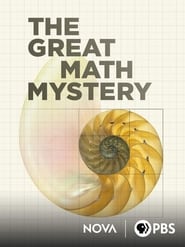
PBS Nova: The great math mystery (The Great Math Mystery)
Download English Subtitle
Release info
Tags
English subtitle preview
The first 200 lines.
Roger, copy mission.
We live in an age of astonishing advances.
Descending at about .75 meters per second.
Engineers can land a car-size rover on Mars.
Touchdown confirmed.
Physicists probe the essence of all matter,
while we communicate wirelessly on a vast worldwide network.
But underlying all of these modern wonders
is something deep and mysteriously powerful.
It's been called the language of the universe,
and perhaps it's civilization's greatest achievement.
Its name?
Mathematics.
But where does math come from?
And why in science does it work so well?
Albert Einstein wondered,
"How is it possible that mathematics
does so well in explaining the universe as we see it?"
Is mathematics even human?
There doesn't really seem to be an upper limit
to the numerical abilities of animals.
And is it the key to the cosmos?
Our physical world
doesn't just have some mathematical properties,
but it has only mathematical properties.
"The Great Math Mystery," next on NOVA!
Major funding for NOVA is provided by the following:
Shouldn't what makes each of us uniqueting NOVA and promoting public understanding of science.
And the Corporation for Public Broadcasting,
and by:
Major funding for "The Great Math Mystery" is provided by:
Working to advance research
in the basic sciences and mathematics.
Additional funding is provided by:
And the George D. Smith Fund.
Human beings have always looked at nature
and searched for patterns.
Eons ago, we gazed at the stars
and discovered patterns we call constellations,
even coming to believe they might control our destiny.
We've watched the days turn to night and back to day,
and seasons as they come and go,
and called that pattern "time."
We see symmetrical patterns in the human body
and the tiger's stripes
and build those patterns into what we create,
from art to our cities.
But what do patterns tell us?
Why should the spiral shape of the nautilus shell
be so similar to the spiral of a galaxy?
Or the spiral found in a sliced open head of cabbage?
When scientists seek to understand
the patterns of our world,
they often turn to a powerful tool: mathematics.
They quantify their observations
and use mathematical techniques to examine them,
hoping to discover the underlying causes
of nature's rhythms and regularities.
And it's worked, revealing the secrets
behind the elliptical orbits of the planets
to the electromagnetic waves that connect our cell phones.
Mathematics has even guided the way,
leading us right down
to the sub-atomic building blocks of matter.
Which raises the question: why does it work at all?
Is there an inherent mathematical nature to reality?
Or is mathematics all in our heads?
Mario Livio is an astrophysicist
who wrestles with these questions.
He's fascinated by the deep and often mysterious connection
between mathematics and the world.
If you look at nature, there are numbers all around us.
You know, look at flowers, for example.
So there are many flowers
that have three petals like this, or five like this.
Some of them may have 34 or 55.
These numbers occur very often.
These may sound like random numbers,
but they're all part of what is known as the Fibonacci sequence,
a series of numbers developed by a 13th century mathematician.
You start with the numbers one and one,
and from that point on,
you keep adding up the last two numbers.
So one plus one is two,
now one plus two is three,
two plus three is five,
three plus five is eight, and you keep going like this.
Today, hundreds of years later,
this seemingly arbitrary progression of numbers
fascinates many, who see in it clues
to everything from human beauty to the stock market.
While most of those claims remain unproven,
it is curious how evolution seems to favor these numbers.
And as it turns out,
this sequence appears quite frequently in nature.
Fibonacci numbers show up in petal counts,
especially of daisies, but that's just a start.
Statistically, the Fibonacci numbers
do appear a lot in botany.
For instance, if you look at theottom of a pine cone,
you will see often spirals in their scales.
You end up counting those spirals,
you'll usually find a Fibonacci number,
and then you will count the spirals
going in the other direction
and you will find an adjacent Fibonacci number.
The same is true of the seeds on a sunflower head--
two sets of spirals.
And if you count the spirals in each direction,
both are Fibonacci numbers.
While there are some theories
explaining the Fibonacci-botany connection,
it still raises some intriguing questions.
So do plants know math?
The short answer to that is "No."
They don't need to know math.
In a very simple, geometric way, they set up a little machine
that creates the Fibonacci sequence in many cases.
The mysterious connections
between the physical world and mathematics run deep.
We all know the number pi from geometry--
the ratio between the circumference of a circle
and its diameter-- and that its decimal digits
go on forever without a repeating pattern.
As of 2013,
it had been calculated out to 12.1 trillion digits.
But somehow, pi is a whole lot more.
Pi appears in a whole host of other phenomena
which have, at least on the face of it,
nothing to do with circles or anything.
In particular, it appears in probability theory quite a bit.
Suppose I take this needle.
So the length of the needle
is equal to the distance between two lines
on this piece of paper.
And suppose I drop this needle now on the paper.
Sometimes when you drop the needle, it will cut a line,
and sometimes it drops between the lines.
It turns out the probability
that the needle lands so it cuts a line
is exactly two over pi, or about...
...64%.
Now, what that means is that, in principle,
I could drop this needle millions of times.
I could count the times when it crosses a line
and when it doesn't cross a line,
and I could actually even calculate pi
even though there are no circles here,
no diameters of a circle, nothing like that.
It's really amazing.
Since pi relates a round object, a circle,
with a straight one, its diameter,
it can show up in the strangest of places.
Some see it in the meandering path of rivers.
A river's actual length
as it winds its way from its source to its mouth
compared to the direct distance on average seems to be about pi.
Models for just about anything involving waves
will have pi in them, like those for light and sound.
Pi tells us which colors should appear in a rainbow,
and how middle C should sound on a piano.
Pi shows up in apples,
in the way cells grow into spherical shapes,
or in the brightness of a supernova.
One writer has suggested
it's like seeing pi on a series of mountain peaks,
poking out of a fog-shrouded valley.
We know there's a way they're all connected,
but it's not always obvious how.
Pi is but one example
of a vast interconnected web of mathematics
that seems to reveal
an often hidden and deep order to our world.
Physicist Max Tegmark from MIT thinks he knows why.
He sees similarities between our world
and that of a computer game.
If I were a character in a computer game
that were so advanced that I were actually conscious
and I started exploring my video game world,
it would actually feel to me like it was made
of real solid objects made of physical stuff.
¶ 
Yet, if I started studying, as the curious physicist that I am,
the properties of this stuff,
the equations by which things move
and the equations that give stuff its properties,
I would discover eventually
that all these properties were mathematical:
the mathematical properties
that the programmer had actually put into the software
that describes everything.
The laws of physics in a game--
like how an object floats, bounces, or crashes--
are only mathematical rules created by a programmer.
Ultimately, the entire "universe" of a computer game
is just numbers and equations.
That's exactly what I perceive in this reality, too,
as a physicist,
that the closer I look at things that seem non-mathematical,
like my arm here and my hand,
PBS Nova: The great math mystery subtitles in other languages
Comments
No comments yet. Be the first to leave one.