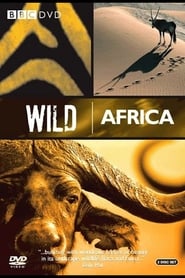
Wild Africa
Download English Subtitle
Release info
Tags
English subtitle preview
The first 144 lines.
The savannah...
it is the Africa of our imagination...
vast lands, home to the greatest herds on earth...
It looks timeless... but it isn't.
This is a young landscape created by remarkable events.
Now we can see the big picture.
Seen from space,
Africa is dominated by great swathes of desert and rainforest.
Caught between these extremes lies a band of grasses
and dry woodland - the savannah...
It's incredibly fickle.
In the space of a few years,
a sprinkle of trees can turn into thick woodland...
...or disappear altogether... leaving just grasses.
The life of the savannah is dictated by the weather...
and it's highly capricious.
Every year there is a dry and wet season,
but no two years are exactly the same.
In drier times, grasses thrive...
...with heavy rain, it's trees that flourish.
The savannah is the fastest-changing and
most unpredictable of all African environments.
Yet somehow it manages to support an incredible collection of life.
It is the haunt of the big cats...
...but these elegant hunters are outnumbered...
...the herds so vast, they beggar belief.
More animals live here than anywhere else on earth - the question is why?
To find out, we've got to go back to the days before the savannah was born.
For millions of years rainforest dominated much of tropical Africa...
and then things changed.
The climate began to dry, large patches of rainforest died,
replaced by thickets and grassy spaces creating new food opportunities.
Pioneers were quick to move in to the infant savannah.
Some of the first were the ancestors of the giraffe,
who left the dwindling jungle.
And from the desert came others.
Antelope thrived here and in great numbers.
For them the savannah was a paradise,
offering lots of easy-to-reach food.
Some plants did fight back.
Acacia probably developed thorns to limit the damage caused by giraffes.
Over time, many bushes and trees were pruned and clipped
by an onslaught of nibbling mouths.
And then, three million years ago,
another animal marched in from the rainforest...
to become one of the greatest architects of all.
Destructive yes... but also creative.
Many different types of plant eaters were transforming their world...
and on a grand scale.
By trampling and breaking up bushes and saplings,
something even more special was created...
...the beautiful open country we see today.
Only five to seven million years old,
savannah is the youngest habitat of all...
Africa's new world.
No other landscape has been so dramatically shaped by its animals.
In a few places, the great herds still run free...
offering a glimpse of how things must have looked before the time of man.
In the shadow of the great herds... came the hunters.
Dramatic contests like these are part of everyday life on the open plains,
but everything here is controlled by a far greater force
the grasses themselves.
Grasses are so adaptable, resilient and fast-growing,
they provide important bulk food.
Wildebeest eat nothing else,
while most other vegetarians eat grasses at some time of the year.
Food for the mighty...
...and the miniscule.
Despite the hordes of different grazers, grasses don't really suffer.
With regular pruning, the more robust are controlled...
allowing a greater variety to thrive.
Not only that, but by cutting back the grasses,
the grazers also encourage them to grow faster...
It's like mowing the lawn... the biggest lawn in the world.
Life is lived to its limits here...
and it's the humble grasses that fuel all the action.
Grasslands can be so productive that for some birds,
like European white storks,
they're worth flying half way across the world to reach.
The skies also fill with great flocks of terns.
They've all made this marathon journey for one reason...
huge numbers of grass-eating army worms.
There's so many that they even feed a giant among birds
the marabou stork.
Such a population explosion of army worms only happens every ten years or so
and it's when just the right humidity encourages
just the right amount of grasses to flourish.
Because feasts like this are sporadic and moveable,
storks have had to develop into long distance commuters...
...but these gatherings, built on grass leaves,
are minor compared to those drawn in by the seeds of grasses.
They're so nutritious,
they attract their own crowds and they are breath-taking.
Red-billed quelea.
In some years,
the rain encourages so much grass seed in just one locality
that the birds reach breeding condition quickly.
The result?
One of the savannah's most fabulous sights a nesting colony of quelea.
Crammed into a tiny patch of woodland are over a million breeding pairs.
The chicks are out of the eggs in just ten days
faster than any other bird in the world.
All this commotion attracts marabou storks.
For a short time, they can enjoy easy pickings.
Quelea reproduce at a phenomenal rate.
Their population more than doubles in just one month.
But they can only breed in these numbers
when there's enough grass seed available.
It can be famine or feast in this unpredictable world.
Both quelea and wildebeest move through the savannah in enormous numbers,
but there's another species whose numbers are higher still
and they're here all year.
To find them, we must travel into the night.
They're... termites.
And there are so many that they provide food
for one of the savannah's most voracious feeders.
An aardvark a shy creature and very rarely seen.
Male aardvarks can weigh as much as a full grown man...
...And all on a diet of ants and termites.
His impressive bulk shows just how many there must be...
...up to 10,000 per square metre.
So what keeps these going?
Grasses, leaves and dead wood.
Every year, ants and termites consume a third of all the plants in the savannah
and that's more than the elephant,
wildebeest and zebra combined.
But sometimes it can take an aardvark an hour or two to sniff out a nest.
The underground colonies can be far apart.
Aardvarks go to all this effort because they need to eat a lot of termites
somewhere in the region of 100,000 every night.
Termites not only feed aardvarks,
they also benefit the whole system by recycling nutrients
and this helps everything...
...from common grass rat to rare wild cat.
Spring hares are alert to the slightest sound or hint of vibration.
So much potential prey brings out serval cats
whose keen hearing makes them master night hunters.
Although aardvarks hoover up lots of termites,
eventually the defending soldiers deter even the most determined.
And every year, at each colony on just one magical night,
couples take to the air looking to start their own nests.
Savannah can be bountiful... but there are times of hunger too.
The dry season can last eight months or even more,
testing the survival skills of everything that lives here...
Wild Africa subtitles in other languages
More English subtitles for Wild Africa
- NL PAL DVD9 · 42 downloads · 2020-12-07
- Part 6of6 Lakes and Rivers Xvid AC3 www mvgroup org ENG · 16 downloads · 2007-08-26
- Part 4of6 Coast Xvid AC3 www mvgroup org ENG · 21 downloads · 2007-08-26
- Part 3of6 Deserts Xvid AC3 www mvgroup org ENG · 15 downloads · 2007-08-26
- Part 5of6 Jungle Xvid AC3 www mvgroup org ENG · 19 downloads · 2007-08-26
- Part 1of6 Mountains Xvid AC3 www mvgroup org ENG · 13 downloads · 2007-08-26
- -=complete=- Xvid AC3 www mvgroup org ENG · 20 downloads · 2007-08-26
Comments
No comments yet. Be the first to leave one.