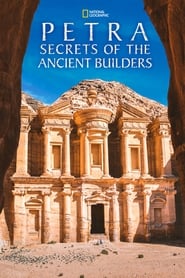
Petra: Secrets of the Ancient Builders
Download English Subtitle
Release info
Tags
English subtitle preview
The first 64 lines.
What's fascinating
about the culture of the Nabateans is that
in less than two centuries, they built an exceptional city.
A blend of extreme luxury and exuberance
that makes Petra so wonderful.
Had they started from the bottom,
it would've been impossible for them to know where to begin
so that the wall would be plumb,
because the cliffsides are not always perpendicular.
They can be slightly slanted, and that's very difficult to calculate.
There's another big problem that comes with
chipping away from above yourself, and that's namely the risk of debris
falling on the laborers below.
When the Nabateans decided
to build the facade of the Khazneh,
they had to prepare the area so they could reach the mountaintop
before even beginning construction.
And then they sculpted it from the top down.
To do that, they build a staircase. And they built it wide enough
to allow the workers to comfortably go up and down
even while carrying their tools.
There was a bridge over there that allowed them to get from
the staircase to the front on the other side.
They went around the back of the mountain in order to get to the summit,
and then they carved out the top of the Khazneh.
This cave was where the laborers who were assigned the
construction of the Khazneh stored the tools they needed.
They would meet here at the beginning of the day,
then they would take the bridge to go around the mountain
and then they'd begin sculpting the rock.
Contrary to what most people think,
it's easier to make a capital
that's decorated with something like acanthus leaves, or any ornate capital,
because that gives you something to work around.
In case you make any mistakes while carving it out,
you can always slightly change the shape of a leaf
so that it hides your mistake and no one sees it.
However, with clean, straight lines, the slightest error becomes visible.
That means you have to be much
more careful and rigorous in your work.
In other words, there's absolutely no room for error.
If workers broke something by mistake,
if the stone had a weak spot,
or if any part of the cornice or the capital broke off,
well, that was it,
it's not like you could just replace the piece in question.
The slightest error was fatal to the entire project and was irreparable.
It's quite rare to find traces
of how the rocks were transported.
You have to keep in mind that these quarries have been exposed
to the elements without an interruption for 2,000 years,
so many of the stones have been significantly eroded.
Any traces potentially left behind by rock movement
have completely disappeared or have been covered up
by later construction, debris, or even by soil.
That's what 2,000 years will do.
There are a few machines
that were made out of wood
and that would make it possible to lift big stones.
The most commonly-used machines were what we call lifting jacks.
The idea is to have two beams attached together using cables,
and then raise the stone off a pulley.
Using the swinging motion of the machine,
they could get the stone closer to the wall.
Petra: Secrets of the Ancient Builders subtitles in other languages
More English subtitles for Petra: Secrets of the Ancient Builders
- Petra Secrets of the Ancient Builders 2019 WEB-DL DSNP · 21 downloads · 2021-05-17
Comments
No comments yet. Be the first to leave one.