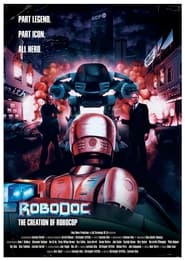
RoboDoc: The Creation of RoboCop
Download English Subtitle
Release info
Tags
English subtitle preview
The first 200 lines.
I think the character is a modern knight in armor.
We were so on target. The movie is so precise.
The Verhoeven mantra on RoboCop was blood.
I want more fucking blood.
I never met anybody
that had a good time making RoboCop.
The '80s in America were a tipping point.
It had this prescient dark side.
That's the lightning in the bottle.
It's a character that's a wonderful, unique hero.
One of the really iconic movies around.
It lives because of its theme.
And the theme is executed right down the line.
There's a sincere purity about his goals,
and yet he promises action.
I'd been thinking about, sort of, action movies
and strangely business in 1980.
And in particular, I was thinking
about how could I do a movie where there was business
and action together.
I'm Ed Neumeier, and I'm the co-screenwriter
and co-producer of RoboCop.
I was very interested in science fiction,
and I was working as a reader at Warner Brothers.
It was then called TBS. It was shared.
Both Columbia Pictures and Warner Brothers
were on it a lot.
And that's where Blade Runner was shot.
In 1981, when I was on the set of Blade Runner,
I wasn't really working on the movie,
but I was kind of pretending to.
I remember asking someone on the set,
"So, what's this movie about?"
And they said, "Oh, it's about a robot."
And I went, "Oh, cool, a robot."
Because I always had liked robots.
And then they pointed at Sean Young,
and they said, "That's the robot."
And I went, "Oh, no, that can't be the robot.
I know what a robot looks like."
And on the set of Blade Runner,
I had the idea for RoboCop.
And later that night,
I saw that blue car which they call a spinner.
And there was something to a young man
that was very seductive about that.
The name RoboCop came to my mind,
and kind of an image of the character.
And I give a lot of credit to Ridley Scott's art direction,
to really creating a mood where suddenly,
you have this idea about something else.
And then it took about four years
of thinking about this plot, and story, and the character
until it really germinated into an idea
I started writing down.
But eventually, I got a better job,
and I became an executive, a junior executive at Universal.
I was reading a lot of comic books for a studio.
They came to me one day, and said,
"Ed, read these comic books."
These, sort of, modern, neurotic superhero.
Iron Man, Machine Man , because the superhero
had, sort of, trouble being a superhero.
Even though he had all these powers,
there was, like, something going on inside.
So, he was, sort of, like a superhero with a headache.
You know, I kind of showed up suddenly,
and I'm wearing a suit, and I'm a little nervous
about, "Why am I here?"
Because I didn't really feel like an executive type,
but it was a good job.
Yes, sir.
You can, sort of, see
in the executive scenes in RoboCop
that there is that young character
who eventually gets shot, you know?
I kind of saw myself as Kinney.
Too bad about Kenny, huh?
That's life in a big city.
It was while I was there
that I was really doing a lot of the plotting,
and that's where I met Michael Miner.
My name is Michael Miner, and I co-wrote RoboCop.
Miner was older than me,
but he was then a young filmmaker from UCLA,
where I had also gone.
Ed viewed a package of short films
that a bunch of UCLA filmmakers made,
and mine was one of them.
I started shooting music videos as a director camera operator.
Did about ten of them. They were heavy metal videos.
I made experimental films in the vein of Nicolas Rogue
and the French New Wave,
but was also heavily influenced by Philip K. Dick
and Jorge Luis Borges.
They were my, you would say, literary mentors.
The type of science fiction I was interested in
had a social aspect.
What it means to be human, what is reality,
whether reality as we see it is questionable,
all of those things.
I started developing an idea called Supercop,
which was about an appliance that a human wears
that accelerates all of that person's
physical attributes.
And the crux of the drama was that it starts
affecting the psychology of the cops in psychotic ways.
He came to see me looking for a job,
but instead, I said,
"Hey, let's do a movie about a robot."
We had lunch, and we found out,
"Wow, we were thinking in these similar, sort of, vein
of what is the future of law enforcement.
And it was pretty much a, I won't say
love at first sight, but we really hit it off.
And one thing led to another.
And we started writing a script on nights and weekends
called RoboCop.
Ed and I do very different things,
which is kind of what you want in a partnership.
I am full of frothy amount of ideas,
where Ed is more of a solid backstop,
and he's a no BS kind of guy.
So, part of our process was myself pitching things,
nine of which were pretty bad,
but the tenth one, when it landed,
it was usually, you know, something that Ed recognized
as a solid, dramatic piece.
And that was part of the glue of our partnership.
I actually told them
that somebody in my family had died,
so I could leave for two weeks and go write the first act,
which I did in San Anselmo, the town where I grew up.
And the funny part of it was that they sent me flowers,
which I felt very bad about.
Ed had a very solid first act, including the torture murder.
I came along and filled in a lot of blanks
about the corporate conspiracy,
how the criminals, Clarence and Dick Jones,
linked up, had a kind of cabal to manipulate Delta City.
At times, it was very difficult,
because we were both in the room pacing, typing.
We would be late at night, tugging over specific lines,
specific jokes.
It was very hard.
But then there were other times when something came out, like,
"He's old, we're young, that's life."
I just blurted that out one day, and it just landed.
We struggled together to figure this thing out.
The great thing about the first drafts
of RoboCop was they were funny,
they were insightful,
they were critiquing social mores of the time,
particularly the Reagan era.
If you know anything
about the '80s and Ronald Reagan,
everything was privatized.
The climate was ripe, I think. The country was ready.
They were tired of this BS, right?
And so, they were ready for this satire about Maricona.
I later offered Universal the script,
and they said, "You've made a mistake.
And the mistake you've made is that the robot
should not look like a robot.
It should look like a man on the outside.
That's the way you do it," they said.
'Cause they'd dumped The Six Million Dollar Man,
and that's what they thought it should be.
But luckily, they didn't buy it.
Terminator was about to come out.
And we consciously stayed away from it as long as we could.
There was an industry screening that we finally went to.
We saw it halfway through the writing of the script.
There was a particular guy I was romancing,
who I was trying to get to buy RoboCop.
This guy named Stan Lee,
who was then working for Marvel Pictures.
And Marvel was not such a big going concern
at that moment, and they liked it,
but they didn't make an offer for it.
We took Stan Lee during that time
to Paramount Pictures
to see an early screening of Terminator.
And when we left the theater, Stan Lee turned to us, and said,
"Well, boys, you're never gonna beat that!"
And I was like, "Oh, shit."
And so, we went back to work, and we finished the script.
And in some ways, Terminator didn't hurt us,
it helped us.
Because for Orion, Terminator was this, sort of,
down-and-dirty movie
that they weren't even very happy about,
and then it made a lot of money.
And suddenly, they were like, "Oh. Well, that's not so bad."
I have no doubt whatsoever
that the reason why RoboCop was green-lighted at Orion
was because Terminator had done so well.
Later, Jim Cameron,
I think, thought we had copied him,
but it wasn't true,
More English subtitles for RoboDoc: The Creation of RoboCop
- RoboDoc The Creation of RoboCop S01 1080p AMZN WEB-DL DDP2 0 H264-WhiteHat · 97 downloads · 2023-09-19
- RoboDoc The Creation of RoboCop S01E04 Murphy and The Machine 1080p AMZN WEB-DL DDP2 0 H264-WhiteHat · 89 downloads · 2023-09-19
- RoboDoc The Creation of RoboCop S01E03 Blood Sweat and Steel 1080p AMZN WEB-DL DDP2 0 H264-WhiteHat · 72 downloads · 2023-09-13
- RoboDoc The Creation of RoboCop S01E02 Verhoeven’s Mantra 1080p AMZN WEB-DL DDP2 0 H264-WhiteHat · 87 downloads · 2023-09-11
Comments
No comments yet. Be the first to leave one.