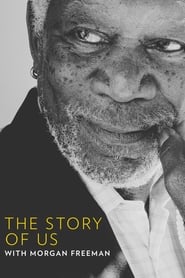
The Story of Us with Morgan Freeman
Download English Subtitle
Release info
Tags
English subtitle preview
The first 198 lines.
Freedom.
You say America, and it's probably the next word that comes to mind.
It's our fundamental right to live our lives however we want.
But freedom isn't something we've always had.
When I was 18 I joined the air force and I did well enough on my test to qualify
as an electronic counter measures operator.
But I was told I couldn't take that job.
Apparently, no black man could fly with the Strategic Air Command.
Abraham Lincoln knew that a country could only truly stand for freedom if
it applied to all of its people.
Around the world there's a growing tide of freedom.
The belief that every person has the right to self determination
is growing stronger and stronger.
I wonder, if one day we will all be free.
What drives people to fight for freedom?
Five nights before elections they told everybody Putin
will be the next president.
I was just really angry.
- Can we find liberty even when bound in chains?
My mind and emotions were beyond the confines of that cell.
-And when will everyone be free to be who they really are?
I wanna wear a Burkah so nobody sees me as a boy.
- That's when I felt what freedom really meant.
This is my journey.
To discover the ties that bind us.
And the common humanity inside us.
This is The Story of Us.
I'm going to meet a man who was born a slave.
Shin Dong Hyuk began his life in a North Korean labor camp.
It was the only world he knew until he was 23 years old.
I wonder what freedom means for someone who first encounters it as an adult?
Shin and his wife Leann are meeting me in New York City to tell me his story.
Nice to meet you.
- How do you do? - Good.
- So, how long you two been married?
- Two year. - Two years?
- Yeah, this April. - Is that a long time yet?
- Yes. - Yeah.
-Feels long at the same time it feels like it was just yesterday.
- Ok, got, got you out of a hole there.
You been free now for, what?
Eleven year.
-Eleven years, okay, so you were born in a slave labor camp?
Yep, so.
- How did it come about that you were gonna be born there?
- My parents go in the camp, I was born in the camp.
- They were political prisoners? - Yes.
-The United Nations estimates there are about 100,000
political prisoners in North Korea.
You can be thrown into a prison camp simply by speaking ill of the country's leader.
Just talk to me a little bit about daily life while you were in the camp.
You were there for a long time.
.
We woke around 4 AM.
And there would be some kind of signal either a bell, maybe a speaker
and we would know it was time to go and work.
So would do whatever task it would be.
It could be farming corn rice, it could be working in the coal mines.
None of us had dreams or hopes for the future.
It was just so natural, that's just the way it was.
- Born there, lived there, die there.
-If we do something wrong or don't work well, the guards would give us an option,
you can either starve or get beat.
Gee wiz!
-So one of the rules that we learn is that we are never, ever supposed to eat anything,
that is not given to us.
This little girl was probably six or seven at the time but she must have came across
something to eat and she didn't want to eat it all at once and she must have wanted
to save it so she had to hid it in her pocket and one of the guards had said,
why didn't follow the rule, you know better than that?
And he repeatedly hit her on her head and eventually she passed out.
-The next day she didn't come to class so the guard sent us to go get her
but when we got the house she was dead.
They beat this child to death?
.
What about your parents?
- Really sad but they were just fellow prisoners to me,
I didn't have any sense of family.
The hardest thing in my whole life is probably the memory of my mum and my brother.
But I learned as a child that I'm supposed to report to the guards at any point
on my own parents, you know, report if they're doing anything wrong.
And the more I report on them, the better off it is for me.
So I thought they were escaping and I reported on them.
I really had no anticipation or thoughts of what would come from that.
There were many people gathered and my father and
I were forced to watch their execution.
- But honestly I really had no emotion.
- When it happened? - When it happened.
In a way I thought it must have been a sin that maybe they...
deserved.
- Later Shin recalls meeting a fellow prisoner named Park,
a man who traveled throughout North Korea and China.
He intoxicated Shin with descriptions of life lived freely and life with food.
- He sparked a lot of curiosity with the things he said.
-But the thing that was most fascinating was the way he was able to express
and explain the foods he ate, like pork,
the way he would describe it was so interesting and it just pulled me in.
Some might consider it kind of foolish or humorous
but for me it was something as simple as food.
It was that simple thought that kind of drove me initially.
To run?
- In 2005, January 2nd we were tasked to work near the fence.
I had actually been the one to initially say, maybe this is the time we should try.
-According to Shin, when they made their break, Park arrived at the fence first.
But he accidentally touched the electric wire.
Only Shin made it through alive.
- I really had no idea what to do or where to go,
all I knew is that I needed to get away as far as possible.
Of course, of course.
Shin crossed the border into China and survived by working odd jobs.
He made his way to Shanghai and from there gained passage to Seoul in South Korea.
Shin had freed his body, but he began to realize his mind was still enslaved.
You're free.
How is that feeling?
-The time I come to South Korea, in the night I don't sleep.
Nightmare?
Yeah.
-And because of the nightmares and the mental distress I couldn't even eat.
I was diagnosed with severe PTSD.
-And from that point is when I started having questions in my head about life.
- How long were you in South Korea?
- About ten years. - Ten years.
It's a long time to get acclimated.
Which brings up you.
-From when I first saw her I liked her right away and I thought she was pretty.
And within a few days I asked if she had a boyfriend and, he's very brave.
- Very brave. - Very brave, I must say.
-Marrying Leann and choosing to start a family was for Shin a decisive break from the
chains that had bound him for so long.
-It was so hard for me to comprehend and look at the world around me where parents
love their children and feed their children and clothe their children
and care for them.
But now that we are expecting our son, I see how my wife is preparing for it
and I see that there's a child growing inside of her
and I just see the world differently.
- Well Shin. - Bye.
-Thank you so very much. -Thank you very much, thank you.
- Really appreciate your coming and doing this.
I hope to see you again maybe.
Alright that's a good idea.
And my darling, thank you.
- Thank you, so nice meeting you.
Take care of that young'in.
Thank you. -OK, bye-bye. -Bye.
-Shin didn't suddenly feel free, he had to learn what freedom is.
Experiencing the joy and challenges of life
and all the complex choices you have to make.
He has made those choices.
He's got married.
He has a kid on the way.
And that, that's what gives freedom meaning.
Freedom is a state of mind.
And this man is living proof of that.
He found a way to be free, even though his body was utterly trapped.
For 43 years.
I'm headed to Louisiana, to meet Albert Woodfox.
He was imprisoned here in Angola State Penitentiary for most of his life.
Originally convicted of armed robbery at age 18,
he ended up on solitary confinement for longer than anyone else in American history.
A-ha.
- A-ha. - Mr. Woodfox.
-Mr. Freeman, welcome to my home. -Nice to meet you.
I would expect anyone who spends four decades in solitary to emerge
with a broken soul and deadened mind.
But Albert appears healthy and well adjusted.
I've come to find out how.
So, what got you in prison?
- I was a predator in my own community.
You know a petty criminal, a person of the street.
I was undisciplined, unmotivated stuff.
But my crime going to prison was an armed robbery charge.
-And did you go straight to Angola when you were convicted?
-No I actually escaped the very day I was sentenced to 50 years.
-Ok, alright, you escaped, you were out for a little while?
- Well I went to New York. - You went to New York?
-It was a defining moment in my life because while in Harlem
I had an up close encounter with the Black Panther Party.
I had always noticed a certain fear in African-Americans,
even those who defied the odds and achieved certain goals in life.
For the first time in my life where I seen black people
and I didn't see that fear, I didn't feel that fear.
Talking about revolution and organizing the black community to protect the people.
Some of the sisters.
And although they possessed outward beauty, it was the inner beauty that I was
seeing, it was the strength and determination and the sense of purpose.
I was profoundly shocked when I realized that hey,
I am worth something, I do matter.
I actually joined the Black Panther Party.
OK.
-But I got arrested again and I was eventually extradited back to Louisiana
and after that they shipped me to Angola in 71.
-But it was an incident a year after his arrival at Angola
that would change the course of Albert's life.
A prison guard was found murdered.
-April 17th 1972 they found a correction officer named Brent Miller
murdered in one of the units.
Each unit has four dormitories and I was in the very last unit.
-Even though Albert's unit was nowhere near the scene of the crime,
The Story of Us with Morgan Freeman subtitles in other languages
More English subtitles for The Story of Us with Morgan Freeman
- The Story Of Us With Morgan Freeman S01 1080p AMZN WEB-DL DDP5 1 H 264-AJP69 · 56 downloads · 2018-10-28
- The Story Of Us With Morgan Freeman S01E01 The March Of Freedom 1080p AMZN WEB-DL DD 5 1 H 264-AJP69 · 12 downloads · 2018-01-05
- The Story Of Us With Morgan Freeman S01E01 HDTV x264-eSc · 16 downloads · 2017-10-14
- The Story Of Us With Morgan Freeman S01E01 HDTV x264-eSc · 15 downloads · 2017-10-14
Comments
No comments yet. Be the first to leave one.