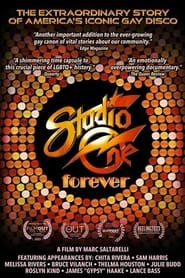
Studio One Forever
Download English Subtitle
Release info
Tags
English subtitle preview
The first 200 lines.
When I read this was gonna be demolished,
it made me sick.
Well, it was a big, ugly building.
It was an eyesore, frankly.
When I first heard that somebody had bought it,
I thought, "Uh-oh, potential threat."
I felt very angry.
It was a landmark building and it was a landmark in time.
The building itself was a tin can.
How does it stand up?
It was a place where I could go and feel safe.
It was an explosion.
I had so many memories there.
A complete immersion.
Hello, anybody here?
Look at this place.
Wow. It's like Follies.
Whoa, whoa, whoa.
Yeah.
Didn't you all used to be 20-something?
-Yeah, exactly. -You all got old, man.
You all got old.
All right, all right.
I'm going to warn you before we go in.
Prepare your eyes.
It's not what it used to look like.
Okay.
Okay, guys.
It used to be paradise.
It's a straight club now.
It's a straight club.
For so many people,
this was the happiest place on earth for them.
What is a gemstone in the history of LGBT America,
the very first disco.
And even if somebody opens a new nightclub in West Hollywood,
it would never be what we had in the '70s and '80s.
Why?
Because in the '70s and '80s, we were a secret society.
This is the place we came to find our tribe.
What a trip seeing this like this now.
For me, it was really my entrance into life.
I was wide-eyed.
It was Hollywood.
A very haunting and moving experience
to walk in.
It was kind of like going back to see your old house
and the memories instantly come alive.
And it was at that moment I realized what a monument it was.
They're talking about demolishing the whole thing.
Wow.
And a lot of us on council said, "You cannot."
I said, "What?"
You know, Studio One has been part of my life off
and on since 1975.
Maybe my Disco Dolly days were long gone
and behind me.
I assumed that there would always be a place.
All these years.
Anybody who tells you that they were there in the '70s
and remembers it, wasn't there.
As you were in the middle of a group
of the most beautiful men you'd ever seen.
You could feel the energy move throughout the whole room.
I would go there and dance on Thursday nights.
All of my best friends, they were hairdressers
and stylists
and after I got a hit, I was performing.
Sweat and hell.
Because I was raised in the church,
it felt like the pits of hell and the-- with the lights
and the fire.
Everything came together to make a wonderful explosion
of happiness.
If you could dance,
you forgot about everything else.
An assault of the sound and these beautiful people.
It was such a rush.
I loved seeing the happiness of everybody getting together.
Everybody was so close.
It was like you had to watch your feet.
The opening night.
You had 1500 people, bum, bum and the turntable would jump.
I said to Scott, "Call RCA, get someone down here
to fix that damn turntable."
When you crossed over into the threshold
of the dance floor was a kind of alternative reality.
It was so chemically induced for most people.
They're beyond misty water-colored memory.
They're sludge-colored memories.
MDA was my favorite.
People were doing coke on the dance floor.
They had little bottles.
They'd...
Everybody did drugs back then.
Here, especially in the '70s, cocaine was the thing.
It was not uncommon for somebody to come in
and put whatever cocaine they had on the bar.
I'd have a thing of straws here, and we would just take from
the pile as it went along and went back to serving drugs.
My-- or serving drugs.
Serving drinks.
The alternative, you know,
everybody's favorite, crystal meth.
At first it was fun, then it was fun with problems,
and then it was just problems.
But during that time, during the '80s,
it made me feel normal.
Whether you were drunk, whether you were high,
whether you were stone sober, it was surreal.
And you felt embraced, accepted,
and loved with over a thousand men.
There was this disco song, Menergy.
Coming here, there was a lot of menergy.
It was still light outside, but it was pitch black in here,
and the bartenders would be setting up
and getting things ready.
And we would just bring in our roller skates,
because roller skating was huge back then.
We just kind of snuck in.
I was not like other boys.
I was very shy.
There was a guy that I asked to dance,
and this guy said, "No", scarred me for life.
And I started shaking, and I was nervous,
and they said, "Come and dance with us."
And we were sort of dancing and moving,
and a Donna Summer song came on.
I literally started to cry, and I was shaking,
and they held onto me.
And if you're a 23-year-old kid from Kansas City,
I never thought there would be a place for me to be myself.
Okay, guys, the front bar.
Michael, that's the first place I laid eyes on you...
-...40 years ago. -Yeah, I remember, John.
It was about right in this corner, wasn't it?
40 years ago.
There would always already be a line forming outside,
and we opened precisely at 9:00.
The second that the doors opened,
this place would completely fill up,
um, and it would be nonstop till 2:00 in the morning.
If I was horny, I would go
and I'd spend time in the front bar,
which was, for me, easier to talk to people.
Michael Koth worked there, and we were friends.
He was a good guy,
and it's fun to see that he's around.
I mean, there's so few of us that are still around
from that period.
Those relationships that we created in Studio One,
those friendships, that bonding
became the cornerstone what had to happen next.
Studio One canopy, you remember,
and the line would go all the way down La Peer,
and all the excitement of just being right here.
Who are you gonna meet?
Tape rolling.
Best Friend, and show number 11, 8-29-84.
- This is the Studio One Video - Network.
I just remember Scott Forbes being a host.
Okay, welcome back.
Okay, here we go into our final round here,
which anyone can win.
He was a gorgeous, hot guy who wanted to run a disco,
and he was as much of a stereotype as he wanted to be.
We had a working relationship, 'cause I was always
doing shows back there, so we laughed a lot.
It was as far as it got, but that's not
because I didn't try very hard.
I never went to Studio One before I met Scott.
The night I met Scott really changed my life.
I recognized him immediately, because I had read articles
and seen pictures of him.
We just started talking,
and when I told him I worked at Disneyland,
that was something that really got his attention,
but it was like I'd known him a long time,
like a brother.
I ended up riding on the Freedom Float
with Troy Perry and Morris Kight.
They recruited me to be part of the Human Rights Coalition,
and Scott said, "You should move in with me."
I mean, we were spending all our time together
and I don't know, it just made sense.
So Vivian said,
"So, are you and Scott, you know, an item?"
I'm living with him, but in the other bedroom.
It seemed like a strange question,
because Scott is so gay.
He definitely had a type.
He went for young, very young, blonde.
He was known for that type.
I'm originally from Detroit.
I had always ever since I was a little kid, uh,
watching television,
I always knew I would end up in Los Angeles,
where they were making television.
Bachelor number two
is originally from Detroit, Michigan.
More English subtitles for Studio One Forever
- Studio One Forever 2023 1080p AMZN WEB-DL DDP5 1 H 264 (SDH) · 33 downloads · 2024-10-07
Comments
No comments yet. Be the first to leave one.