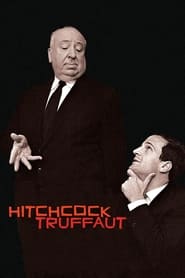
Hitchcock/Truffaut
Download English Subtitle
Release info
Tags
English subtitle preview
The first 186 lines.
Why do these Hitchcock films stand up well?
They don't look old fashioned.
Well, I don't know the answer.
That's true, yes.
My dad was a big movie buff,
and it was one of the books that was in his library.
From the time I was about seven years old,
he knew I wanted to make movies,
so he recommended it to me.
And I remember picking over it,
and I must've read it... Sections of it.
Like, there's the Oskar Homolka sequence from Sabotage.
Where it sort of lays out all of the cutting pattern.
It's not even a book anymore,
it's like a stack of papers because it was a...
You know, I had a paperback and it's just...
You know, it's got a rubber band around it.
In 1966, Frangois Truffaut
published one of the few indispensable books on movies.
A series of conversations with Alfred Hitchcock about his career,
title by title.
It was a window into the world of cinema that I hadn't had before,
because it was a director simultaneously talking about his own work,
but doing so in a way that was utterly unpretentious
and had no pomposity.
There was starting to be
these kind of erudite conversations about the art form.
But Truffaut was the first one where you really
felt that, you know, they're talking about the craft of it.
That was incredibly fascinating to me
that these two people from very different worlds
who were both doing the same job,
how they would talk about things.
I think it conclusively changed
people's opinions about Hitchcock
and so Hitchcock began to be taken much more seriously.
At that time, the general consensus
and climate was a bullying, as usual,
by the establishment as to what serious cinema is.
So it was really revolutionary.
Based on what the Truffaut-Hitchcock book was,
we became radicalized as moviemakers.
It was almost as if somebody had taken
a weight off our shoulders and said,
"Yes, we can embrace this, we could go."
In 1962, Hitchcock was 63 years old,
(ALFRED HITCHCOCK PRESENTS THEME PLAYING)
a household name in television, and a virtual franchise unto himself.
He had already been known for many years as the "master of suspense,"
and he had scared the wits out of audiences all over the world with Psycho,
and in the process, upended our idea of what a movie was.
And in this house, the most dire, horrible event took place.
Let's go inside.
He had just completed his 40th feature, The Birds.
Truffaut, half Hitchcock's age, had made only three features,
but he was already an internationally renowned and acclaimed filmmaker.
Truffaut wrote Hitchcock a letter.
He proposed a series of in-depth discussions
of Hitchcock's entire body of work in movies.
For Truffaut, the book on Hitchcock
was every bit as important as one of his own films,
and it required just as much time and preparation.
The meeting was documented by the great photographer Philippe Halsman.
Hitchcock and Truffaut.
They were from different generations and different cultures,
and they had different approaches to their work.
But both men lived for, and through, the cinema.
My mind is strictly visual.
Hitchcock was born with the movies.
There's no such thing as a face,
it's nonexistent until the light hits it.
There was no such thing as a line,
it's just light and shade.
The function of pure cinema, as we well know,
is the placing of two or three pieces of film together
to create a single idea.
(WOMAN TRANSLATING INTO FRENCH)
Hitchcock was trained as an engineer,
then moved into advertising.
Through that, I went into the designing
of what were,
in those days of silent films, the art title.
And then art direction, script writing, and production duties.
They said, "How would you like to direct a picture?"
And I said, "I've never thought about it."
I was 23.
My wife was to be my assistant.
We're not married yet,
but we're not living in sin either.
Hitchcock had many close collaborators,
but none of them was closer than Alma Reville.
She was credited on some films, uncredited on many others,
but Hitchcock consulted his wife on every movie he ever made.
The Lodger was the first time I'd exercised any style.
He is making floors out of glass
so that he can show people walking in circles in the apartment above.
He's playing with all those things
that make cinema fun
and magic, the tricks of it.
He was also conceptual
with the way he approached many of these films.
This movie, I have an idea for a way that I've never worked before.
This is somebody whose mind is racing, filled with ideas
and that's why, you know, we refer to him all the time.
Do you realize the squad van will be here any moment?
No, really! Oh, my God, I'm terribly frightened.
Why? Have you been a bad woman or something?
Well, not just bad, but...
But you've slept with men?
Oh, no!
WOMAN; Knife.
He directed the first British talkie.
And if you use a penknife! Or a pocketknife!
Alice, cut us a bit of bread, will you?
I mean, in Chelsea you mustn't use a knife!
And then, in 1934,
he made the first 100% Hitchcock picture.
St. Moritz was the beginning
of The Man Who Knew Too Much.
It was the place of our honeymoon.
And of course, Hollywood beckoned.
I wasn't attracted to Hollywood as a place.
That had no interest,
what had interest for me was getting inside that studio.
Hitchcock did some of his best work in the '40s.
But in the '50s, he soared.
I have a murder on my conscience, but it's not my murder.
And curiosity of James Stewart,
in this story of a romance shadowed by the terror of a horrifying secret.
Look, John, hold them.
Diamonds.
There was a spell that was cast with those films
in the '50s and the '60s.
And it's a special blessed time for me
because I saw them as they came out.
Truffaut began as a critic in the early '50s.
He started at the great French film magazine, Gamers du Unéma.
For the writers at Cahiers, soon to become the filmmakers of the Nouvelle Vague,
Hitchcock's greatness as an artist was self-evident.
(JEAN-LUC GODARD SPEAKING FRENCH)
Before they made their own movies,
the Cahiers critics erected a new pantheon of cinema-
The directors who were the true artists,
the authors who wrote with the camera, the auteurs.
Being an individual artist meant self-exposure,
pouring all of yourself into your movie,
all of your fears and obsessions and fetishes,
just like Hitchcock did.
All together! Pull!
Hitchcock often told the story of being sent to the police station as a boy,
where he was locked up for a few minutes as a symbolic punishment.
He said that it led to a lifelong fear of the police.
But Truffaut really was locked up.
He was delivered to the police by his own father,
and then sent to a juvenile detention center,
an episode he put into his autobiographical first feature.
Truffaut had a fierce attachment to freedom.
It's there in all of his films.
And it sent him in search of another father, a father who would liberate him.
He found the great film critic Andre' Bazin,
who virtually adopted Truffaut and brought him to Gamers du Unéma.
He found Jean Renoir,
and Roberto Rossellini.
And he found Alfred Hitchcock.
Hitchcock had freed Truffaut as an artist,
and Truffaut wanted to reciprocate by freeing Hitchcock
from his reputation as a light entertainer.
And that's the basis on which they started their conversation.
Well, let me check with him and see if he's running yet.
You started?
You're up?
All right, you're running now, huh? Okay, fine.
We are now on the air.
WOMAN". Your type of picture?
People get enjoyment but pretend not to be fooled.
They sulk, they begrudge...
They give their pleasure grudgingly.
HYYCHCOCK'. Yes. Well...
When I say pleasure, I don't mean amusement. I mean their enjoyment.
They are obviously...
They're going to sit there and say, "Show me!"
They expect to anticipate- "I know what's coming next- "
I have to say, "Do you?"
Yes, but you see, to me,
plausibility for the sake of plausibility
does not help, you know.
Hitchcock/Truffaut subtitles in other languages
More English subtitles for Hitchcock/Truffaut
- Hitchcock/Truffaut · 93 downloads · 2018-10-08
- Hitchcock Truffaut 2015 720p BluRay x264-CINEFILE · 121 downloads · 2017-01-12
Comments
No comments yet. Be the first to leave one.