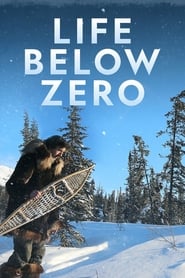
Life Below Zero
Download English Subtitle
English subtitle preview
The first 184 lines.
Ah.
Weather happens to be king.
Right now it's, kind of like, a little broken blue,
but a lot of fog there,
a lot of fog there,
a lot of fog there.
And that means I have to gauge
how many days of fuel do I have left?
Not weeks, days.
Kavik River Camp serves as a remote fueling
station and emergency depot, 197 miles above the Arctic Circle.
As Kavik's sole proprietor, Sue Aikens must ensure that the camp
is equipped with fuel and power to serve clients
and for her survival in the harsh conditions of the tundra.
.
.
. Well, generator just crapped out on me.
That was a pretty quick drop in the electrics.
Well, it never ends.
Ah, generator has a god box that tells you what happened.
Why did I shut myself down?
Well, high water temperature.
First thing I noticed when I'm looking at the gen
is there's a lot of fluff.
Maybe a little bit of oil.
This is the radiator for the coolant.
Well logic says first place I got to look is in here,
and you can see it looks like a fur carpet in there,
something straight out of the 70s.
A lot of fluff, a lot of fuzz there.
Because it's dry, because we're getting closer to winter,
it's gonna collect everywhere.
It's a simple fix, I just got to give it time, cool down,
get the fuzz from the back side of that radiator,
and then work on it.
Tear it apart and clean it.
So camp will go without power for a little bit today.
Doesn't matter what I had lined out for my day, it just changed.
So just like the weather changes in a heartbeat,
you can never time a breakdown.
I'll wait until it cools down, start wrenching on it,
tearing it apart, cleaning it, and putting it back together.
Everything has its use and its limits,
and I take them to the limit.
Nineteen, twenty, twenty-one, twenty-two, twenty-three,
twenty-four, twenty-five. Oh, excellent.
So I'm gonna make a frame tent on a sled.
I live here in Noorvik, Alaska.
I have a permanent house here and I live in camps
rotating around back and forth
for seven, eight months of the year.
We travel pretty far, and we tent out a lot,
so it's, kind of, our job to utilize
the resources of the area.
We gather stuff, we hunt it down, and we fish for it.
There's all kinds of stuff we do.
My wife acquired title to some properties that her family has.
The family still uses it, everybody's still welcome to,
but everybody's done it in tents,
and everybody's done it with nothing more permanent
than a cache.
And we're gonna do something more permanent
than a cache down here.
Those are the eight-foot crossbeams.
I see a lot of uses for this,
so I'd like to make this thing to where it's gonna last
at least a good 10, 20 years.
I never did take a carpentry class or do anything
in those kind of trades.
All this stuff is self-taught.
If I didn't do this, I'd have to pay someone, you know,
35, 50 bucks an hour.
This will be able to go from place to place,
not as like a regular sled with every ride of a snow machine,
but as something that I would take from one place to another
and leave it there.
I wouldn't play basketball on this exactly, but um,
looks like it's definitely gonna do the job that I need it to do.
Takes time, but it's coming.
And to tell you the truth, it's a lot of work.
It's a ton of work.
And this is the time of year to get it done.
Whenever you're dealing with four hours of daylight
and extremely cold temperatures, tasks tend to slow down.
The time up here is everything.
Just getting ready here.
I'm gonna redo my whole dog yard, so
got a lot of stuff that needs to get moved out of the way,
dogs that need to get moved.
Something that really needs to happen so I can get focused
on training here.
Jessie Holmes devotes all of his time, money,
and resources to his team of sled dogs.
Winter racing season will begin soon,
and getting his dog lot in working order is a priority.
This is gonna be one clean open area
with everything in rows.
It's time to step this up.
The weather has completely changed.
We're heading into early winter.
The ground is freezing.
Can't take this top layer of this ground off
with these stumps out in the frozen ground, so
timing's everything as with anything up here.
What up?
Hey, Jess. Hey, how you doing, man?
You ready?
My friend is willing to help me right now.
That's huge, because this job that he's doing for me
is not something that I can do myself.
I don't own a piece of machinery.
I've got way too many dogs.
I just have dogs strewn all over the place in the woods,
tripping in holes.
I mean I'm liable to break my leg out here in one of these
holes this winter and end my whole mushing career.
This has got to become professional, organized,
so I can deal with it efficiently.
To actually be able to see all my main dogs that I'm gonna be
racing this year in one spot is gonna be an exciting thing.
Everything in rows.
It's gonna look amazing, and it's gonna make my life
ten times easier.
No matter how long I'm out here,
I learn and I also still make mistakes.
Time to go moose hunt.
Ammunition.
It's helpful to have some cord with me.
Yeah. This is the big hunt of the year.
When I pull that trigger, that's six months' food right there.
And I only get one chance.
A couple weeks here in the fall. That's it.
It's time to go get a moose.
For Glenn Villeneuve, hunting for moose is his most
critical hunt of the year.
A single moose will provide Glenn with a six months' supply
of meat and protein to help him survive through the dark winter.
So I'm heading around the lake right now hunting,
and what's different this year from most years is I got snow
on the ground.
I've never hunted moose with this much snow on the ground
right at the start.
If I had my choice, I'd probably rather not have the snow
just because it makes a lot of noise walking in it.
Look at this. Just came upon this moose track.
This is really exciting.
A large moose walked right through here,
and it wasn't that long ago.
But moose travel fast.
That moose could be a long ways from here.
But I wanna come around to the top of this little hill
where I can get a better view.
It's good to know there's a moose around.
I'm thinking about the terrain here,
because one of the biggest challenges of hunting moose
is getting the moose back home.
He walked right by here.
Maybe I can get him to turn around and come back.
I just know I can't keep moving further away from the lake.
I have to be very careful about that, because right now,
I'm already a hundred yards from the lake.
If I get any further away, that's just that much further
I'd have to move this moose.
I haven't heard anything for several miles,
I'm gonna try something a little different.
I'm gonna make a cow call.
See if that interests it.
Doesn't seem too interested.
It's my first day hunting, so I'm gonna keep moving now,
just look around and see what else is going on.
I walked about a mile this afternoon first day of hunting.
Saw a few squirrel tracks, one snowshoe hare track,
one moose track.
That's typical.
It's very hungry country up here.
Right over the hill there's a big bull.
Right here!
I can see a big bull through the trees.
Come on.
Come on.
Oh, my safety!
Jesus Christ!
Can't shoot now, he's right behind that tree.
There he goes!
Life Below Zero subtitles in other languages
More English subtitles for Life Below Zero
- Life Below Zero First Season · 86 downloads · 2019-10-08
- Life Below Zero S10 1080p WEB H264-EDHD · 23 downloads · 2018-09-03
- Life Below Zero S10E08 1080p WEB H264-EDHD · 21 downloads · 2018-09-03
- Life Below Zero S10E07 1080p WEB H264-EDHD · 15 downloads · 2018-09-03
- Life Below Zero S10E06 1080p WEB H264-EDHD · 13 downloads · 2018-09-03
- Life Below Zero S10E05 1080p WEB H264-EDHD · 15 downloads · 2018-09-03
- Life Below Zero S10E04 1080p WEB H264-EDHD · 14 downloads · 2018-09-03
- Life Below Zero S10E03 1080p WEB H264-EDHD · 13 downloads · 2018-09-03
Comments
No comments yet. Be the first to leave one.