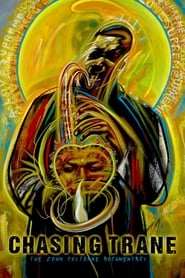
Chasing Trane
Download English Subtitle
Release info
Tags
English subtitle preview
The first 200 lines.
John Coltrane,
he could get in his spaceship
and it could take him anywhere he
wanted to go.
Just to say the name
John Coltrane, it makes me shake
and tremble.
It's like talking about Beethoven, Shakespeare.
You're talking about an artistic genius and
a spiritual giant.
Trane had a sound
that was heavenly, it was like, oh, my God.
Coltrane's strength of
character is in his journey through music.
He sacrificed, and he had the
insight and the consciousness to touch
that thing that's inside of all of us.
Right now,
we're gonna take you down to a favorite
little spot of ours here in New York,
Café Bohemia.
Down there at the present time is
a young man whose name is Miles Davis.
I'm sure you know who he is.
He's a real cool stylist,
Miles Davis is.
1957, John Coltrane is
part of one of the groundbreaking
groups of the day, the Miles Davis Quintet.
Miles Davis is looked upon as the harbinger
of everything new.
He is on the cutting edge,
everyone is looking at him for the promise
of what is to come.
Are you really asking me a question like that?
How good was that band?
Well, I think it was
probably one of the-the greatest,
uh, jazz bands that was ever formed.
Everybody in the band
had their own voice, and John was really,
really special in that regard,
in that you could hear that he was
going somewhere,
and I think that Miles heard that he
was going somewhere.
Being with Miles Davis
was huge for Coltrane,
absolutely huge.
It catapulted him from being somebody
that only really serious record collectors
knew about to being somebody that
everybody knew.
John Coltrane's
experiences in Miles Davis' quintet
was sort of like going up to the
high diving board every night,
allowing himself to be scared,
allowing himself to not know exactly what
was gonna be ahead of him.
It's of a high, high
caliber to be able to play on a level
which is exceptional.
You've got to be touched by the
supreme whatever to be able to play
like Miles played and like Coltrane played.
At this time,
Coltrane is a relative newlywed with the
entire Miles Davis band as best men.
Coltrane marries Naima Austin,
a woman he'd met in Philadelphia.
Naima has a child, Antonia.
This is a man who
gets his first experience at fatherhood
with me, you know, so, and I was a handful,
OK, I was a handful.
I was remembering one
time John had this gig, it was a bad night,
snowy, he did the gig.
I needed some shoes.
He walked back from that gig home so he
wouldn't spend any of the money so
that I could get the shoes the next day.
You know, then you make that sacrifice,
you work all night and then you walk home
so that I can get a pair of shoes?
That's father.
John Coltrane is
working consistently to support the
wife and daughter he adores.
Life is good, but there's a problem.
We are playing in
nightclubs where the pimps and hustlers
are around, and you, uh, go for the hype,
and hey, man, you take some of this
and you feel up and good, you feel good,
and you go for it and then you're stuck.
Hard drugs is an addiction.
Charlie Parker, a great prophet
before Coltrane, Charlie Parker,
he was on drugs.
He wanted to get off. He didn't quite make it.
There was the misguided
notion that artistic ability was enhanced
with hard drugs.
Charlie Parker is the example.
You're gonna turn from
somebody that can't play into Charlie Parker
by doing this?
It doesn't happen. It's a myth.
Geez, and some of my friends, I mean,
they died following that trail.
Before Coltrane was
really aware of it,
he was using the needle and he was
really heavily addicted.
He had become a heroin addict,
and it's not generally known that he
was also drinking to excess.
The funny thing about him, though,
is everybody loved him.
I'd spoke to over 250
people when I did my book, and I couldn't
find anybody that said, oh,
when he was drunk, he was a terror.
They all said, oh, I didn't even know
when he was drunk because he was always
so sweet, you know?
He was that kind of person,
but he was unreliable.
Miles Davis famously wrote in his
autobiography, he would come to
the gig in clothes that looked liked he
had slept in them, so this was not making
a great impression on Miles Davis.
John Coltrane's fired.
He's never been higher in his career,
and so the drop down is long and hard,
and he realizes that he can go the
way of Charlie Parker and just continue
in a self-destructive path or really is he
gonna find a way to dedicating himself to
a clean, spiritual existence that brings
together everything that has inspired
him from the time he was a child?
And so here's John Coltrane at
a pivotal point of his life.
He's gotta make a decision.
I was born in a small town called
Hamlet in North Carolina in 1926.
My family moved from there when
I was a few months old to High Point.
I was an only child. I was brought up Methodist.
It wasn't too strict, but it was there.
In my early years when I was going to
church every Sunday, I was under the
influence of my grandfather.
He was the dominating cat in the family.
Both of my grandfathers were ministers.
I grew up in that and I guess just accepted it.
To understand
John Coltrane's beginnings is to
understand that he comes from the American South,
and the racial realities that he
grew up with, the idea that the
black church was the primary force that
held his family together and also
it was the source point for his first
musical experiences, and the fact that music
and the spirituality were there as one
at the very beginning, is to really get at the
DNA of what John Coltrane is all about.
The Jim Crow South
was basically a reference to what
the South was like after the Civil War,
after Reconstruction, where segregation
had been re-imposed.
It was a place ready-made for the blues,
ready-made for jazz, ready-made for people
using their pain to catapult their art.
The Jim Crow South
where Coltrane grew up proceeded
from slavery and under slavery,
it was against the law for us
to read or write.
How will our humanity be expressed,
creativity, courageously?
It was against the law for black people
to worship God without white supervision,
so what do you do?
You steal away at night near the creek,
hold hands in a ring shout and
lift your voice.
Lift your voice, vocals,
create a community, camaraderie and so forth.
Black music was the
black response to being terrorized
and traumatized.
We're gonna share and spread some
soothing sweetness against the backdrop
Chasing Trane subtitles in other languages
More English subtitles for Chasing Trane
- Chasing Trane The John Coltrane Documentary 2016 1080p BluRay x264-TREBLE · 45 downloads · 2018-08-03
- chasing trane the john coltrane documentary 2016 720p hdtv x264-w4f · 22 downloads · 2017-11-12
- chasing trane the john coltrane documentary 2016 720p hdtv x264-w4f · 20 downloads · 2017-11-12
Comments
No comments yet. Be the first to leave one.