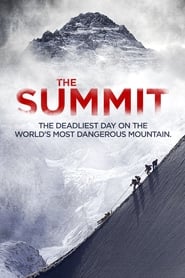
The Summit
Download English Subtitle
Release info
Tags
English subtitle preview
The first 200 lines.
I think people are interested in trying to know
what actually happened to our minds.
8,000 meter, you're in the death zone.
There is a struggle.
There is a fight in every breath,
in every thought.
Everything hurts.
Every limb, every cell is screaming,
"Oxygen, oxygen, oxygen."
You don't feel the cold anymore.
Time seems to stand still.
There's so many reasons to turn around
and only a couple of reasons to continue.
In one hand,
people question us climbing a mountain like K2.
In the other hand,
they're upset why people don't go up
and rescue people
in this dreadful environment.
Where you likely will be killed
by doing so.
There will be things we never will know,
but the question you should ask yourself.
"What would you do?"
Mind you, K2 climbers, huh?
This is unbelievable.
There's Nanga.
K2?
Nanga. Nanga.
Nanga Parbat.
- Yeah. - Oh, my God.
And then we'll show you K2, your destination, okay?
We're on our way in.
- Up there. - Yeah?
Whoop!
You're gonna have to run this bit
'cause there's rockfall.
Really?
Yeah, they've been running it.
Go. Go. Go.
Shit.
It's good to be back here,
and it's nice to wake up to this sight this morning.
It's my belief that everybody has the love of climbing.
You know, the first thing a child Wants to do
is climb something.
The art of rock climbing is relearning
what you knew intuitively as a child.
You get such a big respect for this mountain
and all the climbers who did it before you.
If you want to have a nice story on the birthday parties,
you know, you climb Everest,
but K2 is really, I think, for the real mountaineers.
- Hello! - Hello.
How are you?
Good.
Pretty good view, I reckon.
I think it's pretty hard to beat, actually.
There is quite different between people from Himalaya
and from Western world.
It's quite different, because the Western people,
they are more adventurer.
They love more adventure.
Our people also like adventure,
but they love climbing.
Where are we?
Oh, we are now climbing K2.
All right.
Yes.
The first man to climb K2
was from my valley, Achille Compagnoni.
So K2 is our mountain.
Everything is raw.
It's glaciers.
It's black mountains.
It fills you with respect.
K2 is absolutely the king.
The higher it gets, the more interesting it gets.
So when it comes to climbing 8,000-meter peaks,
you want to do it,
but at the same time, you have this fear.
This is serious.
This is for real.
If you make one step wrong, you're history.
Finally here. Such a relief.
Fantastic job.
Good job.
Let's get the tents up, the stoves going,
and prepare for tonight.
Good?
Yes.
For three months, we were on this expedition,
so when we reached Camp Four, it was already a magic moment.
The whole Earth is beside you.
And then you look behind you.
You see another mountain.
And that's K2. It's a mountain on a mountain.
Ger was coming. I was filming.
I was asking Ger, "How are you feeling?"
And, you know, he was almost crying.
Ah, so happy to be here,
I could almost cry.
'06, we failed to get here.
Here we are now,
and it's wonderful.
You could hear his voice, you know.
"It's something what we already achieved," you know?
"It's already something."
That's what he said.
We had a brilliant night.
There were no clouds.
There was nothing.
And then we went to the summit.
- Are you afraid? - No.
- No? - I am.
- No. - I'm scared to death.
It felt, overall, like... like this was our day.
So we moved up along the slopes above Four.
Fred and I started out a little more slowly.
Both of us felt really strong, very positive.
There were perfect conditions.
I mean, we're talking about a day in a million.
There wasn't a day like this that I can remember,
because it was warm.
Starting to get light enough to see the route up ahead.
And I'm looking up,
seeing a tightly spaced group of climbers
moving extremely slowly.
They're not moving.
What are they doing?
We are way back in time.
We are really late.
I don't know what the fuck we're gonna do.
Very disappointing.
I was so devastated.
You put in so much effort for months,
and then you just realize that there is no way
that we're gonna be able to summit
and come back down in daylight.
We just went down.
It was simple as that.
Everybody thinks that coming down is the easy bit.
It makes sense,
but don't believe it for one minute.
I went up in '54 for my country,
for Italy.
At the time, it seems like suicide.
No one knew what would happen to a human body or mind
at that altitude.
They tested us in a ridiculous manner
for months.
I didn't care.
Of the 11 climbers chosen for the K2 expedition,
I, Walter Bonatti, was the youngest.
I should have died on K2.
But the thing that was to affect me most profoundly
was after the climb.
It was the story.
Many of the other climbers there had been on Everest
or other... other 8,000-ers before K2.
I hadn't been higher than 6,200.
I just wanted to come along to see how high I could get.
When we finally got to the bottleneck,
there's actually a- a traffic jam.
The serac was the main danger.
It's probably almost 100 meters high,
slightly overhanging.
And it could crack any time.
This very, very delicate place
is notorious.
Ice can drop at any time.
It's a Russian roulette.
That's what it is.
The main tactic to avoid the dangers of the serac
is to be fast,
to minimize the time when you're exposed to it.
It was not with a good feeling, waiting there.
We had a lot of respect for the serac, yeah.
We knew that that was a...
A little monster up there.
I put the ice screws in...
You've got a lot of people coming behind
with all the weight that's on the rope,
that's pulling on the screws.
Well, that was a worry.
Above 8,000, you can only trust yourself.
We wanted to traverse out to the right
to have a rest outside of the fixed ropes.
It's exhausting to be in a queue to wait.
You can't climb in your own pace.
Several others also wanted to wait there
until people had passed.
The bigger the chain,
the bigger the chance
that there is somebody in this chain
who is, you know, making a mistake.
Dren, he unclipped his rope and tried to pass me.
Aah!
We were all shocked when he fell,
but when he stopped, he stood up and waved.
More English subtitles for The Summit
- The Summit 2012 HDTV XviD spinzes · 125 downloads · 2015-06-05
- The Summit 2012 DOCU DVDRip x264-DeBTViD · 74 downloads · 2014-06-03
- The Summit 2012 DOCU DVDRip x264-DeBTViD · 52 downloads · 2014-06-02
Comments
No comments yet. Be the first to leave one.