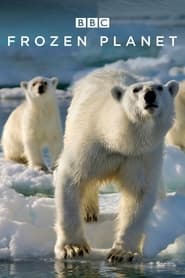
Frozen Planet
Download English Subtitle
Release info
Tags
English subtitle preview
The first 200 lines.
This white wilderness, this emptiness, is the North Pole.
I'm standing in the middle of a frozen ocean.
Beneath my feet and for over 500 miles in every direction,
there are several metres of ice.
But something significant is likely to happen here,
at the North Pole, soon.
Chances are that some time, within the next few decades,
perhaps even as soon as 2020, there will be open water here
for the first time in human recorded history.
The Arctic and Antarctic are changing.
Enormous masses of ice that have been frozen for thousands of years
are breaking apart and melting away.
Ice scientists are going to extremes to find out exactly
what's going on.
For them, these are exciting times.
But the transformation that's being seen here will be felt
far beyond the polar wilderness.
In this programme,
I'll be trying to understand what these changes mean, not just to the
wildlife and people that live around the Poles, but for the whole planet.
I'm starting my journey in the Arctic, the far north of our planet.
It's still very cold outside by most people's standards,
but the Arctic has been warming fast,
twice as fast as the rest of our planet.
My first mission is to find out what effect
that's having on the animals.
Although first, we have to find them.
It's April in Svalbard.
We are 1,000 miles north of the Arctic Circle,
in search of the region's top predator.
We need to travel away from the land and out over the frozen sea.
There's some tracks right beneath us.
Over there.
I'm with a Norwegian team,
which is giving the polar bears of Svalbard their yearly health check.
She's under us now.
I'll come round for a clean shot.
The team works together to give an anaesthetic injection
from a dart gun without hurting the bear.
It takes tremendous skill.
Ah, you've got it.
I'll just back off until she's asleep.
Nobody likes to see a magnificent
animal like a polar bear lolling about unconscious on the ice,
but it's only by darting them
in this way and keeping check on them
year after year, that we can be sure we know
what is happening to them and the population of polar bears as a whole.
Over the last 30 years, many teams have been seeing
the condition of their local bears deteriorate.
Although not every bear is suffering.
How much? 96, there.
And 102 here, so that's 197, yeah.
Is that good?
It's not too bad, it's a bit above average.
So she's a bear in a good condition for Svalbard.
The trouble is that if this was underweight, she would be in trouble.
Not only from her own point of view, but from the point of her cubs,
because an underweight female gives birth to underweight cubs
and underweight cubs have a great problem of surviving
their difficult first year in these circumstances.
It can be minus 40 degrees Centigrade when polar bear cubs emerge
at the start of the Arctic spring,
from their dens where they were born.
This mother hasn't eaten for half a year.
She and her cubs need to fatten up fast over the next few months and
their chances of survival depend on what's happening beneath their feet.
These polar bears aren't walking on land.
They're roaming across the frozen surface of the sea.
And the bear's food lives under the ice.
Ringed seals are hunted by polar bears.
In fact, in some parts, polar bears eat almost nothing else.
So, it's very understandable that this mother ringed seal...
who's looking at me now, should be a little apprehensive.
That pup of hers is only about three or four days old...
and the pup won't be able to swim for another two or three days.
Seals have good reason to be nervous around their holes.
They need the holes to breathe when the sea is frozen,
but this makes them easy to find.
Polar bears can sniff out seal holes, even if they're covered in snow.
Spring is the best hunting season.
This mother's found a food store under the snow
that was probably made by an Arctic fox.
It's a time of plenty now,
but the bear family need to make the best of it
because the good times are about to come to an end.
As the weather warms,
the ice beneath the bears' feet starts to break up and then melt.
And as the ice dwindles, so do the bears' chances of a successful hunt.
Most of the ice is lost over these shallow coastal waters,
where most of the seals live.
It's now summer and these bears have a choice ... take their chances
on the shrinking ice floes, or make for the safety of the land.
It's a case of sink or swim.
Bears have always gone hungry in the summer,
but the length of time when there's enough ice for them
to go hunting is getting shorter and shorter, across much of the Arctic.
This is hitting cubs particularly hard,
because they can't survive for as long without feeding as their mother.
Cubs that were born underweight are at the greatest risk.
This mother and her cubs may well not get another meal
until the sea freezes again in winter.
There's not much to eat on land and the fact is that the longer the cubs
have to wait until the ice returns, the more likely they are to die.
Longer summers with no ice are probably the main reason why
many polar bear populations are dropping.
To help monitor bears into the future, this female is being fitted
with a radio collar to track her movements.
It's an extraordinary sensation to be
so close to such a powerful animal.
With luck, carrying that collar,
she will have more years to go yet...
and be telling us a great deal
about herself and the rest
of the race of polar bears, as they
face this very uncertain future.
The future of the ice cover on the sea isn't just
an issue for the animals.
It's a big concern for the people
who live in the Arctic
and travel across the ice every day.
David Iqaqrialu is an Inuit from the village of Clyde River
in the Canadian Far North.
There are very few roads up here, so David and his community,
like most Inuit people, have always travelled across the frozen sea.
Dog sleds are the safest way to get around because the dogs feel
thin ice underfoot and won't lead travellers into trouble.
Old-timers, like David, know the ice is as well as we know
the streets in our local neighbourhood.
Every spring,
cracks have always formed in the same places at the same time.
It's going to be big very soon. After two weeks maybe...
it will be more open.
But now, cracks are appearing where they never did before.
So, David and his friend, Laimikie, have taken on a new job.
They are using special GPS units to record the position
of new cracks or weak ice.
These findings will be used
by locals for their own safety,
but they're also being studied by ice scientists,
who want to predict how the ice will change in years to come.
THEY SPEAK THEIR NATIVE LANGUAGE
The Inuit are keen to know what the future holds too
because they've seen with their own eyes the changes
that the scientists have seen from space.
This satellite photo from 1980 shows the Arctic Ocean
at the end of the summer, when ice cover is at its minimum.
Since then, there's been a 30% drop in the area covered by ice.
But these images can't tell us about changes to the most important factor,
the thickness of the ice.
Measuring thickness across the whole ocean
was beyond scientists for many years,
until help came from an unexpected source.
The Arctic Ocean is of huge military importance, as it's the shortest
route between North America and Russia.
Since the late 1950s, British, US and Russian submarines
have been patrolling the Arctic Ocean.
But as well as looking out for enemy activity,
they've also been measuring the thickness of the ice,
critical when looking for a place to surface.
When scientists got permission to look at the submarine crew's records,
they discovered that the ice has been thinning fast.
In fact, it's nearly halved in thickness since 1980.
Across most of the Arctic Ocean,
there are now just a couple of metres of ice.
It's so thin that it could melt away almost entirely in the summertime,
and that includes the ice at the North Pole.
If current trends continue, then there will be
open ocean here by summer's end,
some time within the next few decades.
So, the days of the Arctic Ocean being covered
by a continuous sheet of ice seem to have passed.
Whether or not that's a good or bad thing, of course,
depends on your point of view.
Nobody has had a better view of the changes to the Arctic Ocean
than the people of Barrow, the most northerly town in Alaska.
The people here have always survived by hunting on the frozen sea
and they celebrate this at a festival every year.
The blanket toss was once the best way to spot distant animals to hunt,
as lifelong resident Lewis Brower explains.
When we throw ourselves up into the blanket, you know,
you get that much more of an 'Ahh' of seeing further and further out,
so sometimes, you'll jump 15-20 feet in the air,
and hopefully, you're being caught right back into the blanket.
I'm OK! THEY LAUGH
But the old way of life is under threat.
When Lewis was young, the sea stayed frozen to the horizon until July,
and some ice remained off-shore all summer.
But now, it's breaking up in June
and melting away completely for two or three months.
I used to go out on the ice all the time at this time of the year,
but we can't do that any more, cos there's no more ice.
Lewis can also see that the loss of sea ice is affecting
the animals he hunts for a living.
Since 2007, something very strange has been happening
on this stretch of coastline, close to Barrow.
Mother walruses, confused by the lack of ice, are crowding onto the land
with their pups.
This very tight crowding isn't normal
and it's caused many youngsters to be crushed to death.
Frozen Planet subtitles in other languages
More English subtitles for Frozen Planet
- BBC: Frozen Planet - Complete Series (2011) · 136 downloads · 2018-07-16
- 07 On Thin Ice 720p HDTV MP4 · 83 downloads · 2014-03-17
- Frozen Planet -Complete Series-720p HDTV x264 YIFY-350mb-Eng · 133 downloads · 2013-07-23
- Frozen Planet 2011 720p BluRay x264-RO4EVA · 167 downloads · 2012-05-09
- BBCFrozen Planet EP01 To The Ends Of The Earth 2011 720p BluRay AC3 x264-HDxT En · 248 downloads · 2012-03-07
- BBC Frozen Planet 2011 1080p BluRay DTS x264 D-Z0N3 · 173 downloads · 2012-01-21
- BBC Frozen Planet E08 The Epic Journey · 81 downloads · 2011-12-30
- frozen planet ep7 Resync for vsenc release · 89 downloads · 2011-12-16
Comments
No comments yet. Be the first to leave one.