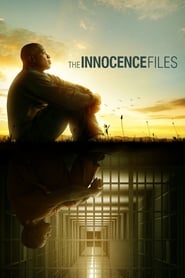
The Innocence Files
Download English Subtitle
Release info
Tags
Download English Subtitle Files for Mobile (9)
English subtitle preview
The first 200 lines.
We get flooded with letters from all over the country.
At least a couple of thousand letters from incarcerated men and women a year.
A lot of these people have been in prison for two, three decades.
They're out of time,
and so they write to us.
These letters all represent human beings who are incarcerated,
claiming to be wrongly convicted.
In many respects, we're the court of last resort.
And we can't take every case.
We can only take on about 1% of the cases.
I was convicted in 1983 for murder in the second degree...
This is a case of mistaken identity.
- The law clerk gave me... - ...20 years to life in prison
for a crime I had nothing to do with.
I was found guilty and received life...
I have been wrongfully imprisoned for 18 years.
My only hope of proving my innocence...
I hope this letter will cause interest in my struggle.
- Please help. Blood, skin... - I feel beaten down.
As God is my witness...
I'm totally innocent of the crime.
"Back in 1992, I was accused of killing a three-year-old child,
something I know I didn't do.
I've been on death row in Mississippi for five years,
and I know they have the wrong person locked up."
This letter, it was quite extraordinary.
As you read any of these letters, you have no idea
about the the duration and density of the journey before us.
We have to have good models in place...
And you become, frankly,
more angry with how foul the criminal justice system is.
People in the crime lab saying the tire prints match,
the shoe prints match, the hair matches,
the bite marks match.
Because of these unreliable methods,
innocent people are going to prison.
It's the whole profession.
It's the whole system.
It's the whole methodology.
It's all junk.
I don't remember a whole lot about that night.
I know...
we were home.
I am the oldest,
and then was Courtney,
and then there's Patria, Patria's the baby.
I remember that night. Just a normal night,
and I had gave all three of my kids a bath and put them to bed, in my bed.
I know the way the bed was positioned.
It was pushed...
up against the wall by a window.
Me and my sisters have always been close,
because we have shared the same room,
same bed.
Nothing unusual. We all slept together.
My mom was there and my oldest brother was there.
He sleep-was asleep on the couch.
I thought that they was safe and okay.
Me and my best friend,
we'd just get together
and go to the club, you know?
I remember waking up, because...
I knew that Courtney was not there.
She was gone.
When I got home, my mom,
she asked me, was Courtney with me?
I said, "No, ma'am. I thought she was here with you."
That's when we realized that Courtney was missing.
And then we called the police.
Everyone walked around, calling her name,
knocking on different people's doors.
She never turned up.
We thank you, Lord, and we pray now that you would look upon
those that are here at this church.
Lord, as we come together,
to get strength for another week
out into this world...
I like it when tornadoes come through,
because it causes everybody to come together.
If there's no tornado,
there is a divided Mississippi still.
There is a white Mississippi and a black Mississippi.
The majority of the people in Noxubee County are low-income,
predominately black.
Mississippi has got a long way to go.
It's not totally...
separated,
other than the most segregated hour of the week
being eleven o'clock on Sunday morning.
You know, justice prevails in Noxubee County on most cases,
and I don't believe race figures into
much of what goes on in the courtroom up there today.
But Noxubee County has a notorious, horrible history.
There have been many cases from way back
that blacks were mistreated horribly in Mississippi.
I was a Mississippi state trooper after I got out of the Marine Corps.
You know, the patrol was still kind of like on the racist side
with, you know, discriminating against black troopers.
So I ended up having to sue 'em to get hired.
They said I was too short.
So...
I can remember that night pretty good
because we hardly ever have kids come up missing.
It was a small house.
Kitchen, one bedroom, living room.
It was an old house, so...
it wasn't...
so hard for somebody to come in.
I don't think I slept that night.
All I know is that morning around six or something,
Eichelberger said they found her.
She actually was found, it was just a straight shot from here
going north to the pond.
I remember everyone was crowded around the pond.
There was people and police.
When they said they found her it was just so horrifying.
The crime scene was less than a hundred yards from her residence.
She was about 10 feet out there.
She actually was found partially clothed,
face down, and then the water was down a little bit more too.
Steven Hayne is a forensic pathologist,
and he worked with the state crime lab.
And I think he was one of the go-to guys for a lot of death cases in Mississippi.
He noticed that she'd been sexually assaulted.
And something kind of unusual,
some of the wounds on Courtney Smith's body
were made from bite marks.
- How's it going today? - Oh, doing all right. How you doing, sir?
- Pretty good. Been quiet, or busy? - Been pretty busy.
Steven Hayne recruited Dr. Michael West,
a forensic dentist, on the case.
I go to the morgue and examine this child.
We photograph her,
we do the standard evidence collection.
Infant black female.
Approximately three years old. Raped, sodomized, strangled, dead.
There were injuries all over this child.
There was a bite mark on the wrist of Courtney Smith.
Courtney Smith,
the first child homicide case I ever worked.
And...
This was my first case dealing with bite marks.
So I ain't know anything about 'em.
Bite mark evidence was new at the time.
You can compare...
a bite mark on a victim
to someone who literally is a perpetrator.
Like fingerprints, for instance.
They now have a link
that they can pin straight to a suspect.
Usually, you find in these...
aggressive, violent, sexual attacks,
that's where you'll find a lot of bite marks.
Don't really know if I'm qualified to get into all the sociology,
psychology of it.
But they turn animalistic.
Everybody that had access to the house within the last 24 hours was picked up
and processed as a suspect.
They come back with a list of 12 people.
I go, "My God, I've never had this many."
So, we took 12 sets of impressions of these people's teeth.
And actually, you couldn't get any fingerprints
or anything like that at the house.
There wasn't no physical evidence from the house.
And so, Ashley Smith was our primary witness here in this case.
She wasn't all the way asleep. She was laying there in the house
when Courtney Smith was picked up out of the bed.
I was five years old, and I don't remember a lot of it, but...
I remember going to see Uncle Bunky, to talk to him.
I don't remember what we talked about,
um, but I just remember going to see him.
He's Uncle Bunky, the host of Fun Time,
a show he's been doing for more than 30 years.
Uncle Bunky had this local television show
where he would draw animals,
and he would put weird parts on the animals
and ask the kids to identify the animals.
In addition to having his television show,
he also had a side gig with the Lowndes County Sheriff's Department.
Deputy Bunky Williams has a knack for drawing.
It comes in handy when he sketches crime scenes,
a grim task.
What better guy to use
as an investigator
that would question children about what they've witnessed?
All right, now, this is Ashley, and what's your last name?
Ashley Smith.
And today is September 23rd, 1990,
and this is about... oh, 9:57. How's that?
- I got my watch on, see? - You got your watch? Okay.
Now, then, write "Ashley" on that...
Ashley was in the bed the last time she saw Courtney.
And so Uncle Bunky, Ashley and myself
we were sitting there in the room with a tape recorder.
Now, write Ashley on that paper so I know that you can write.
Can you write numbers?
Uncle Bunky says, "You told me he had something in his ear.
Do you remember what he looked like?"
I said, "He had a quarter in his ear."
He had a quarter in his...
The Innocence Files subtitles in other languages
More English subtitles for The Innocence Files
- The Innocence Files S01 WEBRip x264-ION10 · 19 downloads · 2020-04-15
Comments
No comments yet. Be the first to leave one.