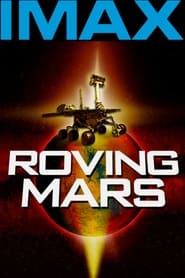
Roving Mars
Download English Subtitle
English subtitle preview
The first 200 lines.
Space exploration began with dreaming,
thousands of years of humans staring into the heavens
and wondering, "How did this begin?"
"What else is out there?"
The earliest answers were given in myth and poetry.
Now they are sought by space-age technology,
and while each mission increases our knowledge,
it also leads our imagination further and further.
How did life begin?
Did it happen more than once in the universe?
The answer may lie on Mars.
Mars today is desolate, dry and barren,
and at first glance has little in common with our own planet,
and yet from orbit we see what look like dried-up lake beds and canyons -
clues that, three or four billion years ago,
Mars may once have been wetter and more Earth-like.
And since life blossomed here on Earth, the question is,
did it ever take place on Mars?
To answer this question, NASA's Jet Propulsion Laboratory
brought together a team of scientists and engineers
whose mission was to discover if Mars ever had what was needed to support life.
A geologist and astronomer at Cornell University,
Steve Squyres was chosen to lead the science team.
As principal investigator, he would direct the team's search
for life's most essential resource - water.
I've worked on the question of water on Mars for 28 years,
You can't learn what you need from a telescope, You must be a geologist,
A geologist is sort of like a detective at the scene of a crime,
Something happened here a long time ago, What happened?
Was it warm? Was it wet? Could life have existed here?
The key is in the clues, and the clues are in the rocks,
On Earth, a geologist can find an interesting rock,
crack it open with a hammer and just look at what's inside,
But we're not ready to send a human geologist to Mars yet,
So we had to build a robot geologist,
and the only place this could be done was NASA's Jet Propulsion Laboratory,
where some of the most innovative engineers in the country work,
We're talking about a robot, a rover that can go to Mars,
land on the surface, take a look around and then cut the cord and go -
carrying everything it needs with it -
cameras, instruments, communications equipment, everything,
Something that can look inside rocks and can tell us what clues those rocks hold,
This place to me is almost sacred,
This is the place where our rovers are assembled before they leave this planet,
Everything that we do in this room must be perfect,
Over 4,000 people have worked on this mission,
For every single piece of this spacecraft, down to the tiniest one,
there was a person somewhere who conceived it, who nurtured it,
who took it from a concept to something real,
lt's taken this team three years to design and build and test these rovers,
and we still have work to do,
We can only launch when the two planets are properly aligned,
and that's just a month away, but we still have tests to run,
We're working in shifts, almost around the clock, and we don't know if we'll make it,
There's no one person who can get their arms around this thing and say:
''l understand everything about this vehicle,''
lt's now burst the bounds of our brains,
This rover is more than just a roving geologist,
This rover also has to be a spacecraft,
lt actually has to fly itself from Earth to Mars,
ln addition, it has to do the very subtle and quick timing control
of all the things that happen as it enters and lands the vehicle,
We had to stuff all that intelligence and capability
into that little six-wheel vehicle back there so that it could get there safely on its own,
l call our spacecraft the ''origami spacecraft,''
which means it's really a complicated series of folds,
We punched holes in the lander petals for the wheels to snake through,
We've had to fold everything into these complicated shapes
to get this system to fit inside this tetrahedron,
lt's beautiful, but at a price, and that price, in this case, is complexity,
There have been missions to Mars since the '60s,
there have been dozens of them, but two-thirds of those missions failed,
Mars is a spacecraft graveyard,
A spacecraft has to travel about 300 million miles to get to Mars
at about 60,000 miles an hour,
but it still takes seven months to get there,
Trying to hit our landing sites from that distance
is like shooting a basketball from Los Angeles to New York
and having it go through the hoop without touching the rim,
The smallest mistake on our part could put the whole mission in jeopardy,
Two of the last three missions to Mars were failures,
One spacecraft burned in the atmosphere, the other one crashed on the surface,
This time, NASA decided to send two identical spacecraft
to double our chances of success,
The two rovers are named ''Spirit'' and ''Opportunity,''
They have very different personalities,
They did when they were babies, back when we were first building them,
''Spirit'' was our troublesome firstborn,
Every test we ran, it seemed we ran on ''Spirit'' first,
and the first time you try, it usually doesn't work,
We'd run tests on ''Spirit'' and they'd fail,
and we'd try to fix things, run another test, and that would fail, too,
By the time we got to ''Opportunity,'' we'd learned stuff,
and things went much more smoothly,
The biggest problem was underestimating the size and weight of the rovers,
Once we realized how big they really had to be,
we also realized that the landing system we planned to use
couldn't get them to the ground in one piece,
As the rover got heavier, the lander got heavier, the aeroshell got heavier,
The whole thing got heavier and heavier and heavier,
From the very beginning, on this mission, it seemed like nothing was going right,
The air bags are like the air bags in your car, but way more expensive,
They inflate explosively around the vehicle and they cushion the landing,
The first time we tested them, they tore open and deflated,
Setbacks - we know they are going to happen,
l always tell people, when you start these projects,
the same thing probably happened to Lewis and Clark
and Captain Cook in their exploration -
what is guaranteed is there will be setbacks,
3, 2, 1...
These rovers have to land using a supersonic parachute,
The parachute design we thought would work ripped to shreds,
The lander had gotten so heavy that the chute just couldn't handle it,
We were practically out of time, and all we had was a chute design
that would destroy the spacecraft when we tried to land,
We had to build a whole nother set of new designs -
no less than three or four designs we had to test
in the three months that followed in our mad rush to make it to the launch pad,
We were running out of money, we were running out of time,
The drop was successful, The fact that the parachute exploded - not a good thing,
- l'd rather have it happen here than ,,, - Mars, That's right,
Unfortunately, strictly speaking,
that chute that just exploded was the chute that we were planning on taking to Mars,
Mars is a tough place to send a spacecraft,
The average temperature is 60 degrees below zero,
lt goes down to 1 00 below zero at night,
There can be dust storms that darken the skies for months at a time,
But if the rovers make it, they'll give us the experience
of what it would be like to be on Mars,
We'll be able to look off into the distance and say, ''Yeah, l'd like to go there,''
and then actually go and see what we find,
The rover's arm has the same dimensions of a human arm -
with a shoulder, an elbow and a wrist,
The arm tucks up tight under the front of the vehicle for when we drive around,
but when we get to a rock that we want to examine,
the arm unstows and reaches out, using all of its joints
to place the instruments on a rock and to begin to study them,
The hand has four fingers, One is a microscope,
two are spectrometers to tell us in detail what the rocks are made of,
and the fourth one is called the RAT - the Rock Abrasion Tool,
To examine the rocks, we've got to get to them, and Mars is very bumpy,
So to deal with bumps, engineers came up with a ''rocker-bogie'' suspension system,
lt's a very clever design that allows each of the six wheels
to go up and over a rock independently while the rover itself hardly tilts at all,
OK, come on in, guys, Now, stay clear, Watch it, watch it,
Stay clear of this, 'cause it's gonna move, Watch the wheels ,,,
lt goes way beyond this single mission,
The eventual goal is to send humans to Mars,
but the first person to walk on Mars is not an astronaut today,
lt's someone in high school or in elementary school,
So it's turning in place, then, when it gets lined up just right,
we're gonna drive it backwards,
We've invested so much work, so many years,
so much of our hopes and our dreams into these rovers,
And then when you think about where they're going,
the ride they're gonna get on that rocket, the transit through space,
what it's like when that parachute goes out at mach 2,
going through the Martian atmosphere,
You're standing next to this little robot
and you realize it's gonna spend eternity on the surface of another world,
lt's going to another planet, for real,
And once they're gone, that's it,
After the rovers launch, we're never gonna see them again with our own eyes,
We've done everything we can to prepare them for the dangers they'll have to face,
but it's gonna be very hard to say goodbye,
''Spirit'' will be launched first, then ''Opportunity'' three weeks later,
Mars and Earth are both orbiting the sun,
so they're always moving relative to each other,
Every 26 months, there's a brief interval
when the planets are lined up just right,
At that time, and only at that time, we have enough rocket fuel to make it,
So this is our one shot,
5, 4, 3, 2, 1...
We don't fire a rocket motor all the way to Mars, We don't need to,
We just place the spacecraft on a trajectory to Mars,
and let it coast for 7 months and 300 million miles
until it reaches the planet,
Once it's been pushed on its way to Mars by the launch vehicle,
it has to maintain its orientation toward the sun
and it needs to be able to correct its orientation and direction
so that it would hit Mars and get to this very tiny spot on Mars we're aiming for,
So all that has to take place over the course of the seven-month journey,
Landing is when the real challenge begins,
Mars is so far away, it takes about ten minutes
for a radio signal to travel one way between Mars and Earth,
but it's only six minutes from when we first hit the top of the Martian atmosphere
to when we're bouncing on the surface,
There's nothing we can do to help when it's time to land, The rovers are on their own,
and we're just passive, passionately interested observers
waiting for a radio signal that shows whether or not they've survived,
Not going to be an issue, The current reported temperature
is about zero degrees Celsius, which is close to the limit,
the flight-allowable limit, however ,,,
Landing on Mars is so complicated,
There are so many things that can go wrong,
The flight computer has to know precisely the right time to deploy the parachute,
lf it deploys it too high, when the parachute opens,
the wind forces will just rip it to shreds,
lf we deploy the parachute too low of an altitude,
it won't open in time, and it will just crash right into the ground,
Roving Mars subtitles in other languages
More English subtitles for Roving Mars
- Roving Mars 2006 WEB-DL DSNP · 32 downloads · 2021-03-30
- IMAX Roving Mars 2006 1080p BluRay H264 AAC-RARBG · 34 downloads · 2017-09-13
- IMAX Roving Mars 2006 1080p BluRay H264 AAC-RARBG · 29 downloads · 2017-09-13
- IMAX Roving Mars [Bluray 720p and 1080p SRT] · 33 downloads · 2010-03-10
- IMAX Roving Mars 2006 720p BluRay x264-REVEiLLE · 29 downloads · 2008-02-29
Comments
No comments yet. Be the first to leave one.