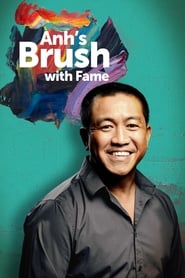
Anh's Brush with Fame
Download English Subtitle
Release info
Tags
Download English Subtitle Files for Mobile (10)
English subtitle preview
The first 200 lines.
In this series, I meet some amazing Australians...
That's not journalism, that's churnalism.
I also like to test my own limits.
..as they tell me their fascinating stories.
Hey, sexy, your turn for the garbage.
I put paint on the canvas...
There I was, about to win the Melbourne Cup.
..and tried to capture elements of their personality.
"I'm gonna be a world champion!"
"Pipe down, Gidget. You haven't even won a contest yet."
I was about 48 hours away from... dying.
The portrait is theirs to keep so I hope they like it.
Oh, that's nice. Wow.
Oh, my heavens!
Wow.
Welcome to Anh's Brush With Fame.
Lisa Wilkinson is one of the most influential women
in Australian media.
After a successful career in magazines,
first as editor of Dolly, then Cleo,
she made the move into television.
We have an exclusive interview with a navy whistleblower.
She has gone on to become one of the biggest names in broadcasting.
Where does her ability to connect with an audience come from?
I hope he captures my optimism.
I just adore
the way he interprets faces and all of the different uses of colour
and those beautiful brush strokes.
So I just... I hope that I'm a... I'm a good patient.
Lisa Wilkinson is a loved and respected journalist.
Growing up in Sydney's south-western suburbs,
she built her career on hard work and great instinct.
She has an ability to process the world around her
with warmth and intelligence.
That's the Lisa I wanna capture today.
Lisa, welcome. Anh, how lovely to see you.
Mwah. Welcome to the show. Thank you.
I'm so flattered to have been asked.
Such an honour to have you on. Thank you.
Lots to talk about. This is the chair?
Yeah, that's the chair.
Let's go right back to the start.
You grew up in Campbelltown. What was that like?
Oh, it was probably...
..about as... classic an old-style Aussie upbringing
as you could possibly imagine.
I grew up with two brothers, one older, one younger
so I had to make up the numbers in the cricket team.
And it was the old, you went out in the morning during school holidays
and you didn't come back until the streetlights were turned on.
Did your parents encourage you to be who you wanted to be?
Dad wasn't ever one to sort of lay down the rules.
Yep. He lived by example.
He'd sort of gone from being president of the Lions Club
for many years
and then starting up the local junior version of that,
which was the Leos club.
And he was loved by everyone.
He just made people around him wanna be better.
And, I mean, my dad passed away nearly 30 years ago,
and I still get people that I've never met before
coming up to me and saying, "I knew your dad in this capacity
"and you know, what an extraordinary human being he was."
My mum had a really tough childhood
and I think in many ways was very, very lucky
that she met the angel that was my father.
A lot of her childhood was spent in and out of orphanages.
Her mother had her when she was 15. Oh.
And so, you know, in those days, she was considered illegitimate.
Had a couple of stepfathers who weren't very nice to her.
And I think it made her not very trusting of men
and deeply insecure about what life held.
And so...
..when I went out into the workforce and just decided that...
"I'm just gonna go for it."
Mum would be very nervous for me.
Yeah. Whereas Dad was just always beaming.
You had dreams of being a ballerina but you stopped.
Yeah, I loved it.
From the moment I first put on a pair of ballet shoes,
I just felt light as air.
And I couldn't believe I got to practice it
and that I was good at it. Mm.
But, you know, Campbelltown was a bit of a school of hard knocks.
Ballet was considered daggy. Not that I cared.
Yeah, I started getting bullied at school.
And the problem with bullying is...
..the desire of those who are bullying you are to diminish you.
And my response, at least, was
"if I disappear into the cracks,
"maybe they won't look my way anymore."
I would have loved to have known how far I could take ballet.
Yeah. But I gave it up.
Unfortunately, the bullying didn't stop.
It was really, really awful.
You never realise how alone you are
until you've been cornered in a playground
and what feels like the entire school
is calling out, "Fight, fight, fight."
And then you feel... the punch.
Wow. Mm.
I used to be a really good student and I think everything...
..that you can possibly do not to shine...
..feels like a way out.
So you make yourself small.
And that was what I did.
But I could never talk to my parents about it.
I knew Mum wouldn't be able to cope with it
and I think I didn't want to disappoint Dad.
'Cause he would have wanted to protect me.
So I kind of... I dealt with it on my own.
Which is not the advice I would give to young people now.
Yeah. You've gotta call bullying out.
You've gotta shine a light in those dark cracks where bullies live.
On the very last day of the very last exam,
I remember walking out of the gates of Campbelltown High
after all of the bad experiences that I'd had there,
and I made a firm promise to myself
never again was I gonna let somebody determine who I was
and what I was capable of doing.
You used to love to buy Dolly magazine when you were...
I did! Yeah.
I regularly used to have it confiscated
in Miss Coleman's geography class.
That magazine was everything to me and my girlfriends.
I mourn the fact that teenage girls now don't have that safe place
that Dolly was.
It was such a friend and mentor.
I remember the vulnerability of being a teenager
and not being able to afford any of the clothes, but dreaming.
You imagine a life beyond.
How did you come to work at Dolly?
You know, I'd grown up watching a show
called The Mary Tyler Moore Show. Mm-hm. (LAUGHS)
And she was a producer in a television station.
Yep.
And she was an independent woman in her 30s, living her best life.
And the '70s,
you know, feminism was really starting to come into its own,
Cleo magazine had started,
the possibilities of what you could be as a woman were really shifting.
Yes. I also grew up
always wanting to read the newspapers every day.
I didn't realise at the time, but it just excited me.
And so I decided I wanted to be a journalist.
Mum always said to me, "Get yourself a skill."
No-one in my family gone to university,
so that wasn't really an option,
I didn't wanna be a schoolteacher.
And so I thought, "I'll get shorthand and typing."
So I went to business college in town. No-one knew me.
I wasn't against the backdrop of the science block
where I used to get beaten up.
So I met all these new people in my life
and they liked me.
And I really liked them. Yep.
I just felt like I'd been given this fresh start at life.
And I looked in the Sydney Morning Herald
in the women and girls employment section.
I know! How hilarious is that?! Yeah, it is. It is.
And I love the fact that that is now funny.
Yeah, it's cool. That we can ever think that was OK.
Yep.
So of course, being the late '70s,
the women and girls section was really tiny
and the men and boys went on for page after page after page.
So I got to the letter D very quickly.
Mm. And I stopped
because there was a tiny three-line ad
that said, "Dolly magazine is looking for a secretary...
"/editorial assistant/ girl Friday..."
Whatever that means.
"who is prepared to do absolutely anything."
There were a huge number of girls just like me who love Dolly
and were desperate to work there.
And I don't know how, but I got the job.
Wow.
And from the moment I walked in, I felt like I'd come home.
Yeah, yeah, jeez.
Lisa relished in her first task,
curating the vast amounts of reader-submitted poetry,
but her passion and drive would exceed all expectations.
At 21, you become the youngest editor of Dolly.
What were they thinking?
The funny thing is, I think having been a reader for so long,
I still felt connected to that audience.
I think that's something that editors have to have,
always remain the reader.
Lisa was often challenged about her fresh approach to the business
but sales of Dolly magazine tripled under her leadership
with many sell-out issues.
In 1983, her continued success
would draw the attention of one of the biggest names in media.
I got a call one day
and I was told that Kerry Packer wanted to meet me.
Ah.
And of course, in my head I'm hearing myself saying,
"But I don't wanna meet him."
The thought of working for him just terrified me.
Why would I put myself through that?
More English subtitles for Anh's Brush with Fame
- Anhs Brush With Fame S06 WEBRip iview · 39 downloads · 2021-07-06
- Anhs Brush With Fame S04 WEBRip iview · 13 downloads · 2019-07-24
- Anhs Brush With Fame S03 WEBRip iview · 13 downloads · 2018-09-12
- Anhs Brush With Fame S02 WEBRip iview · 15 downloads · 2018-06-11
- Anhs Brush With Fame S01 WEBRip iview · 17 downloads · 2018-06-11
Comments
No comments yet. Be the first to leave one.