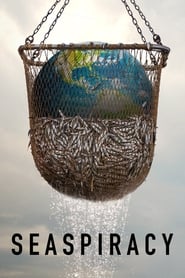
Seaspiracy
Download English Subtitle
Release info
Tags
English subtitle preview
The first 200 lines.
When ships are in the middle of the ocean...
...where problems occur...
they can throw you overboard
into the sea.
It is dangerous for you to make this documentary.
There are many risks.
If you're scared of dying, go home.
My name is Ali.
That's me.
And for as long as I can remember,
I've been fascinated with dolphins and whales.
My obsession with the ocean, though,
was really born out of watching documentaries
from people like Jacques Cousteau,
David Attenborough, and Sylvia Earle.
Watching their films opened up a whole new world for me,
filled with an abundance of beauty,
color, and life.
I would dream of one day exploring our thriving seas
just like they did.
Capturing images of all the extraordinary wildlife
that lived beneath the waves.
After finishing college, I'd been working on other documentaries,
but at 22, I was ready to embark on making my own film
on just how incredible the oceans were.
It's home for up to 80% of all life on Earth.
And with the vast majority of our seas still unexplored till this day,
for me, the oceans were an indestructible source of inspiration.
But not long into starting the project,
this romantic vision that I always had of the ocean completely changed.
...beached whale found off the country's coast earlier this week
had more than 30 plastic bags inside its stomach.
It's the 29th whale of this species to become stranded across Europe
in the last two weeks.
This represents the largest stranding episode in the last 100 years.
- ...washed up on a beach... - In the UK, 4 others died
in a number of beachings nearby in recent days...
When news started coming in of whales washing up on beaches,
even along the Southeast coast of England where I lived,
I was forced to confront a side of the story I never knew.
A story of just how huge our impact on the seas had become.
These animals washing up with their stomachs filled with plastic
was devastating not only because of their incredible intelligence,
but because they even help keep the entire ocean alive.
When dolphins and whales return to the surface to breathe,
they fertilize tiny marine plants in the ocean called phytoplankton,
which every year absorb four times the amount of carbon dioxide
than the Amazon rain forest does,
and generates up to 85% of the oxygen we breathe.
So in a world concerned with carbon and climate change,
protecting these animals meant protecting the entire planet.
The way I saw it was if dolphins and whales die,
the ocean dies.
And if the ocean dies, so do we.
But with so many whales washing up dead, the future looked bleak.
Plastic was invading every last corner of the world's seas,
with huge floating garbage patches accumulating in the middle of the ocean,
like the Great Pacific Garbage Patch.
In fact, today,
the equivalent of a garbage truckload of plastic
is dumped in the sea every single minute,
joining the over 150 million tons already floating there.
But this plastic breaks down into smaller and smaller pieces known as microplastics,
which now outnumber the stars in the Milky Way galaxy
by at least 500 times,
and is seeping into every living creature in the ocean.
Essentially, our oceans have turned into a toxic plastic soup.
And worst of all, I was a massive part of the problem.
Although I signed petitions and subscribed to ocean newsletters,
I did nothing to actually protect what I loved.
So from then on,
I did what any self-respecting Jacques Cousteau wannabe would do.
I became the plastic police.
I donated to every ocean charity I could.
Attended beach cleanups,
and carried reusable cutlery and a drink bottle wherever I went.
My mission was simple.
Stop the world from using plastic toothbrushes,
straws, cutlery, bottles, bags,
or anything single-use plastic.
And I was gonna stop at nothing until my message was heard.
Seaside Fish and Chips.
Yeah, hi. My name's Ali.
I'm just wondering if you'd swap out your plastic straws
'cause it's killing whales and baby sea turtles.
Hello?
But that didn't stop me from tackling this plague of plastic.
So, this is my first beach. In just one hour,
I've been able to collect three whole bags full of plastic trash.
There's takeaway food packaging,
there's cutlery, there's straws, there's everything.
I even found Nemo.
Onto the next beach.
But no matter what beach I went to
or how much I collected,
there was always more plastic, and more animals washing up.
After months of this,
and as I began to wonder if this really was the best way to save marine life,
I came across this.
Japan has confirmed it will resume commercial whale hunting,
and is withdrawing from the International Whaling Commission.
The country's whaling fleet set sail for the Antarctic last Tuesday.
Tokyo says it plans to kill despite a worldwide ban.
So, this is the news I woke up to today.
The Japanese government want to resume whaling in the Antarctic again.
I knew that dolphins and whales were dying accidentally from plastic,
but I never dreamed that they'd be targeted on purpose
by an industry I thought only existed in the history books.
I did some research and found there's been an international whaling ban since 1986.
However, several countries have operated under the radar for years,
most notoriously, though, is Japan.
Logistically, it was extremely challenging to film or do anything
about the whaling in Antarctica.
But I found there was one place in the south of Japan
where this industry could still be seen operating from the coast,
in a place called Taiji,
where each year over 700 dolphins and small whales are herded into a cove
for slaughter.
I wanted to find out
just how big of a threat Japan's whaling practices were
compared to plastic.
So I set up a meeting with one of the few activists
who'd been involved in this issue for years, a guy named Ric O'Barry.
The Japanese government go through a lot of trouble
to make sure that people don't know about this.
If you went there, and you didn't know what you were doing,
you could get arrested, and you could be in jail a very long time.
Because they're trying to get rid of people
who are opposed to their war on dolphins.
When you first show up in Taiji,
immediately, the police are on you.
They're at your hotel. They're following you everywhere you go.
You got the Yakuza, you got the right wing,
you got the government, the fishermen, you got everybody against you.
The room is bugged, the telephone is bugged.
The television is actually photographing you
while you're in your room.
So you ask what, how... What happens when you go to Taiji?
Just know that all of those people are watching you,
and they are trying to figure out,
"How do we take these people out?"
But if it's so risky to go,
and there are other issues affecting the entire ocean,
like plastic washing up everywhere, then why go to Taiji?
Showing up in Taiji with a camera is extremely important.
If we can't fix this,
what are you talking about, saving the ocean?
How can you do that? You can't even fix this.
This is the size of a football field.
My head was still filled with questions,
but with the dolphin hunt just starting,
I knew that figuring out what was going on in Taiji
would give me a better understanding of the bigger picture
of how to save the ocean.
Either I stayed home picking up trash on beaches all day,
or take a risk and find out if there was a bigger threat to the sea.
So I dropped all my other projects,
packed my camera bags, convinced my partner Lucy to join me,
and with the mission to expose what was truly happening to our oceans,
got the next flight out to Japan.
Where are you going today?
Oh, we just arrived. We're just visiting the area.
- Holiday? - Holiday. Yeah.
Drive safe.
Thank you.
What the hell?
From that point on, we had an entourage of police,
secret service, undercover cops,
and the coast guard following us everywhere.
Is it the police?
Yeah, they're out there. Let's go out the back.
So, arrived in Taiji,
and first thing in the morning, decided to head to the harbor.
Pretty quickly, boats start heading out to sea.
There was about 13 of them in total, and they were gone for several hours.
When they returned, they returned in formation
and were billowing black smoke from their exhaust pipes.
And banging on poles in the water
to try and scare a huge pod of dolphins closer to land,
and then maneuver them into a cove where I'm standing above right now.
It's impossible to see exactly what's going on.
There's a lot of splashing.
There's people down there wrestling these dolphins.
Whatever is going on, they don't want us filming.
Police are trying to search for us.
It's really tough conditions to try and film this stuff.
The Taiji dolphin drives continue to be supported,
underwritten, funded by the marine park entertainment industry.
A live dolphin really is very expensive.
And so,
the big ticket is catching young dolphins and whales,
and selling them to marine parks.
What captivity in concrete tanks does
is it takes away everything that makes life worth living for them.
Everything they need to do, they can't do.
And everything they don't want to do, they're forced to do.
I had enjoyed going to these marine parks my whole life,
but never even questioned how the animals got there in the first place.
But now, knowing it was connected to industries like whaling
made me pledge to never go to these parks again.
Seaspiracy subtitles in other languages
More English subtitles for Seaspiracy
- Seaspiracy 2021 1080p WEBRip x264 AAC5 1-[YTS MX] · 59 downloads · 2023-02-26
- Seaspiracy 2021 1080p WEBRip x264 AAC5 1-[YTS MX] · 42 downloads · 2022-06-17
- Seaspiracy 2021 720p WEBRip x264 AAC-[YTS MX] · 37 downloads · 2022-06-17
- Seaspiracy 2021 1080p WEBRip x264-RARBG · 45 downloads · 2022-06-17
- Seaspiracy 2021 720p WEBRip x264 AAC-[YTS MX] · 77 downloads · 2022-05-01
- Seaspiracy 2021 1080p WEBRip x264 AAC5 1-[YTS MX] · 41 downloads · 2021-03-27
- Seaspiracy 2021 1080p WEBRip x264-RARBG · 51 downloads · 2021-03-25
Comments
No comments yet. Be the first to leave one.