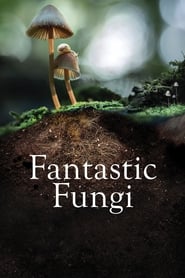
Fantastic Fungi
Download English Subtitle
English subtitle preview
The first 195 lines.
There's a feeling,
the pulse of eternal knowledge.
When you sense the oneness,
you are with us.
We brought life to Earth.
You can't see us, but we flourish all around you.
Everywhere, in everything,
and even inside you,
whether you believe in us or not.
From your first breath, to your last.
In darkness, and in the light.
We are the oldest, and youngest.
We are the largest, and smallest.
We are the wisdom of a billion years.
We are creation.
We are resurrection, condemnation, and regeneration.
We are mushrooms.
Mushrooms are very clandestine
and very much the trickster.
So, they're hiding from you all the time.
We're in Agarikon territory now,
there's some big living stags up here.
It's always interesting and exhilarating
to be in the old growth forest,
but not always rewarding in accomplishing our mission
to find a new Agarikon strain.
But nevertheless, it beats being in the office.
Fungi are the grand molecular decomposers of nature.
Now, what does that mean?
Well, they break down wood.
And here I'm laying in the forest,
haven't peeked yet, but here's a piece of wood
laying down on the ground.
If I were laying down on the ground, and I died,
fungi would leap up to recycle me
and that's the way of nature.
Mushrooms represent rebirth, rejuvenation, regeneration.
Fungi generate soil that gives life.
The task that we face today
is to understand the language of nature.
My mission is to discover the language
of nature of the fungal networks
that communicate with the ecosystem.
And I believe nature is intelligent.
The fact that we lack the language skills
to communicate with nature does not impugn
the concept that nature's intelligent.
It speaks to our inadequacy for communication.
If we don't get our act together
and come in commonality and understanding
with the organisms that sustain us today,
not only will we destroy those organisms,
but we will destroy ourselves.
Mushroom, it's not like a vegetable
and it's not like a animal, but it's somewhere in between.
The fungus is it's own kingdom all together.
There's over 1.5 million species.
That's six times more than plants.
Of all those species of fungi,
about 20,000 produce mushrooms,
and mushrooms come in an incredible diversity
of shapes and sizes and colors and lifestyles.
There are even bioluminescent mushrooms.
A lot of people are afraid of mushrooms.
People associate mushrooms and fungi,
you know, mold, with death and decay, which makes sense.
You know, there's a lot of fear because of fungi's role
in the cycle of life.
They decompose dead and dying organisms
and move all those nutrients back into the cycle.
They kind of are at the very end of stuff,
but they're also at the beginning.
- Once you start working with mushrooms, you get drawn in.
A really important difference between plants and fungi
is that plants have evolved to catch your eye.
When a tomato gets red it is saying,
hey, I'm ready, come get me.
The mushrooms don't give a shit.
They're doing their own thing and a lot of them are hiding.
Every time you pick up a mushroom,
you are faced with the omnivore's dilemma.
Do I know enough to eat this?
Should I eat this?
Will this kill me?
And that's one of the reason why people
are freaked out about mushrooms, because, yeah,
there are ones that can kill you.
There are some that will take out your liver
or your kidneys, but to be honest with you there's berries
in the woods that can kill you, too.
So it's, it's really a matter of knowing your mushrooms.
There's a huge subculture of mycofiles,
of people who are fascinated with mushrooms.
They hunt mushrooms together
and they eat mushrooms together,
and they are sort of bloated pleasure seekers
with a scientific bent.
You know, really my kind of crowd.
Is that tricholoma?
Grifola frondosa.
This is Cortinarius (mumbles).
Agaricus bisporus.
That's a Cladonia lichen.
- So I started attending these festivals and forays
and learning more and more.
It changed the way I saw everything.
Mushrooms actually were the window by which
I came to understand nature in a deeper way.
If we didn't have Fungi,
we would get this build up of plant matter
that would choke the Earth.
I mean they really are the key.
They break down plant life and make it usable
for new plant life and for animal life.
- They are the digestive tracks of the forest.
One of the lifestyles of fungi is the decomposers
called saprobres, or rotters, if you want.
The yeasts and molds used in making beer
and wine and cheese are all saprobes.
That's actually a penicillin mold
in Gorgonzola and Roquefort.
Bourbon is fungi fermented corn.
But this ability to break things down is a talent,
if you will, that can be harnessed to help us deal
with some of our problems like pollution.
These rotters, they can break down anything that's natural.
That's what they have evolved to do,
anything that's hydrocarbon based.
So that includes stuff like oil spills.
Pollutant problems.
That's kind of the truth of it.
I was a part of this experiment.
There were four piles saturated with diesel
and other petroleum waste.
One was a control pile, one pile was treated with enzymes,
one pile, treated with bacteria and our pile
we inoculated with mushroom spores.
The fungi absorbs the oil.
The fungi is producing enzymes for oxidases
that break carbon hydrogen bonds.
These are the same bonds
that hold hydrogen carbons together,
so the fungi becomes saturated with the oil.
And then, when we returned six weeks later,
all the tarps were removed,
all the other piles were dead dark and stinky.
We come back to our pile and it's covered
with hundreds of pounds of oyster mushrooms.
Some of these mushrooms are very happy mushrooms,
they're very large.
They're showing how much nutrition that they could obtain,
but something else happened which is an epiphany in my life.
They sporulated, the spores attract insects,
birds then came, bringing in seeds and our pile
became an oasis of life.
- Mushrooms are the fruiting bodies of fungi,
so the mushroom is like the apple.
The bulk of the organism is growing underground
and it's composed of these long threads.
These threads grow one cell at a time
and then they branch and re-branch,
growing in every direction they can,
even three dimensionally.
And that mass of threads is called a mycelium.
A stick falls onto the ground,
you pull it up and there's mycelium.
It is virtually everywhere.
- A mycelium has more networks than our brain
has neural pathways, and works in much the same way,
with electrolytes, electrical pulses.
They're the most common species on Earth,
they're everywhere.
- Just to give you an idea of how much fungi
are in the forest, as you're walking through,
there's about 300 miles of fungi,
under every footstep that you take
and that's all over the world.
And they form these massive links,
it's like a big web just growing through the forest.
- Mycelium that can grow out even just this big
can have trillions, literally trillions of end branchings.
Almost everyone knows about the computer Internet.
The mycelium shares the same network design.
Trees are communicating
using the mycelium as pathways.
They are connecting one tree to another.
They're using the mycelium, too, to feed one another,
in other words one tree can swap nutrients
with another tree using mycelium as the passage way.
So we often think of kin recognition
as an animal behavior.
Humans, you know, we love our babies,
we know it's our baby
and we're gonna look after that baby.
Well, we never thought that plants could do that,
Fantastic Fungi subtitles in other languages
More English subtitles for Fantastic Fungi
- FantasticFungi2019BluRay1080pAVCDTS-HDMA5 1-HDT · 34 downloads · 2022-02-03
- FantasticFungi20191080pBluRayHybridREMUXAVCDTS-HDMA51-UnKn0wn · 40 downloads · 2022-02-02
- Fantastic Fungi 2019 720p WEB-DL x264 AAC-[YTS MX] · 40 downloads · 2020-09-11
- Fantastic Fungi 2019 720p WEBRip x264 AAC-[YTS MX]-HI · 75 downloads · 2020-09-11
- Fantastic Fungi 2019 720p WEBRip x264 AAC-[YTS MX] · 49 downloads · 2020-09-11
- Fantastic Fungi 720p · 67 downloads · 2020-09-09
- FantasticFungi H264 SD TC BURN IN srt · 46 downloads · 2020-03-27
Comments
No comments yet. Be the first to leave one.