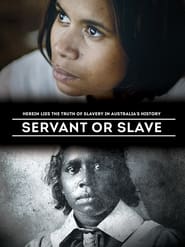
Servant or Slave
Download English Subtitle
Release info
Tags
English subtitle preview
The first 200 lines.
I was originally born in Grafton,
taken from Grafton to Cootamundra Girls' Home
when I was four.
I don't know why.
It's not clear to me where I'm originally from.
I know I'm from up there somewhere
Up the Bundjalung tribe, that's what I was told.
I'm still tryin' to find out.
Not really important to me it's not.
'Cause I was too much in the institutions.
I was three and a half years old.
Being so young as I was,
I thought this was natural to be abused
you know and thrown in the box room
and whipped and things like that.
Be a domestic service
to be workin' in a white person's house
to do their cleaning and their washing
and lookin' after their kids
and that's what we were doing.
It was just literally a slave,
to be there to do their bit of what they wanted you to do.
We were like dogs,
just given the rubbish you know?
Had the leftovers.
Hurts, to think what the wealthy have done to us.
Pain that we went through.
I still have nightmares.
In 1901, Australia became a federation.
Under the new constitution,
aboriginal people would not be counted in the census.
And the commonwealth would have the power to make laws
relating to any race of people in Australia,
except aboriginal people.
The federated states retained exclusive power
over aboriginal affairs until 1967
when the constitution was amended in a historic referendum.
When Australian's voted overwhelmingly
to change these discriminatory clauses.
Aboriginal people had been subject to oppressive legislation
that varied on a state by state basis
from the late 19th century.
The notorious aborigines protection board
had the power to forcibly move people
from their traditional lands, onto reserves and missions
and to remove children from their families
and power over their financial affairs.
The policy of protection,
of smoothing the dying pillow of a doomed race,
rapidly changed to one of control.
With the end game of assimilation.
Certainly when the pieces of legislation
were first drafted in the late 1880s
through to the early 1900s,
what you do see is a reflection
of this generally held assumption
by the dominant culture in Australia
that aboriginal people were a dying race.
By the time you get to the 40s, 50s, 60s
and it's very clear
that the aboriginal population isn't dying out.
The impetus behind the concept of protection
becomes very different.
You do find a large sort of broad similarity
in terms of the assumptions about
inferiority of aboriginal people,
the problems that were assumed to exist
or would be created if aboriginal children
were left with their families.
The importance of seeing assimilation
of aboriginal people as a key way of progressing forward
in terms of federal government policy.
All of those sorts of big ideological pictures
were pretty much existent across the board.
I was born in Brewarrina.
I didn't know my father
but I had a step father who I really loved
who was the only dad that I knew.
We was playing outside in the dirt
with our roly poly
and then while mom
and all the other ladies were playing cards inside,
black car come there, just parked there.
Jenny she had me by the hand
and hanged onto me.
And the welfare fella just picked us up and took us.
Took us and mom didn't know.
There was certainly an assumption
that the best time to remove children
was the youngest you could possibly get them
so there were lots of instances where
aboriginal women would go into hospital,
would be told their children had died
and then later find out that they'd been adopted out.
There was a view that if children were institutionalised
or sent out to work,
somehow these would be better ways
of equipping them for life in white world
then allowing them to stay with their families.
Well I was born at Peak Hill,
in Peak Hill hospital.
In 1932.
That's a long time ago.
Yeah no,
you'd see me out on the mission there at Peak Hill
with mom and dad.
Well that's where we was taken' from there.
I remember we was playin' out on the lawn
out the front of the courthouse
and that's where mom and dad walked away
and left us there.
I don't think they knew where I was going,
I was only little,
I didn't know whether they knew or not
but we didn't know.
I was only little, tiny kid.
Train ride and ended up at Cootamundra.
In 1911, the Cootamundra Domestic
Training Home for aboriginal girls
was opened by the Aborigine's Protection Board,
in Country, New South Wales.
Until it closed in 1968, hundreds of aboriginal girls
were placed in the home,
after being forcibly removed from their parents.
The idea was to segregate part aboriginal children
from their families,
in order to assimilate them into the mainstream community
as domestic servants.
Matron called out and said,
"now girls, this is your new home.
"You behave yourself and do as you're told,
"things will be alright."
And that's what she said.
They never told us why we were taken, never.
I went to Bomaderry Children's Home ,
I was aged two with the other two sisters.
And when I went to Cootamundra,
about nine with me other sister Patty,
they said we were gonna meet me eldest sisters
and I didn't even know we had 'em.
Only family I knew was the Bomaderry kids
and the ones in Cootamundra, they seemed strange.
I wasn't brought up with them.
If you're not brought up with someone,
how could you connect?
The story of private John Wenberg
of the second AIF and his wife Lily
is one shared by many families.
All nine of their children
including sisters Adelaide, Valerie and Rita
were taken from them.
Some were taken before their younger siblings
had even been born.
Two of their children, Dorothy and John died of neglect
while wards of the state.
Despite their repeated pleas
for the return of their children,
John and Lily were formally advised
that the removal of their children
was justified due to parental neglect.
- I got in the home when I was three and a half.
Grew up, grew up not knowing they were my sisters.
And grew up not wanting to know.
You know, we're not close now.
We're strangers.
Same with our brothers, they're strangers.
I was more or less on me own
amongst about 45 girls or more.
All in the same position I think that I was in.
Taken and just put there, for the reasons unknown.
I was a real devil then,
I just wouldn't settle down to do nothin'.
'Cause I had an idea in my head
that I shouldn't have been there.
You know when you wake up in the morning
and you think you're gonna wake up
and see your mom and dad and you don't,
you wake up and you're in a dormitory with about
14 or 15 other kids, all age groups,
it's not very comforting.
When you became a women you know,
you got your periods.
I didn't know what was going on.
I was down the toilet, I saw blood,
"oh shit what's happened here"?
And went up to the matron and,
"Oh Adelaide," she said.
"You're turning into a women."
And all she did was handin' me these things,
you have to wash yourself and that you know?
So shit what's goin' on here you know?
That's all we were told, nothing.
There was no love up there, none whatsoever, none.
In 1948, an Anglican missionary couple
established the Marella Mission Farm
known as the Hidden Mission,
to accommodate aboriginal children on their private property
in a north western suburb of Sydney.
The first child arrived in 1953
and the subsequent hundreds of children
More English subtitles for Servant or Slave
- Servant or Slave 2016 1080p AMZN WEB-DL DD2 0 h264 SDH-QOQ · 32 downloads · 2018-08-05
Comments
No comments yet. Be the first to leave one.