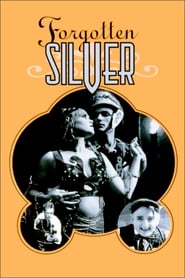
Forgotten Silver
Download English Subtitle
Release info
Tags
English subtitle preview
The first 200 lines.
I'm in a small town called Pukerua Bay in New Zealand.
Behind me is the house of an elderly lady
called Hannah McKenzie.
I've known Hannah all my life.
She's a very close friend of my parents, who live just 4 doors away.
In fact, I remember coming to "Auntie Hannah's" gardens,
as we called her when I was about 7 years old and playing in these trees over here.
I didn't know a lot about Hannah McKenzie back then
I knew that she was a widow - her husband had died many years before I was born.
About a year ago I had a call from my mother.
She said I should drop in on Auntie Hannah sometime because
she was wondering if I'd be interested in a lot of old films that she had stored
in a shed at the bottom of her garden.
I wasn't expecting much.
Hannah described them as a
lot of old home movies that her husband, Colin, had taken.
I was expecting to maybe find a bunch of old home movies,
drop them off at the film archive on my way home and that would be the end of it.
What I found, sitting right here, was an old chest.
I opened the chest and I found the most extraordinary collection of films
These were 35mm films.
The tins were rusty.
There were strange names on them. "Warrior Season".
Films I'd never heard of.
I had no way of realizing the significance of these films at the time.
We later discovered they were made between the turn of the century and the late 1920s
by an extraordinary New Zealander.
A man who has now gotta join the ranks of the great film pioneers.
A guy called Colin McKenzie.
At the archives we get a lot of film coming in.
It's family parades, babies on lawns
A lot of it's very interesting, historically.
Just on dress, fashion, and things like this, but
Colin McKenzie's collection, on the other hand, is something totally unique.
I got a call from Peter
and he wanted to know if I knew anything at all about
Colin McKenzie.
And, I had to say that I didn't know very much.
The name wasn't totally unknown to me. I'd come across it in a couple of journals
and a couple of old papers
but there was very little solid information to relate to him.
Certainly there was no films that were attributed to him.
We were very luck to get the film in when we did.
They were starting to deteriorate quite badly
some of the reels.
And, I think, within 5 years if it hadn't have been found
it would have disappeared forever.
Imagine if a film
like "Citizen Kane" was to suddenly come out of the blue.
Really, the discovery of this collection was that exciting and that intriguing.
It's a treasure trove of films of major historical importance
not just for New Zealand but worldwide.
This is New Zealand filmmaker is gonna rank
you know - I mean - with the greats, like D.W. Griffith.
And I think, in some ways, infinitely better.
I've gotta confess: Colin McKenzie was just
a name I'd read somewhere in a book, in a history book
and he didn't have a lot of impact to me
until this great discovery of all his films and the historical research that's gone with it
and now I am just flabbergasted.
This is just the greatest film discovery of the last 50 years.
Here was this unknown genius, who died in obscurity,
and who now belongs, you know, in the pantheon
of great cinema artists and innovators.
Colin McKenzie had humble beginnings.
He was born on the 7th of February, 1888
in the tiny South Island farming community of Geraldine.
His father, John McKenzie, arrived in New Zealand in 1879.
With typical Scottish pragmatism
he built his home and farm the hard way.
John's young wife, Ellen, found country life difficult.
but she took pride in her sons, Colin and Brooke.
Colin, the elder of the two, was studious and introverted, the opposite of his brother.
Yet the boys enjoyed a close bond.
From sunup to sundown they worked the land with their father.
in whose footsteps they were expected to follow.
Colin, however, showed no aptitude for farming.
His interests lay elsewhere.
The boys' uncle, Albert Drury,
owned a successful bicycle shop in Timaru.
It was there, in the workshop,
that Colin discovered his passion for mechanical invention.
Young Colin would often stay weekends, tinkering with tools and spare parts.
The boy's imagination needed an outlet.
In the spring of 1900, he found it.
The travelling picture show had come to town.
It was like a flash from heaven, starting out of the darkness,
and his whole heart lifted.
He felt this was something he wanted to do
and he would do.
He just followed that big picture show
right around the district.
And where the other kids had been gorping at the screen
looking at those lovelies and horses and things
Colin was at the back of the hall looking at the magic machine that was doing it all.
The projector.
What fascinates me most about Colin McKenzie's early films
are not so much the films themselves, but the technology involved.
I mean this was 1900. 5 years after the birth of cinema.
You can't walk into the chemist's shop and buy a movie camera to take home movies.
Aged only 12, Colin built his first motion picture camera.
Impatient with the hand crank technology at the time,
Colin mechanized his camera with great ingenuity.
When Colin rode the bicycle, his camera rolled,
thus creating the cinema's first tracking shots.
Colin's later attempt to mechanize a home-built projector
leapt way beyond pedal power.
I don't know who else would have thought
of using steam power to drive a projection system, but he did. And it worked!
Well, he was clever enough to make his own film.
He got flax seeds from down at the swamp at the back of the farm.
And he boiled them and boiled them. Turned that into cellulose nitrate.
And then he had to find something for the emulsion and he found eggs.
Not eggs. Egg whites.
He used the egg albumen process, which they used in the 19th century
for making materials photosensitive.
He adapted that, though, to use the moving images.
The trouble was, that it took 12 eggs
to make one minute of film.
That's alright as long as he was making short films.
Colin was caught red-handed.
The precocious boy had been planning the world's first feature-length film.
Colin's father flew into a rage.
This was an affront to his dignity.
He ranted and he raved, and he smashed up all of Colin's gear.
Everything was destroyed.
Everything. All his gear. Except the camera, which his clever mother had hidden.
Living less than 50 miles from the McKenzie farm was
someone who, like Colin, nursed extravagant dreams of invention.
His name was Richard Pearse.
In the early years of the century,
Pearse constructed a crude flying machine
and made several attempts to get airborne.
Pearse's exploits have always been the subject of conjecture and legend.
Some writers believe he flew before the Wright brothers.
But no reliable proof has existed that he even got off the ground.
Until now.
Found among the films in the Colin McKenzie collection
was an astounding cinematic record.
Seen here, publicly, for the first time
is a piece of film currently being examined by the Smithsonian Institute.
A fragment of cinema that will forever rewrite aviation history.
Minutes before take-off, Colin positioned his camera above a wagon.
And waited.
Colin McKenzie's remarkable film contained yet another astonishing revelation.
The man on the left has a newspaper in his pocket.
Digital enhancement allows us to look closer.
The Wright brothers historic flight at Kitty Hawk was not until December 17, 1903.
Richard Pearse, a farmer from New Zealand,
had beaten the Wright brothers into the air by nine months.
But the thing that I find really funny is, if you examine the footage,
He's flying straight at Colin McKenzie, who's filming it, and he
has to swerve to avoid Colin and he crashes into the hedge.
And if Colin had not been there,
he probably would have flown a lot further and we would've all heard about it.
His father confiscated the film.
Forbade in his dual way
the boy ever to have anything to do with this new-fangled filmmaking ever again.
Aged only 15, Colin McKenzie ran away from home.
New Zealand was growing into a prosperous dominion.
Even the poorest members of society had some leisure time.
and most of them chose to spend it at the pictures.
Opportunities were plentiful for enthusiastic young men like Colin.
In 1905, Brooke joined him
to form the McKenzie Brothers Picture Company.
Filming parades and weddings, the brothers rapidly amassed a small fortune.
But Colin's dreams were more ambitious.
At 84 minutes, "The Warrior Season"
must now be acknowledged as the world's first feature-length film.
But even more remarkably, it introduced a revolutionary technical innovation.
By 1908, after three years of development,
Colin McKenzie had perfected a way to record synchronized sound with pictures.
Conventional film history tells us
that Al Jolson sang in 1927
and in "Old Arizona" you could here the sound of bacon frying.
Well, that's the late '20s. Here in 1908,
Colin McKenzie had figured out a way in making this epic, battle-torn film
to have gun fire, to have horses' hoof beats.
He recorded it all and it all came through. And, most of all, he had dialogue.
He just forgot one thing:
All of his subjects talking were Chinese.
And while he figured out a way to record them, he didn't think of making subtitles.
It was his fatal flaw.
Audiences just walked out in droves.
They couldn't understand a word.
They were amused by the novelty for a few minutes of hearing sound,
but then when they couldn't figure out what anybody was saying, they just lost interest.
Disillusioned and financially crippled,
Colin abandoned his recording experiments forever.
He turned his attention from sound to pictures,
becoming obsessed with the images themselves.
In late March 1911, Colin succeeded in creating
an emulsion that reacted to distinct wavelengths of light.
Producing an effect very like colour.
There was only one problem:
the key ingredient was photinia aquefolium, a berry found only in the islands of Tahiti.
The McKenzie brothers wasted no time in packing their bags.
What Colin and Brooke achieved in Tahiti was actually quite an extraordinary
feat of chemical engineering.
They take the berries, they boil them up,
Forgotten Silver subtitles in other languages
More English subtitles for Forgotten Silver
- Forgotten Silver 1995 BDRip 1080p DD 2 0-HighCode · 116 downloads · 2014-06-09
- Forgotten Silver 1995 BluRay 720p x264 DTS-MySiLU · 121 downloads · 2014-05-22
Comments
No comments yet. Be the first to leave one.