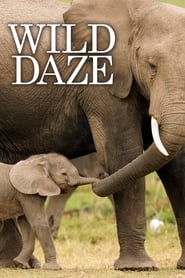
Wild Daze
Download English Subtitle
Release info
Tags
English subtitle preview
The first 198 lines.
Jambo
- Our ancestors originally came
from the tropical rainforest.
So, the tropical rainforest in a sense,
is our Garden of Eden. And the gardeners
in the Garden of Eden are the megafauna: the orangutans,
the elephants, and occasionally the rhinoceros,
believe it or not.
The fate of tropical rainforest
is inextricably tied to the fate of these megafauna.
So, do we need rainforests?
Of course we need rainforests.
We need oxygen, we need to breath.
It's a cliché to say by saving orangutans
or by saving elephants, we are saving ourselves.
But it's actually true if we look at the longterm.
Humans are very bad at looking at the long term.
We want it now.
- Yes, it's always very difficult in our terribly busy,
frantic, and dangerous world to focus on non-human issues.
But nevertheless there is a massive crisis going on
with wildlife around the world.
And it's not just the charismatic species
that we're talking about.
There are a ton of smaller species
that are also under massive threat and species
that we don't favor quite so much.
Evolution, or evolutionary biologists, some might say,
and certainly creationists might say,
and certainly religions might say, that the human being
is the pinnacle of evolution.
Well, if it is, we are one
of the stupidest species on the planet.
Because I cannot think of any other species
that goes around intentionally trashing its own home.
So, if we're the apex of evolution,
then if there is a God, He made a real mistake.
- Once you understand there's no sharp line dividing us
from the rest of the animal kingdom and that we are part
of the animal kingdom and not as we arrogantly suppose,
somehow separated, you then can ask yourself,
"Well, okay how is it that we're different?"
because we are different.
And I think it's the explosive development
of the human intellect.
And so how come the most intellectual species
to ever walk the planet is wiping out the other life forms,
is destroying ecosystems...
Because this, in the end,
is going to lead to our destruction.
So, we destroy these animals at our own peril
without thinking of the future of our own species.
The real cause of wildlife crime
is corruption, and corruption, it's greed.
The real conflict is powerful people,
many times government officials, who are the ones
in the heart of organized crime,
that's basically activating hundreds of poachers,
across many countries.
The illegal wildlife trade is not rooted in poverty at all.
In fact, poverty has nothing to do with this issue.
It is in fact, the rich and the powerful
that actually are the part of this problem.
- These are people that have made reputations
and made a very, very, very strong impact in the world
and they've made that impact in a very violent way.
They've killed people, they've executed entire families,
they've bribed officials, they've put people in places
where they can make decisions
that impact policies and governments.
You're not talking about you know, your run of the mill,
poor poacher who's running around with a 1947 rifle.
You're talking about extremely powerful,
extremely influential people in positions of power
that simply snap their fingers and make people disappear.
- Why are we not just going
in there with drones?
- I thought you wanted to hear the answer
to the other question which was a much better question.
- Okay, so the question is,
are we losing this war?
- Yes, right now we certainly are.
And it's not just that we're losing the war,
the rate at which we are losing the war is increasing.
There is evidence coming across my desk every day
of the gravity of the situation.
It is more serious than anyone can express standing here.
It's certainly easier to say, well, it isn't that bad.
I'm looking at a small portion.
My job is to look at the big scale.
I've worked in the field in parks.
I've worked in countries.
I've worked on regions.
Now I look at bigger picture
and that bigger picture is really serious right now.
- My interest in organized crime came from years
of being a journalist, working in conflict areas
and unstable areas of the world.
And what I found was no matter where I went
whatever the so-called problem of the day was,
was predicated on crime and corruption.
The U.S. government could have more impact
if we go after the networks that facilitate all sorts
of organized crime, instead of trying
to fight specific types of organized crime.
There are far fewer people who know how to launder
and move large amounts of illicit cash
than there are poachers sneaking into parks across Africa.
If we can stop the money, make it harder for them
to move money through the global financial system
we're going to have more impact in shutting this down.
And not just the ivory problem,
but the human trafficking problem, tax evasion,
the departure of revenues from corrupt
and developing countries.
There are all sorts of treaties that already exist
that prohibit the extraction of natural resources
illegally from Africa.
We could be applying those to the wildlife trade.
And we need to think about this
as not just a ecological disaster
but a national security issues,
an international security issue.
The people who are moving ivory,
the people who are moving rhino horn,
are the same people who are moving young women
from Bangkok to Africa and Europe,
the same people who are moving drugs up
into consumer markets.
It's the people who have the capacity
to move illegal products
through the global transport system.
And it's the people who have the capacity
to launder illicit money
through the global transport system.
And so what the United States,
and pretty much every other government does,
is they stovepipe all of those different commodities
and they give different departments the responsibility
to deal with those different commodities.
So, we will have a department that handles wildlife,
we'll have a department that deals with narcotics
and a department that handles terrorism.
And the bad guys are all working together.
You know, you never see a drug trafficker
in Afghanistan who says,
"I'm not giving that Al Qaeda guy my heroine to carry.
"He doesn't have the authorities to carry my dope."
No, they're all working together.
- It's a wide range of different kinds of groups.
Some are groups that have been designated
as terrorist organizations by the U.S. government.
Some are rebel militias, some are organized crime networks
and some are actually state actors,
military or police units that are taking advantage
of natural resources in the
- One of the biggest and least discussed problems
in the world today is that the illicit extraction
of resources from most developing countries
is about 10 times what they get in foreign aid.
So you're never going to get ahead of this problem
until we can stop it.
If we can stop the money
we're gonna have more impact in shutting this down.
We'll be able to have much more of an impact
against these violent networks if we go after them
for their totality of their activities for drugs,
for wildlife, for people, for guns.
I hear these going in Africa as cheap as 75 dollars.
A better quality one may be $100, $150, $200 dollars
depending on what they are.
- These are not hunting guns, right?
- No, they're the best thing ever made for shooting people.
Serious, that's what they're for.
They're for shooting people.
It's not a competition gun.
It's not really intended for hunting.
It's really probably one of the most efficient guns
ever made for shooting bad people.
That's why they are so prolific in the world.
- This rhino horn here weighs six, seven pounds.
I don't remember if this is the front or the back.
I don't know that much about them, but alls I know
is this right here on the retail market
is worth about 650,000 dollars.
That amazes me to think that, because what
that equivalates to is somewhere around 35,000 of these.
When you got $650,000 dollars in that horn right there
and you can buy a bunch of these, how much terror
do you think this whole game drives?
It's about a weapon bought to kill an elephant
and then used to rob a bank.
It's about entire local communities, poor local communities,
getting exploited by traffickers that arrive
and offer five, six years salary.
Of course, they kill an elephant for five years of salary
in Africa; they will do it here in Los Angeles.
- What we got here is about a four-foot tusk
Wild Daze subtitles in other languages
Comments
No comments yet. Be the first to leave one.