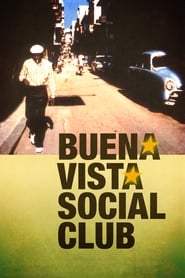
Buena Vista Social Club
Download English Subtitle
Release info
Tags
English subtitle preview
The first 104 lines.
This is a famous photo I look...
during the October Missile Crisis, outside the Hotel Riviera.
The entire Malecón was full of antiaircraft guns and cannons.
We were expecting a U.S. invasion.
I took this one in 1959 in Washington.
Fidel placed a wreath before Abraham Lincoln.
The photo's called “David and Goliath.”
The little guy and the giant.
This is Che Guevara and Fidel playing golf.
Who won?
Fidel.
Che let him win.
Ah, the Buena Vista Social Club!
Compay Segundo! Darling!
We should ask these people, the older folks from the neighborhood.
“Where was the Buena Vista Social Club?”
Where are the old folks?
This guy will know.
We 're looking for the social club. - The Buena Vista?
That's long gone.
The Buena Vista was... let's see. You go up that way.
It's a private house now.
- It was No. 48. - But it's not there anymore.
- We're looking for the old location. - Sure, the building's still there.
- Between 21st and 42nd. - At 31st.
If you go up this way, it's right there.
- You used to dance there? - Yes. I was born around there.
It's a private house now.
You take the divided highway.
Ladies and gentlemen, Compay Segundo!
Eliades Ochoa!
It's that house with a line painted on the door.
It's been gone since 1944. We've lived here since then.
I remember the guys who'd throw parties at the Buena Vista.
In its day, the best bands in Cuba played there.
Know what I eat when I’ve had too much to drink?
Black cocoquetta soup.
Chicken consommé.
You take a piece of chicken neck and fry it up.
When it's no longer bloody, you toss in some chopped garlic.
I think there are still some remains of the bar.
Anyone who eats that will have no aches or pains.
You like mutton consommé?
It clears everything out.
Attack!
From the front.
It's great, so let's enjoy it!
My son Joachim and I...
came back down here to Havana in March 1998.
We'd been here before...
about two years ago, recording the Buena Vista Social Club.
I've been making records about 35 years...
and you never know what the public's going to go for.
This turned out to be the one they liked best. I like it the best.
One of the great things about that record turned out to be Ibrahim Ferrer.
He'd come in off the street, kind of like a Cuban Nat King Cole.
You stumble onto somebody like this maybe once in your life.
We wanted to try recording with him...
make a solo record, let him be heard.
Omara Portuondo!
I, Ibrahim Ferrer Planas...
was born in a small town in the province of Santiago de Cuba...
called San Luis.
I'm the son of Aurelia Ferrer...
registered as her natural-born son.
I say this because...
I want everyone to hear directly from me...
who I am and what I am.
At 12 years of age...
I lost my mother.
I was left an orphan...
my mother's only child.
So I had to make my way in life.
I attended school just like my friends...
but I had to drop out...
because life back then...
wasn't like it is now.
It was harder.
I had to find my own way in life.
You need a hand?
We were just taking a break.
Rubén loves to improvise on his own, and then I join in.
So I started singing. “ Compadre , pick up this tune.”
Ry Cooder heard it too.
I'd sung that number casually...
just to loosen up.
And he recorded it.
Nice.
My name is Omara Portuondo.
I was born here in Havana...
in the area known as Cayo Hueso.
Two blocks that way?
My father was a famous baseball player.
He was one of the first Cubans...
to play outside this country.
They took Cuban baseball to the U.S.
My mother and father...
used to relax after lunch...
and they'd sing a few duets.
And that's when my love of Cuban music began.
For example, I started singing La Bayamesa when I was a little girl.
My father would sing lead and I'd sing harmony.
And the song I recorded on the album that won a Grammy, “Veinte Afios”...
I've known that one since I was a child too.
Buena Vista Social Club subtitles in other languages
More English subtitles for Buena Vista Social Club
- Buena Vista Social Club 1999 iNTERNAL BDRip x264-RedBlade · 79 downloads · 2017-11-27
- Buena Vista Social Club 1999 mHD BluRay DD5 1 x264-STREAMSiZE · 76 downloads · 2017-06-08
- Buena Vista Social Club 1999 · 72 downloads · 2017-03-02
- Buena Vista Social Club · 99 downloads · 2004-03-22
- Buena Vista Social Club 23 976 FPS · 63 downloads · 2002-12-29
Comments
No comments yet. Be the first to leave one.