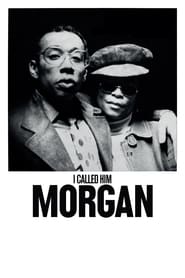
I Called Him Morgan
Download English Subtitle
English subtitle preview
The first 200 lines.
Thelonious, 1963.
Don't Blame Me, the Criss-Cross album.
You're listening to Blue Notes, Blue Nights,
here in New York City.
Going to be a stormy one tonight, folks.
Nor-easter coming in.
They're saying high winds and a heavy snowfall.
So take care of yourselves.
Now, a fresh outtake from a forthcoming blue
He's really flying high on this one.
- Is that Helen? -Yeah.
Yeah.
That's Lee.
Boy, they were young then.
I just couldn't believe it.
Didn't know what to think.
Because they were both together.
They were always the people we related to.
Both of them.
The fact that he had totaled the car that night,
came to work,
and still wasn't able to
come through the night, was not able to get through the night alive, you know?
I was never able to go down that street again.
Didn't get back to New York.
I was destroyed, man.
And then, you know, I was curious about what happened to Helen.
And then I heard that the police had arrested her and taken her to jail.
And you know, I never saw her again.
This is where I first met Mrs. Helen Morgan.
At this building.
Wilson High School.
Our classroom was situated on the first floor here,
closest to the door.
Because whenever we had a break, Mrs. Morgan did smoke.
My class was a Western civilization class.
But I don't begin with the Greeks and the Romans.
I began with the ancient African civilizations.
So I wasn't a "traditional teacher."
As a matter of fact, they didn't call me Mr. Thomas.
They called me Larry.
Almost all the students called me Larry.
And they were--most of them were her age maybe,
or they were some of them--
I would say the youngest ones were in their 40s.
Mrs. Morgan struck me as a person
who wasn't that academically sound, but she was streetwise.
Just the aura or vibe about her was streetwise.
So as a way of introducing myself to the class,
I would always hand out this bio of me,
with my picture and everything, stating that, you know,
I was a jazz radio announcer,
a little bit of background information on who I was.
When I gave it to her, she said, "Oh, I love jazz."
So I said, "Really?"
She said, "Oh, yeah, by the way, my husband was a jazz musician."
And her last name was Morgan.
And I said, "Your husband?
What was his name?"
And she said his name was Lee.
So I said, "Lee Morgan, the trumpet player?"
And she said,"Yeah." And she kind of looked at me kind of funny.
Like, you know, "You know the story too," you know.
So I said, "Well, I want to interview you one day."
So she said, "I don't have to think about it."
So eventually in '96, I guess about eight years later,
she decided that-- she called me, and said,
"Larry, you still want the interview?"
And I said, "Yeah, of course."
So I borrowed a tape recorder, just a regular Sony.
And I got two cassettes, I just grabbed two cassettes.
I said, "I got to get this interview."
You know?
And that was in February, 1996.
In March, 1996, she died.
[indistinct tape playing over loud high pitched noise]
[ambient background music playing]
The country, I never liked at all.
My mother's biggest aim was
when I was growing up in the country,
and I had to work on the farm,
and I had to do all of this,
that when I got big enough, I was leaving this place.
And I was--
I was young.
And then, see, I had kids early.
And I had my first child at 13.
Then I had another baby right behind that.
About 14, right behind.
So that disillusioned me from whole lot of things.
Because I've never once said I wanted any children.
I never did that.
But I had them.
I didn't raise them.
My grandparents raised my children.
Because I left.
I left.
I came to Wilmington.
And then I got married here.
And I only knew him for a week.
And this was that-- the fast life here.
I was 17, he was 39.
And he got drowned.
So his family lived in New York.
And I left Wilmington, stayed two weeks in New York.
And I never came back.
Lee Morgan, ladies and gentlemen.
The first time I met Lee Morgan, I was in the army.
And in the army, we talked about anything new.
They were talking about Clifford Brown, the actor.
They were talking about James Dean, the actor.
And they said, "Dizzy Gillespie found a trumpet player,
16 years old.
His name is Lee Morgan from Philadelphia."
That's when I heard his name.
And one weekend, I went to New Jersey, home.
And they said, "Dizzy Gillespie is playing at Sugar Hill, the club.
And Lee Morgan is there in that band."
So I went to the Sugar Hill, and I saw the band.
And Dizzy Gillespie was soloing,
then he would stop.
Then the next thing I saw, this young--
the Lee Morgan stand up, he started playing.
It was fun to watch him almost challenge Dizzy in the band, musically.
He was extremely confident.
Almost to the point of being cocky.
And here was this bubbly young artist
who knew he was talented.
No question about it.
He knew that he was talented.
The band, they had the band uniforms.
But Lee Morgan and Dizzy Gillespie
and the drummer, which was Charlie Persip, dressed different.
They were like the stars of the band.
I mean, everybody was kind of like in shock.
I mean, here's this kid, man,
that's playing like a seasoned veteran, and with great ideas.
I mean, it was never no doubt in anybody's mind
'cause he was going to be a star.
It was common among musicians
to be one of the best dressers.
We talked about fashion all the time.
What they called Ivy League, that was like the style then.
And Lee was really into that, and so was I.
You know, have the best car, prettiest lady, lots of money,
best shoes.
And all that was important to us.
Yeah, I bought this Austin-Healey.
And Lee bought a Triumph.
And I used to tease him about it, I said,
"Man, your car is not as powerful, it's not as fast as my car."
He said, "Oh, man, we have to see about that."
And, man, we would run around in this city.
And we would go in Central Park at night.
Because in those days, you could drive around in Central Park at night.
Just get out the way, let me go around this turn
as fast as I can.
Could never turn the car over.
The great big festival with Ahmad Jamal was there.
Sarah Vaughan, Count Basie, the Jazz Messengers.
Lee Morgan came running across the racetrack
during an intermission.
And he said to me, you want to play with the Messengers?
Do you want to play with the Messengers?
And I said, "Yeah."
And he said, "Come with me."
And I jumped down on the racetrack with him
and went to the dressing room where Art Blakey was.
And Art said to me, "Do you want to play in my band?"
He had that voice.
"You want to play in my band, with the Messengers?"
I said, "Yeah."
Ladies and gentlemen, we are now beginning the third set
with the terrific Art Blakey and his Jazz Messengers
from the jazz corner of the world.
Lee Morgan on trumpet, Wayne Shorter on the tenor saxophone,
Bobby Timmons on the piano, Jymie Merritt on the bass.
Soul brothers on this scene now.
Really do a cool one for you.
I was always known as a lone wolf.
But with Lee, Lee was the friend.
And he and I would like to have a debate
about different things, politics.
He wanted to know everything.
I went to Europe for the first time with them.
And sometimes when we were playing,
and Lee would be playing a solo,
and Art would be yelling to Lee, "Talk to the people, talk to the people.
Tell them your story, tell them your story."
He knew how to tell a story musically, you know?
[LOUD HIGH PITCHED BACKGROUND NOISE]
Well, I lived for most of my part now, 53rd Street.
Not far from Birdland between 8th and 9th.
Ride around, they all ride around in the circle there.
I could always fit in because I was a talker.
And I got a job.
And then I begin to meet other people.
I started going uptown to clubs.
That's when you would really hear music, the jam sessions, you know?
And I would be invited to the after-hour joints.
I Called Him Morgan subtitles in other languages
Comments
No comments yet. Be the first to leave one.