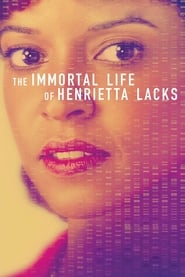
The Immortal Life of Henrietta Lacks
Download English Subtitle
Release info
Tags
English subtitle preview
The first 200 lines.
Gosh almighty.
The Johns Hopkins Science Review with Dr. George Gey.
In this jar, we have a sample of cancerous human tissue.
What makes this sample so unique
is that this is the first cell line we have discovered
in over 30 years of trying
that can survive and reproduce indefinitely.
With this, scientists will be able to perform experiments
that they never could on a living human being.
Growing like crabgrass.
Free of charge!
Well, how many vials do you want?
Known as "HeLa," this cell strain
has since been given to laboratories around the world.
Used by doctors and scientists to perform experiments and research,
starting with Dr. Salk's polio vaccine.
Who owns the patent on this vaccine?
The people, I would say.
There is no patent.
Would you patent the sun?
Did you know the donor?
No. No, but towards the end of her life,
I leaned over her hospital bed.
By this time, she was unconscious,
and I said to her, "Your cells are going to help a lot of people
"and make you immortal."
What was her name?
We see no reason why an interesting story
could not be written without using her name.
And so, George, rather than run the risk of getting in trouble for disclosing it,
the cell strain should be referred to as "HeLa" and the patient's name not be used.
Helen, Helen Lane.
...remarkable advances in medicine and surgery
that are bringing us tomorrow's medicine.
For years, it seemed like a dream,
not knowing what was going on,
not knowing who to go to for understanding.
Didn't even know how to talk about it.
About our mother? Could this be true?
We miss you.
And we love you, Mama.
Freelance science and medical writer and editor.
Yes.
With a degree in...
Biological sciences.
And,
this represents the entirety of your journalistic career?
Yes, well, thus far.
Deborah is Henrietta's baby girl.
The family calls her "Dale."
She's 50 now, living in Baltimore with grandchildren of her own.
She's the most determined to know about her mother and the most vulnerable.
Deborah came near a stroke recently because of all the agony she's gone through
regarding the inquiries into her mother's death and those cells.
I won't be a part of anyone doing that to her.
Oh, no, no, I... Dr...
What can you tell me about African-Americans and science?
Well, from 1932 to '72, the U.S. Public Health Service, uh,
withheld treatment from a group of African-American men
infected with syphilis so they could study the long-term effects of the disease.
- And look, I know I'm white... - And from Portland.
Yes. Yeah. That's right.
But when I was in high school,
my father got very sick and ended up in a research study.
And, in my opinion, the hospital,
you know, they didn't behave in the most ethical manner,
and I remember being very angry about that.
And at the same time, I was taking a biology class
at a community college,
and the teacher told us about the cells and how they've been
at the forefront of basically every major medical breakthrough,
and they belonged to a black woman named Henrietta Lacks.
And after the class, I asked him, "What can you tell me about her?"
And, you know, the second he told me that he didn't know anything,
I just became obsessed with it.
And, Dr. Pattillo, the Lacks family trusts you,
so if there is anything that you could do to help me
connect with Henrietta Lacks' children, I would be so, so grateful.
Yeah, who's this?
Hi, my name is Rebecca Skloot. How are you?
Mmm-hmm.
Dr. Pattillo actually gave me your...
- How's he doing? - He's fine.
I'm not sure exactly how much he told you about what I'm trying to do.
Just that you was gonna ask me some questions
about my mama's cells.
Yes, yes, well, um,
uh, I want to write a book about your mother.
And while there's all this stuff about her cells,
it always struck me that nobody ever wrote about her or her life,
and that's why I've been trying to track you down
and your family down to see if you would be interested in working with me,
and just telling me, um, more about... About her.
Well, all I gotta say about that is, hallelujah!
Finally, somebody want to talk about my mama.
Because back when I was a child,
old folks, they didn't talk about nobody who wasn't alive,
so my whole life, I grew up not knowing one thing,
not even the littlest things, like what was her favorite color,
or... Or what happened to her clothes, her shoes?
Now, I know about that watch and ring
'cause they got stolen by the time my brother killed that boy.
What exactly did her cells do?
Girl, you better get yourself ready,
'cause this story is crazy enough for three books.
I'm ready, I'm ready.
Bet you didn't know my mother's sister converted herself to Puerto Rican.
And that state hospital,
the "hospital for crazy Negroes" they used to call it,
we are not skipping over that part.
Plus all the things I've been dying to know, really,
but don't 'cause she died when I was so young.
Like, did she... Did she breastfeed me?
Did she... Did she love to dance?
No, it's... I'm...
It sounds like we really want to do similar things here.
- Mmm-hmm. - I live in Pittsburgh
and I don't have a publisher yet,
but I'm committed and determined...
- Grandmama, mail! - Oh, my God!
I can't talk to you now.
Mail. Gotta go.
Now listen, uh, you can call me late Monday afternoon
'cause usually I'm out running with my grandchildren.
Now, what'd you say your name was?
Rebecca, Rebecca Smock. You can call me...
Mail!
Deborah?
Deborah? Okay.
Hello?
Deborah, hi. It's Rebecca.
Can't talk.
Oh, well, shall I call back in, say...
Done talking.
My brother say I ought to write a book myself.
But I ain't no writer.
Can't talk to you.
Why can't you talk to me?
Did somebody... Deborah?
Talk to the men.
Sonny, Lawrence.
Deborah, if you'd just give me a chance, I can...
We could spend some time together and...
I don't want to get hurt again.
So, I'm here in Baltimore in a parking lot,
waiting for Sonny Lacks to show up
and hopefully take me to introduce me to the rest of the family.
And I'm really hoping that Deborah might... Might be there, but...
Oh. That's...
Oh, my God, he's actually here.
Yeah, I told you that I'll be passing.
Hi.
I will be over there. All right, okay, bye.
- Miss Rebecca! - Hey.
- Happy New Year. - Happy New Year.
Uh, you're a very hard man to track down.
I'm a busy man, Miss Rebecca.
- I'm a very busy man. - That's good.
- No, it's not. - No?
Here, come on.
Oh. Oh, okay, well, let me just get my stuff.
Is Deborah gonna be there today?
No. Lawrence will check you out.
He'll decide what's what.
Okay.
I told you I'm in a meeting.
I'm in my car. You can have a meeting in the car.
It's a mobile office.
Do you mind if I turn this on,
- so I could... - No, no.
Go ahead, go ahead. Trying to find something on the radio.
Your cell phone always ring that much?
Ripping and running, Miss Rebecca.
Ripping and running.
So, what's the earliest memory you have of your mother?
Well, I hear she was pretty.
Lawrence the only one old enough to really remember.
Me, Dale, Zakariyya, we got no memories at all.
Lawrence was a teenager?
Mmm-hmm. He was around 15.
Zakar-ree-ah?
Changed his name in prison.
Good thing he ain't here to hear you mispronouncing it.
I'm just messing with you.
So, here's where we take scientists and reporters
who wanna know about our mother so the whole family can gang up on them.
Now, you seem nice enough, so I won't go get Zakariyya.
- Here you go. - Thank you.
- Which house exactly does Lawrence live in? - Good luck.
Hello?
Hello?
Hello? Anybody...
Come on in.
I'm Rebecca. Rebecca Skloot.
Wanna taste the meat I cook?
Now, my wife thinks I cook them too long.
How could I resist?
Uh, Lawrence, do you mind if I...
Sonny was telling me you're the only sibling
who has any memory of your mother...
The Immortal Life of Henrietta Lacks subtitles in other languages
More English subtitles for The Immortal Life of Henrietta Lacks
- The Immortal Life of Henrietta Lacks 2017 BDRip x264-ROVERS · 62 downloads · 2017-08-22
- The Immortal Life of Henrietta Lacks 2017 BDRip x264-ROVERS · 72 downloads · 2017-08-21
- The Immortal Life of Henrietta Lacks 2017 BDRip x264-ROVERS · 49 downloads · 2017-08-21
Comments
No comments yet. Be the first to leave one.