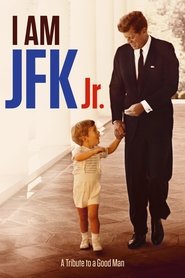
I Am JFK Jr.
Download English Subtitle
English subtitle preview
The first 200 lines.
: Well, this is the man
who, in the next 24 hours,
may become President of the United States,
and she, First Lady of the land.
: So now,
my wife and I prepare for a new administration
and for a new baby. Thank you.
Ask not what your country can do for you.
Ask what you can do for your country.
Every degree of mind and spirit that I possess
will be devoted
to the long-range interests of the United States
and to the cause of freedom around the world.
: Just a moment, please.
Something has happened in the motorcade route.
Stand by, please.
Parkland Hospital... there has been a shooting.
Parkland Hospital has been advised to stand by
for a severe gunshot wound.
The flash, apparently official,
President Kennedy died
at 1:00 p.m. Central Standard Time.
: The president of the United States is dead.
I have just talked to Father Oscar Huber
of the Holy Trinity Catholic Church.
He and another priest tell me that the pair of men
have just administered
the last rites of the Catholic Church
to President Kennedy.
President Kennedy has been assassinated.
It's official now. The president is dead.
: As the casket is returned to the caisson,
there comes a family vignette that must take its place
with those memories we hold warm and dear,
a gentle reminder from his mother,
and John John celebrates his third birthday
with a soldier's farewell to his father.
It's easy for someone to say, "Well, I'm going to be me."
Well, that's easy
when nobody gives a damn who you are,
but when somebody has definite ideas about you,
superlative ones, in John's case...
"You'll be the greatest.
You are the most handsome.
You are royalty.
You are bound and destined for greatness.
Do nothing normal. Do nothing pedestrian.
You are better than that and everyone."
That's not easy to have on your shoulders.
He's the only person we've ever seen
have that kind of greatness put upon him.
In our culture,
where we don't recognize royalty,
he was the closest thing we had to a crown prince.
He was the heir,
the heir to the promise and to the challenge,
"Don't ask what your country can do for you.
Ask what you can do for your country."
That salute of John Jr.
is the first extraordinary celebrity moment
in John Jr.'s life.
From that moment on, his life was different.
From the very beginning, you know, that little salute,
he was under scrutiny and pressure.
I think John F. Kennedy Jr.'s salute
is a defining moment in the American public,
in their psyche,
that we're going to see more from this kid.
: Is it tough being a junior?
I don't have a basis of comparison, so...
I mean, are there ever days you say,
"I wish my name were David"?
No, I'm pretty happy with what it is.
It's complicated,
and it makes for a rich and complicated life,
but that's, I think, part of the puzzle
to figure out in my life.
For me, it wasn't meeting
the little boy saluting the casket.
I think for my mother, it would have been that.
For me, it was like, I mean,
he's, like, a hot New York bachelor.
The first time I met him,
I was working out in my gym in Tribeca,
and a mutual friend had brought him up there
while I was working out,
and so I was on the bike, and we shook hands.
I was just fortunate enough to meet him and engage with him
and go on just a minute
of a cosmic-dust journey with him,
and it was pretty awesome.
You know, his tentacles, his love,
it reaches out from the grave. It's still here now.
A Native American said
that when somebody takes your picture,
you lose a piece of your soul.
How he retained his soul
after hundreds of thousands of pictures
is one of his greatest accomplishments.
He had a brilliant capacity
for getting people to quit looking
at the balloon of himself that he was towing overhead,
the sort of Macy's Thanksgiving Day parade-sized
John F. Kennedy Jr.
to the guy that was standing there
who was remarkable in his own way
but was, you know,
put his pants on one leg at a time.
You know, one of the things
that John tried to do throughout his life
was be his own man and go his own path.
He obviously had the whole specter
of his presidential father and his very famous mother
and a family that was known for politics,
but, you know, John was very much his own man.
He marched to his own beat.
Like many sons of famous fathers,
there's a legacy.
There's sort of a big mountain to climb.
So I think he felt like he had to do something significant.
I mean, he couldn't just get a job.
: His being part of the Kennedy legacy,
the really important thing to know about John
in that regard
was that he was not a Kennedy.
He was a Bouvier.
His mother was the guiding, shaping force in his life,
and he looked very much like her,
but he was also very much a Kennedy,
very devoted to his family, to the name,
to the history, very, very much so.
He couldn't separate himself from that legacy,
and nor would he want to.
The process of separation
becomes a problem for a presidential child.
Their greatest single challenge is to find a separate identity.
Who am I?
He called me up one night, and he said,
"I've been thinking a lot about great men,
and it occurs to me
that it would be kind of a cakewalk
for me to become a great man.
I mean, everybody expects me to be a great man.
I'm perfectly positioned.
You know, if I don't f*** up in some major way,
I can just do it,"
and he said, "But I've been reading a lot of biographies
of great men all the way through history,
and I'm realizing that not one of them
seems to have been a good guy at home.
I mean, even Gandhi beat his family,
and, you know, and my father was no model,
and I wonder
if it wouldn't be a much more interesting challenge
in my position
to set out at this point
and see if I couldn't make myself a good man."
And that was really paramount to him.
He wanted to be good
in his relationship with his wife.
That was really important. He wanted it to work.
He wanted to be good in his relationship with his sister,
who was very important to him.
No schadenfreude at all.
He wanted his friends to succeed,
so I think John Perry Barlow's comment
about him wanting to be good
is really important in understanding who John was.
I also knew that pressures were about to enter his life
in increasing force
that would make sticking with that principle
an extremely hard thing to pull off
because everybody in the world
was going to be tugging at his sleeve.
People were going to treat him like a thing.
They already were.
It's difficult to maintain your goodness
if you're being treated like a thing.
If you were to have a son,
would you encourage
a political career for him?
I would, definitely.
I would hope he would grow up to be,
if not a politician
in the sense of devoting all of his time,
I would hope that whatever he did do,
that he would have some sense of responsibility
for what went on.
Over a quarter century ago,
my father stood before you
to accept the nomination
for the presidency of the United States.
In 1988, John introduced his uncle Teddy Kennedy
to the Democratic National Convention.
The place went wild.
Thank you.
There's a huge gravitational pull towards politics
because that's kind of what he...
I mean, he was just such a natural at it.
John was smart enough to know "I'm Junior.
Comments
No comments yet. Be the first to leave one.