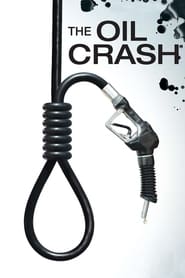
A Crude Awakening
Download English Subtitle
English subtitle preview
The first 200 lines.
Oil is the excrement of the devil - el excremento del diablo.
Oil is black blood.
Oil is the blood of the dinosaurs.
This is the bloodstream of the world economy.
Oil is the blood of the Earth.
We are moving from an era of cheap, abundant energy
to an era of scarce, hard to get, expensive energy.
At the same time, we are making ourselves dependent
on some extremely unstable regimes in some very nasty parts of the world.
Keeping the World dependent on oil as long as possible
is important.
Not one in fifty, not one in a hundred of the people in our country
have any inkling of the potential problem that we're facing.
Increased unemployment, poverty, bankruptcy, starvation,
they're all of a kind of the things that happen when a society collapses.
So we enter an entirely new world of quite unbelievable dimensions,
and yet it's only a few years away.
Hello, folks, I'm a carbon atom.
And since I'm an essential part in each of the hydrocarbons in crude oil,
I'm here to give you the inside dope on gasoline.
Oil is not like wheat, we are not growing it every year.
Oil is an outcome of many millions of years of geological history.
The great bulk of the World's oil was formed at just two very brief moments
of extreme global warming, 90 and 150 million years ago.
Animals and plants that died in the ocean were compressed by
more deposits of sand, and over the years
these deposits squished and compacted more and more,
and then, over time, they were cooked, which was what we call "the kitchen".
And when the organic material was
buried to a depth of about 2000 meters,
chemical reactions converted it into oil.
This was formed once, briefly, over geological time.
And so, we are using this stuff up over one or two centuries.
One barrel of oil, the refined product that with 42 gallons of gasoline
you can buy for a little over a hundred dollars
will produce as much energy, as much work
as you would get from 12 people working all year for you.
You take an average man, performing physical labor for 25000 hours,
to produce the amount of energy just contained in that one barrel of oil.
That barrel of oil, if it's pulled out of the ground in Iraq,
can be pulled out of the ground for one dollar.
You invest a dollar and you get back 25000 hours of human labor.
That is an energy source that is so dense, it's essentially free energy.
All non-renewable, it's all extremely capital intensive
and it's probably the most invaluable raw natural resource we've ever discovered.
You are about to know the thrill of seeing that which has never been seen before.
You are about to enter a beautiful, exciting, wonderful new world.
The world if 1960.
For the first time in history, you'll see:
A wonderful new world of Fords.
The 1960 Thunderbird!
Oil is our God. And ok, if somebody says they worship Jesus, Buddha, Allah,
whoever, they actually worhip petroleum.
70% of the barrel of oil is refined into transportation fuels.
Which include motor gasoline, diesel fuel, jet fuel,
railroad fuel and maritime fuel.
98% of all transportation energy comes from oil.
Construction of an average car
consumes somewhere between the energy equivalent of
27 and 54 barrels of oil, depending on whose statistics you use.
Construction of an average desktop computer
consumes 10 times its weight in fossil fuels.
Microchip consumes 630 times its weight in fossil fuels during its construction.
For every calorie that you eat in the United States and
probably similar number in other industrialized nations,
burns 10 calories of hydrocarbon energy.
There are 6.4 billion people, I think, living on the planet now,
most of them are reasonably well fed and that's the consequence of
what was called the Green Revolution in the second half of the 20th century.
Green Revolution consisted in very large measure
of fertilizing land with petrochemicals,
fertilizers that are derived from petroleum.
Farming has changed more in the last 50 years than it did in the previous 1000.
A farmer today can work 5 times the land his father worked,
and still have time for leisure that his father never knew.
The petroleum that runs these modern hired hands
has not confined progress and farming to the fields,
Life is easier for the farm wife, too.
What it comes down to is that the oil industry has to please Mrs. Martin,
and millions just like her.
Already today she has used some 87 petroleum products,
including the plastic bacon wrapper and the wax of the milk cotton.
She'll top a 100 before the day is over.
Liquids that come out of oil as it's processed and refined,
create the building block for all of our
petrochemical, chemical, plastic, pharmaceutical,
you know, zillions of things. - Tires,
insecticides, cosmetics, weed killers,
A whole galaxy of things to make a better life on Earth.
And you know, it isn't just oil companies
that try to outdo each other competing for the customer's dollar,
the same story is true of almost every successful
business enterprise on the whole planet.
Well, whether you know it or not,
every single preparation on this beautiful lady's dressing table,
every single thing she is wearing, is influenced by oil.
Just before her, let's take away all these articles dependent upon petroleum:
her hand mirror, cosmetics, perfume
and manicure set made of plastics.
Her synthetic silk negligee, her silk under...
ooh, science can go no further.
The Caspian Sea was one of the earlies oil provinces in the world.
People were simply digging holes to produce oil in Baku
and oil production really took off when western oil companies
were granted concessions in the late 1800's.
By 1900, 95% of Russian oil was coming from Baku.
In their heyday these oilfields produced up to
5000 tons of crude oil per day.
Baku then became a huge industrial centre
and one of the most affluent cities in the world.
Where is daddy, mommy?
Well, Jeff, I'll just show you.
We are here, in the United States.
And daddy is down here, in Venezuela.
Here, where the lake Maracaibo oil fields are.
That's where daddy is working, Jeff.
And when he finds a place for us to live,
we're going down there too.
Venezuela discovered oil at the beginning of the 20th century.
The real first discovery was about 1914.
The real turning point was on the 16th of December, 1922
when there was a blowout in a well that was being drilled at Cabimas,
and it became known as the day of the black rain.
150 thousand barrels in the air, for two or three days running.
And that put Venezuela an the world oil map, once and for all.
In that one time, Venezuela became the largest exporter in the world.
It was the US, not Saudi Arabia that was the world's leading producer of oil,
and in fact much of our military and industrial might
arose out of our giant oil industry.
We were, essentialy, the Saudi Arabia of the world up until about the 1950s.
McCamey was a boom town for many, many years.
Their attitude was that this was going to last from now on,
and I know that those people then could not foresee
you were ever going to pump all the oil out of the ground in this part of Texas.
And they couldn't picture ever running out of oil
because it was everywhere and got on everything.
Off course now we realize that you're going to deplete your supply,
sooner or later.
They're not making a lot of dinosaurs anymore.
Oil is a magnet for war.
Oil starts wars.
The Sudan, for example, Darfur.
What everybody is treating as an ethnic and a religious struggle
is infact, in part, a struggle about major oil finds located in the south.
Which means that the government in the north, a different
ethnic and religious makeup, is displacing those people
and moving them out of the area so that those oil revenues
belong to them.
Oil has always been associated with war.
Our very first wars, World War I, World War II,
have very important elements of oil in them,
as a reason for the war, as allowing the war to go on,
as a way of securing supply.
During World War II, which was the war of engines, the continuous supply
of oil from Baku ensured the Russian victory against the Germans.
During the 70s there were the political problems, the war between
the Egyptians and the Israelis in which the oil boycott took place.
Khomeini's revolution, we have the Palestinian problems,
wars between Iraq and Iran...
First war that was absolutely about oil was Saddam Hussein's
invasion of Kuwait which was really about seizing an oil field.
Excellency, ladies and gentlemen,
Iraq oil is a giant that has been kept dormant for so many, many years
This oil has been the least explored,
the least developed, and the least produced.
There are lots of people who will tell you that
oil had nothing to do with the war, if you go to Washington.
And we used to call it the O-word that nobody would say.
But in fact, all evidence points to the fact that the United States
which did not secure areas of weapons of mass destruction,
but did in fact secure the oil fields. The United States had plans
to bring in US companies in Iraq where they
have previously not been allowed to operate.
That there were maps of the oil fields involved in the planning of the war,
that in 1998, long before the war people were arguing for this
as the way of securing energy supplies in the United States.
I can't get inside their heads to know all of the rationale for going to war in Iraq
but there are many people who believe at least a part of the reasons
for being there is the geopolitical position of Iraq and the fact
that it's right in the middle of world's oil patch.
The Iraqis wanted to get rid of Saddam Hussein.
And they were happy that the Americans helped, but look at what happened.
After Saddam Hussein, there is no institutions,
there's no state, there's no army, there's no real police force,
people are kidnapped, killed, decapitated...
There is no law, they made the country stateless, without a state.
Instead of creating conditions for peace,
they are making conditions for conflict.
More and more oil is going to come from less and less stable places.
Less and less secure places, places that actually challenge
taking of oil in the first place.
Oil fuels war, it's a catalyst for war,
it is something that prolonges war, it intensifies war,
this is not a pretty picture.
I suppose that the classification of reserves
depends on the motivations of the person that's classified them.
Try to keep people guessing in a way, keep them off balance.
Most numbers that you will see around the world that lead
to these numbers that we were talking about include
proven plus probable, and sometimes even possible.
Comments
No comments yet. Be the first to leave one.