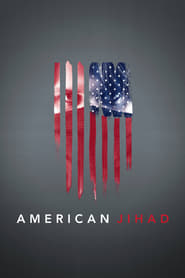
American Jihad
Download English Subtitle
Release info
Tags
English subtitle preview
The first 200 lines.
Man on radio: Target number Hotel-November-5-2-0-9er.
Request splash-out.
Man #2: Roger that.
Splash out now.
There are ominous clouds gathering in your horizon.
-3-0-1 ready to go. -Radio 3-0-1.
You have two choices -- either hijra...
Radio 3-0-1-0-0 in and out.
3-0-9.
...or jihad.
-This is Starter 2. -Roger that.
You either leave or you fight.
I, for one, was born in the U.S.
and lived in the U.S. for 21 years.
I was a preacher of Islam,
involved in nonviolent Islamic activism.
However, with the American invasion of Iraq,
I could not reconcile between living in the U.S.
and being a Muslim.
I came to the conclusion that jihad against America
is binding upon myself,
just as it is binding on every other able Muslim.
Warsame: When I first started watching those videos,
I thought I was the only one.
I specifically invite the youth to either fight in the West
or join their brothers in the fronts of jihad.
You guys need to come here. This is the place to be.
That video -- it was really shocking to me.
I can't comprehend him being violent.
We did not know that he had been fully radicalized,
loaded up as a bomb himself.
Kensky: These weren't outsiders.
We were members of the same community.
So it's even more confusing and harder to understand.
Warsame: I was messaging him through an app,
and he told me that he was in a training camp.
I remember him telling me,
"I'm having the time of my life."
I invite them to join us in our new front, Yemen.
Reporter: Anwar al-Awlaki's rise from American-born cleric
to key terror plotter
had put him atop the U.S. terror hit list.
Reporter: The Justice Department wrote a secret memo
authorizing the killing of Awlaki.
Pilot: I got good range, good limits on him.
Declare fire. Declare fire.
Reporter: U.S. intelligence says Awlaki was on the hit list,
although he wasn't killed.
al-Awlaki: We cannot stand idly in the face of such aggression.
And we will fight back
and incite others to do the same.
Would you fight back?
My ancestry dates all the way back to the Mayflower.
We will fight you and destroy you if we have to.
By that time, I was firmly committed,
and I was inserting the rhetoric of al-Qaeda
into the American arena.
We're not calling for your death and destruction,
unless, of course, you continue to fight us.
I was still radical.
I was in prison.
And one day, I'm sitting there in the bunk,
and, all of a sudden, I see Anwar al-Awlaki on TV.
I didn't know what was going on.
I figured that he had ordered an operation.
Reporter: Early Friday, a CIA drone found its target.
He was killed by a drone attack.
Everybody figured he was invincible -- everybody.
Awlaki was the leader of external operations
for al-Qaeda in the Arabian Peninsula.
Reporter: The loss of Awlaki is another major blow to al-Qaeda,
coming just five months after the killing of Osama bin Laden.
Morton: Osama bin Laden was dead.
Now the primary ideologue in the English language,
Awlaki, was dead.
I was like, "Wow, they really just won the war."
Man: Everybody get off of the street!
Shreiber: But the war was not over.
Even in death, Awlaki's message
continued to capture the hearts and minds of Americans.
Um...
I'm more New York-ish.
But, uh, it's better than not having access
to a city at all, you know?
My kids are in a great public-school system,
so I'm very happy for that.
Sure. Yeah, yeah, sure.
Shreiber: In September 2016,
five years after the deaths
of Osama bin Laden and Anwar al-Awlaki,
another in a series of attacks occurred on U.S. soil.
Following a three-day manhunt,
the suspect in the bombings,
28-year-old Ahmad Khan Rahami,
a naturalized U.S. citizen,
was was captured after a gun battle with police.
Morton: They found a notebook today,
heavily influenced by Anwar al-Awlaki's musings.
al-Awlaki: I invite them to join us in our new front, Yemen.
So maybe homegrown, maybe foreign-plotted.
The way that he laid it in the Dumpster, I don't know.
Not -- Doesn't seem like a trained operative,
from that standpoint.
Just when you think like it's going to go away
for a while, you know?
It's not like you can move away from this.
You can't run.
Like, you can't ignore what you've done.
This revival, ya Muslimin, requires that you rise up,
that you make dua for the mujahideen...
...that you defend them when they're assaulted
by the moderates and by the enemies of Islam.
Hitchens: Throughout our history, we had individuals
who were mainstream members of society
turn against their societies for various reasons.
This is something that has always happened.
So the phenomenon of people joining ISIS,
joining al-Qaeda, is nothing new.
I think we think of terrorism
as a foreign thing because, on 9/11,
we were attacked by 19 foreign-born Arab terrorists.
But, in fact, it is a very homegrown thing.
I've looked at 300-plus cases of jihadi terrorism since 9/11,
and they're overwhelmingly Americans
who are radicalizing online.
There have been Americans associated with al-Qaeda
for a long time.
Anwar al-Awlaki was born in New Mexico.
America as a whole has turned into a nation of evil.
What we're seeing is the Americanization of jihadism.
And we have to try and understand
why this is happening.
Why is it that we're not able to sell our values
and our system to our own people?
Why is it that the joining of groups
like ISIS and al-Qaeda
is a more attractive option for people?
Hughes: We lovingly call that the "Beautiful Mind" board
when it comes to jihadist recruits.
Very rudimentary, kind of reminds me, again,
of the old-school Mafia days
of which dots connected to that one.
I was at the Senate Homeland Security Committee,
and homegrown terrorism was just kind of starting to bubble up.
The average age of a guy that was drawn to this was 26.
I was 26. They kind of threw the cases on me and said,
you know, "Figure out this niche."
Why people join terrorist organizations is complex.
Radicalization isn't a linear process.
Just not how it works.
Hitchens: There is no single type of person
who gets drawn into this ideology.
Hughes: They're rich, they're poor, you know,
they're college graduates and high-school dropouts.
It runs a spectrum.
In 90% of the cases, they're male.
They tend to be younger.
Man: What is your name? What is your name?
-Muhammad. -Muhammad what?
Younus Abdullah Muhammad.
That's my name. -Who do you represent?
I represent Islam.
Shreiber: Younus Abdullah Muhammad
was born in Pennsylvania as Jesse Morton.
Hughes: Jesse's story is interesting in terms of radicalization.
But it's more interesting to me in terms of de-radicalization.
How does an individual like that,
a prominent player on the scene, able to get out,
and what does that lesson tell us?
Morton: My birth was in Pennsylvania.
And my ancestry dates
all the way back to the Mayflower
and the Sons and Daughters
of the American Revolution.
I went through severe abuse in the early stages of my life.
That led me to run away
at the age of 16 to flee the abuse.
I started selling drugs to survive,
and wound up in jail.
Shreiber: While in prison, Jesse discovered the Qur'an.
Morton: Picked it up, read the second chapter.
And it say, "This is a book wherein there is no doubt."
You know, I was overcome with emotions, started to cry,
started to want to change my life,
and decided right then and there
that I wanted to become a Muslim.
I was practicing Islam,
and it established stability in my life.
Woman: Jesse Morton.
I graduated from Columbia,
and immediately,
my dream was to go to the Muslim world
and to become a teacher.
From there, things got more complicated,
and I eased myself into the jihadist world.
The Internet was full of preachers
that were very radical,
and I would just listen to their lectures constantly.
That's how I started participating
in the Islamic Thinkers Society.
Comments
No comments yet. Be the first to leave one.