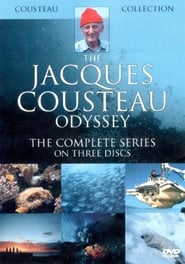
The Cousteau Odyssey
Download English Subtitle
Release info
Tags
Download English Subtitle Files for Mobile (12)
English subtitle preview
The first 200 lines.
In the remote uplands of Central Africa,
this monument marks a beginning.
With these drops of water,
the River Nile begins its 4000-mile journey
northward to the Mediterranean,
crossing half a continent
and 7000 years of recorded human history.
On its banks,
civilization built early marvels,
kingdoms rose and fell,
gods appeared and vanished,
their destinies inseparably joined to the river.
None were masters of it.
More than ever dependent on the life stream of the Nile,
man still tries to impose his rule.
To learn the impact of his growing intrusion,
Cousteau team members study the changes
now occurring in the Earth's longest river.
Transported by the expedition's specially fitted PBY Catalina,
the team members will follow the entire course of the Nile.
In their 10-month journey
encounter the endlessly various life
still sustained by the river,
some of it little altered since prehistoric times.
Always, in its passage across a changing landscape
and the shifting patterns of life upon it,
the river went its own way.
Man's early devices had little effect upon it.
Now, increasingly,
man's machines have the power to alter the Nile forever.
Not only are ancient cultures and animal sanctuaries
threatened by extinction,
but men are learning that technological triumphs
sometimes create problems
greater than the ones they seek to solve.
On the Nile,
man has preserved some of his noblest monuments.
Today it is the river itself
that may be most in need of his protection.
Long travelers upon and beneath the seas,
Philippe and Jacques Cousteau
this time take to the air.
Their first destination:
the mountain headwaters of the Nile.
As the Catalina climbs above the waters off Corsica,
the Cousteaus leave behind the Calypso,
in which they have been charting
the Mediterranean's increasing pollution.
Now they will study the greatest of its river systems,
the Nile, which once emptied
as much as 84 billion cubic meters of water
into the inland sea each year.
Flying southward,
the Cousteaus' path will cross the waterless Sahara
to the Ruwenzori Range,
once called the Mountains of the Moon.
Part of Africa's great central rift,
it forms a vast escarpment,
sometimes rising 16,000 feet
into the equatorial sky,
close to the Catalina's operational ceiling.
Here, in midair,
hangs the true source of the Nile,
the moisture-laden clouds
moving eastward from the Atlantic
that make the Ruwenzori Mountains
one of the wettest regions on Earth,
and for the Catalina,
threading its way among the peaks,
one of the most hazardous.
Trapped by the snow-capped summits of the great barrier,
fooled by the upper altitudes,
the clouds release their rain on the mountain slopes,
running off through wild upland streams
into the great catch basins of Lake Albert and Lake Victoria,
major reservoir from which the upper White Nile flows.
Descending through the broken overcast,
the travelers at last glimpse
the swift current of the upper Nile,
here still nearly as unspoiled as it was at its discovery
more than a century ago.
As Captain Cousteau traces their course upstream
through Uganda,
Philippe brings the Catalina low
over the clustered Sese Islands
in the northern end of Lake Victoria,
only a few miles from the airport of Entebbe.
A little reduction.
It is here that the Cousteaus first sight
a strange phenomenon:
Clusters of wraith-like columns
rising from the surface of the lake.
Okay, let's go down lower.
Suspecting that they may be waterspouts
or even dust twisters carried out over the lake,
Philippe approaches cautiously.
Even flying at an altitude of 300 feet,
the swaying columns tower to double that height
above the plane.
[PHILIPPE AND JACQUES CONVERSING IN FRENCH]
It is only when the Catalina is brought
to the edge of one of the whirling clouds
that the Cousteaus at last realize
the character of the mysterious colonnades.
They are lake flies,
veritable storms of insect life rising from the water.
Now a challenge appears.
Like a great aerial armada,
a phalanx of birds sweeps in to attack.
Abruptly, the men aboard the Catalina
are witnesses to an onslaught of predators
by which nature balances accounts
between one species and another.
Eager to follow the course of this one-sided action,
Philippe brings the Catalina in to a landing.
Ahead of them, the dark clouds of insects
are moving westward across the islands.
Swept by the wind away from their natural breeding bed
in the lake itself,
the numbers of flies are so vast
that no attrition halts their survival.
Even the cumulative sound of their tiny wings
is like a storm.
With only six to 12 hours of life
after rising to the surface of the lake,
the flies have but a single purpose:
To mate before they die.
Their entire development
designed for a few climactic hours,
the flies spread their wings in mating flight.
Then, spent,
they fall again to the surface of the lake
where the voracious tilapia and other fish await them.
Today, near Jinja,
a series of watery stairways
mark the point where, in 1862,
a young British colonial officer, John Hanning Speke,
first sighted Ripon Falls
and determined that Lake Victoria
was the major source of the Nile.
Though disputed long after his accidental death,
his discovery remains secure.
But the Ripon Falls are all but drowned by the dam
which now regulates the flow from the lake.
Landing in quieter waters downstream from Lake Victoria,
the airborne travelers make rendezvous
with members of the overland team.
Leaving the Catalina at anchor,
the Cousteaus set out by caravan
across Uganda's primitive back country,
still alive with one of the world's last great assemblies
of wild animals.
Year by year, with growing haste,
Africa strides out of an ancient world
into the present.
Still, as we move through these open savannahs,
I feel myself almost a stranger,
a tourist in another time.
Most of us who have been brought up
in the so-called developed countries
have seen these animals only in zoos.
Here, in their native habitat,
I feel that I am returning to some storybook period
in the history of life,
visiting the images of a childhood
we ourselves no longer remember.
For these animals,
these infinitely varied inventions of nature
still convey to us a sense of the miraculous.
In a world that encourages uniformity,
that judges values by their utility,
perhaps these animals, like so many of their kind,
also are doomed to disappear
in favor of some more commercially useful species.
Yet, I cannot avoid
a bitter sense of loss
that we, born to a world that still held these creatures,
are being robbed
of a priceless inheritance.
A life that welcomes diversity, not sameness,
that treasures astonishment and wonder
instead of boredom.
Deadly huntress,
the lioness does not always make her kill.
In the bush,
even the vehicles falter.
The good-natured local inhabitants
sometimes wind up pushing them.
Led by Philippe, the team moves on.
With Dominique Sumian and the camera crew,
he leaves the Catalina
to search for the island refuge of a creature
whose numbers constitute one-fifth
of all living mammal species,
the bat.
Protected by the river's torrent
from natives who eat them,
a great colony of the flying mammals
here festoons the branches of the trees.
Hanging in untidy clusters, awaiting nightfall,
More English subtitles for The Cousteau Odyssey
- The Cousteau Odyssey 23 976 FPS DVD · 21 downloads · 2015-10-27
Comments
No comments yet. Be the first to leave one.