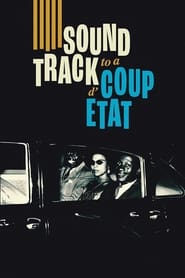
Soundtrack to a Coup d'État
Download English Subtitle
Release info
Tags
English subtitle preview
The first 157 lines.
Can you remember when you first killed a man?
Sort of like it's so final.
That's what grabbed me, I think.
And did that feeling last when you had to do it again?
No, it was only for that evening,
I think, before I slept...
that I thought about that.
I've often thought about this.
That's why I can say it so clearly:
"How did I feel about it?"
And that's the score,
because after that, when we moved north,
there was a lot of killing.
And it just happened so fast
that you didn't even realize it.
I think, after you were there a little while,
you became "callous," I think, is the word?
Very hard, you know? You don't care a damn.
Are you ready? One, two, on
So, the government is thinking about sending me into Russia.
And anybody who says that the Russians
don't love good jazz...
oh, you send them to me!
Good evening, ladies and gentlemen.
I'm Mr. Armstrong.
I don't understand those composers.
Nowadays, when I turn on the radio,
-I immediately switch it off. -
It drives me crazy.
It's not music, but a cacophony.
One of America's most popular emissaries
gets a warm reception
as he arrives in the troubled Congo
on a State Department- sponsored goodwill mission.
Louis "Satchmo" Armstrong,
whose golden trumpet has preached the gospel
of New Orleans jazz on every continent,
arrives in truly royal style.
This is Radio Moscow.
Louie's solid swinging outraged Radio Moscow,
which blasted Armstrong's visit as a diversionary tactic.
Are you a communist, Mr. Lumumba?
I always have to laugh
when they ask me that question.
I'm not a communist at all.
I'm an African.
Would you agree that you're on the lunatic fringe
of the American Negro movement?
Well, I think this:
that America's whole situation is a lunatic fringe.
Anytime you have a country that refers to itself
as "the Free World" and a democracy,
and at the same time has 22 million of its citizens
who aren't permitted citizenship,
why, that in itself reflects lunacy.
The Voice of America Jazz Hour.
My name is Willis Conover.
My name is Willis Conover.
My name is Willis Conover.
I, Willis Conover,
am a familiar name and a familiar voice.
I broadcast a radio program
which can be heard in every country in the world
and appeals to the universal appetite for good jazz
beamed overseas by the Voice of America.
We can achieve our great goal
in this most critical of all battles:
the winning of men's minds.
Different melody.
Number 2, do you know where this program
would be the most jammed?
Behind the Iron Curtain.
-Number... oh! -
That's all the time we have.
Number 2's voice is such that I would defect from Russia,
if I heard it.
Will the real Willis Conover please stand up?
How do you remember 1960?
Years from now, when you tell your children
about this year we've been living throug
what scenes will spring to your mind?
The chief of communism
pounding a table in rage?
What sounds will you hear?
In the U.N., when Khrushchev took off his shoe
and was beating that shoe,
and the interpreter said that he was saying,
"I'll bury you,"
talking about America.
Khrushchev wasn't saying,"I'll bury you.
Khrushchev was saying,"I love you."
But it was the interpreter who hated America.
You understand what I mean?
- But did he have rhythm? - Yeah! He had rhythm.
Rhythm is my business.
Death to colonial slavery!
Bury it!
Bury it deep in the ground!
The deeper, the better!
Africa has brought the U.N. its severest test:
the Congo.
With its delegation yet to be seated,
the Congo is the largest state
to be admitted into the U.N. this year.
The only way to keep the Cold War out of the Congo
is to keep the United Nations in the Congo.
Africa also holds the greatest hope
for saving the United Nations at this critical late hour.
Changing Africa has changed the United Nations.
Humanity has designated 1960
as The Year of Africa.
Never has there been such a year
at the United Nations.
At its 15th session, the General Assembl
has adopted 16 newly independent African countries.
The wind blowing in Africa is not an ordinary wind.
It is a raging hurricane.
We're going to shift the emphasis to our jazz
and send these artists over
where they can reach the masses of the people
of Asia and Africa.
One of the people who we're planning to use,
my friend Dizzy Gillespie.
This is what we might call a Cool War,
rather than a Cold War.
The weapon that we will use...
is the cool one.
Placing the protocol in my hands,
Lumumba said,
"If the Belgians learn of this document,
this would be a death warrant for us."
That day, I was wearing
my hair in a bun
in which I hid the secret document.
In the crowd, a Belgian official
was spying on me.
For seconds, our eyes locked.
Would he arrest me here?
Right now?
I could only think of the document burning in my neck.
But it gave me the strength to brave anything.
Even death.
As I landed in Rome,
journalists were crowding around me.
I read the declaration denouncing Belgium's plot
to install a puppet government.
The plot was already in the make
to impose a government against the will of its people.
The revelation of the protocol
created a sensation.
We won!
Patrice Lumumba's oratory
helped him win enough votes from parliament
to make him premier.
He succeeded where Joseph Kasa-Vubu failed.
Kasa-Vubu took over the largely ceremoni
office of president.
Soundtrack to a Coup d'État subtitles in other languages
More English subtitles for Soundtrack to a Coup d'État
- Soundtrack to a Coup d'état (2h 36m 36s) foreign parts only · 217 downloads · 2025-03-10
Comments
No comments yet. Be the first to leave one.