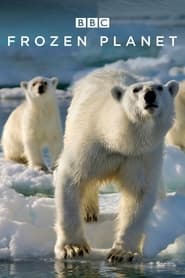
Frozen Planet
Download English Subtitle
Release info
Tags
English subtitle preview
The first 200 lines.
The sun is absent for up to half the year in the polar regions.
When it returns, at the beginning of spring,
its warmth will transform this magical ice world.
The greatest seasonal change on our planet is now underway.
Antarctica is still locked in ice, and surrounded by a frozen ocean.
Nonetheless, there are signs of spring.
Adelie penguins are arriving ... just the males.
They've spent five months at sea, where it's warmer than it is on land
and now they're in a hurry, for spring will be short.
They have travelled 6,000 miles across the ocean
since leaving their colony last year,
and now they're returning to breed.
They cannot lay their eggs on ice, for they would freeze,
so they have to come here, where there is bare rock.
Over the coming months,
the few parts of Antarctica that are ice-free
will be the stage on which five million Adelies
will build their nests.
To construct one, they need pebbles, and without a good-looking nest,
a male will be unable to attract a female,
when they at last arrive.
An impressive property demonstrates your worth as a mate.
It takes stones of all shapes and sizes to build a decent nest,
and finding ones that are just right is not easy.
So some penguins turn to a life of crime.
The one who has been robbed seems unaware
that the thief is just over his shoulder, and looking for more.
The thief's nest is coming along nicely,
probably because he keeps a particularly sharp lookout
for robbers...
after all, it takes one to know one.
It's still cold, but the early season sun
does lift the temperature by a few degrees.
That, however, can have unexpected, even dangerous consequences.
The sea is heating faster than the land,
pulling cold air from the middle of the continent towards the coast.
These katabatic winds are stronger than any hurricane.
They are the coldest and the most ferocious on the planet.
The storms catch many new arrivals by surprise,
and are the reason that spring here is, in fact, the deadliest season.
Here, early birds take a great risk.
Some years, entire colonies are lost,
buried beneath the snow.
The survivors of this storm
must hope that the females prove to be worth the wait
when they finally decide to turn up.
Spring in the north of our planet.
The sun, after an absence of six months,
breaks the horizon for the first time.
A female polar bear emerges from her den beneath the snow.
The sun must be a welcome relief after so long in the darkness.
Her den is on a high slope,
well away from hungry male bears who would kill her cubs,
but close enough to the sea ice where she can find food
for her extraordinary new family...
three young cubs.
If she can raise them all to independence,
it'll be a rare achievement.
One of the cubs is underweight,
and will be fortunate to survive these early weeks.
If the family reaches the sea ice, where the female can catch seals,
her milk will be enriched,
and the smaller cub will quickly gain size and strength.
The sea ice, though, is a dangerous place.
The male polar bear has been out on the frozen ocean all winter.
Times have been lean,
and a bear cub would certainly make a welcome snack.
However, the mainstay of his diet is seals,
and now is the time when they have their pups.
The surface of the frozen sea is marked with pressure ridges,
and cracks created by the fluctuating tides.
Both are good places to look for seals.
He has detected a seal den beneath the ice.
Now he must pin-point it, using only his extraordinary sense of smell.
By treading lightly, he can avoid scaring his prey.
He will need to punch through a metre of snow to reach the den,
and if his aim is not exactly on target,
the seal will certainly escape.
In fact, the ringed seal abandoned her den
just a few hours ago
and her pup has climbed up onto the surface.
It's more exposed up here, but it's easier to see an approaching bear.
The pup is well camouflaged.
Difficult to see when its mother has left it to go fishing.
But he can still smell it.
Nine out of ten polar bear hunts end in failure.
The sun's warming effect on the Arctic is increasing
and the sea ice is showing the first signs of weakening.
Inland, the northern rivers are still locked in ice.
The frozen waterfalls are like dams
holding back billions of tonnes of fresh water
that has not moved for almost six months.
The vast water shed lies motionless,
but as spring advances, it beings to stir.
The frozen waterfalls start to weaken.
Above them, the pressure is mounting.
Now, from high above, whole sections can be seen to be on the move.
The waterfalls are straining to hold back the force
that is building up above them.
The dam bursts...
and the river is unleashed.
Millions of tonnes of ice grind their way downstream,
driven by the unstoppable force of the meltwater.
Boulders and trees are plucked from the bank side.
Within just a few days, the rivers of the north are all running.
The Arctic's fresh water is flowing again.
These vast floods contain 10% of the world's fresh water
and as they enter the ocean, they accelerate the break-up.
Soon, an area of sea ice the size of Australia
will vanish from the Arctic Ocean.
As the huge ice-sheet breaks up, wildlife returns to the North.
The polar bear mother has made it to the edge of the sea-ice,
but the smallest cub is nowhere to be seen.
It's a sad outcome,
but the disappearance improves the chances of the remaining two,
who now have more milk to share.
Having led her cubs to the edge of the ice,
the mother's next challenge is to catch a seal.
Not easy with these two in tow!
CUB GRUNTS
Her prey beneath the ice can detect the slightest vibration,
especially from bears.
And this is not the stealthiest of hunting parties.
BEAR GROWLS
Leaving her cubs behind however, is not an option...
a male bear would eat one in a moment.
This is not going to be easy.
It seems that the cubs already see themselves as fearsome hunters,
but they're still young enough to accept their mother's discipline.
It's the naughty corner for you!
This is not going to be their lucky morning.
They saw no sign of a seal and the cubs are hungry again.
The mother has been nursing for four months without once eating herself,
and now her milk is drying up.
She must catch a seal soon, or the whole family will starve.
The challenge of finding food is getting harder.
She needs the sea-ice as a platform from which to hunt
and it's breaking up faster with each passing day.
Even the ice around the coast is starting to break.
The first cracks here are eagerly awaited by some...
narwhals.
The unicorns of the North are on a mission...
to reach the new fishing grounds
in the bays that have been frozen-up all winter, but are now opening up.
To get to them, the narwhals must travel down leads...
temporary cracks in the ice.
But these new roads could close at any time,
cutting off the air that they need to breathe.
The road narrows until there's barely room for one-way traffic.
Then, a surprise...
narwhals coming from the other direction.
It's a stand-off.
Each team faces an armoury of sharp tusks.
Finally, one side concedes
and everyone continues in the same direction.
Within a week, the remaining bays break wide open,
and the narwhals turn their attention to social matters.
No-one knows exactly what the narwhal's tusk is for.
Some say it's used for fencing,
yet these exchanges are too gentle to be real fights.
Perhaps these encounters
are to remind each animal of where it stands in Narwhal society.
We may never know.
Bizarre creatures appear as if from nowhere.
The tiny plankton they eat have been fuelled by the increasing warmth
of the sun and fertilised by the nutrients
brought down by the great rivers and released from the melting sea-ice.
Sea gooseberries strain the water with their stinging filaments,
their beating cilia scatter the sun's rays
into dazzling bursts of colour.
Beneath the breaking sea ice, a predatory sea slug
flies through the water on translucent wings.
It's on the trail of a peculiar swimming snail.
And now the most voracious of the plankton-eaters
swim up from the depths...
Arctic cod.
SEAGULLS CRY
The shoals can be enormous, some containing 500 million fish
and predators travel hundreds of miles to feast on them.
The cod harvest is THE annual event
for the birds and seals of the far North.
For just a short period,
the combination of the strengthening sun, the newly-flowing rivers
and the breaking sea ice make the Arctic Ocean teem with life.
The land is also transformed by the sun's heat.
The small patches of bare ground that appear are darker than the snow
so they absorb more of the sun's energy.
This accelerates the melt.
The Arctic tundra is unveiled.
By tracking the sun, Arctic poppies catch its rays around the clock,
so their flowers are always warmer than their surroundings.
For early season insects, this warmth is even more valuable
than nectar if they're to stay active in the cold.
The woolly bear caterpillar does not need the warmth from flowers
to kick-start its spring.
It's always the first insect to appear after the snow retreats
and the story of how it does so is truly astonishing.
At the start of spring, the caterpillar eats as fast as it can,
as indeed it must, for this far north, the season will be brief.
The days shorten only too soon, but the caterpillar has not yet
Frozen Planet subtitles in other languages
More English subtitles for Frozen Planet
- BBC: Frozen Planet - Complete Series (2011) · 136 downloads · 2018-07-16
- 07 On Thin Ice 720p HDTV MP4 · 83 downloads · 2014-03-17
- Frozen Planet -Complete Series-720p HDTV x264 YIFY-350mb-Eng · 133 downloads · 2013-07-23
- Frozen Planet 2011 720p BluRay x264-RO4EVA · 167 downloads · 2012-05-09
- BBCFrozen Planet EP01 To The Ends Of The Earth 2011 720p BluRay AC3 x264-HDxT En · 248 downloads · 2012-03-07
- BBC Frozen Planet 2011 1080p BluRay DTS x264 D-Z0N3 · 173 downloads · 2012-01-21
- BBC Frozen Planet E08 The Epic Journey · 81 downloads · 2011-12-30
- frozen planet ep7 Resync for vsenc release · 89 downloads · 2011-12-16
Comments
No comments yet. Be the first to leave one.