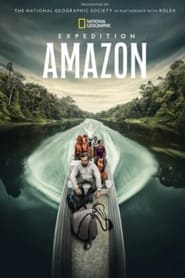
Expedition Amazon
Download English Subtitle
English subtitle preview
The first 200 lines.
Deep in the Amazon,
there's a place where dolphins fly through trees.
I'm amazed about how it's possible these animals,
these incredible creatures are here in the jungle.
A place where bears live in the clouds.
The Andean bear is like the engineer of the cloud forest.
A place where turtles have guardian angels.
It is a place that
has caught me in such a way that
I can't imagine it will let me go.
And the trees,
they soak up 20 billion tons of water every day
to create rivers in the sky.
That water is what connects it all.
We're talking about the largest river of the world.
It's not just water in rivers.
It's water in the glaciers, in the atmosphere,
in the clouds.
The Amazon is changing in real-time,
and there's so much we don't know.
There are a lot of threats here in the Amazon, but still,
there are some people trying to make the difference.
In an unprecedented two-year expedition,
National Geographic is bringing together a passionate
group of scientists to follow the water,
as they explore the magnificent ecosystems within.
From the tops of the Andes, across 4,000 miles,
to the Atlantic Ocean, and beyond.
Science enables us to see into the future.
To ensure that it's still standing
for the next generation.
It matters what we do.
When you think of the Amazon,
these 20,000-foot peaks may not come to mind,
but this is where it all begins.
We actually are in the Amazon Basin.
We're right on the edge,
right on the eastern side of the Andes.
This is an important water tower.
The snow and ice that you see here
eventually is going to make its way down into the Amazon.
But the glaciers here are disappearing,
and we don't know how quickly.
That's what National Geographic Explorer Baker Perry
is here to find out.
I'm leading this expedition to install a weather station
near the summit of Ausangate.
Having lived in the Andes when he was younger,
this is a sort of homecoming for Baker.
Just in my lifetime,
I've seen tremendous changes happening in the Amazon
with ongoing deforestation.
And what we're trying to understand is
how glaciers are responding.
We have a very, very limited understanding of the weather
or climate at the tops of these Andean mountains.
So Baker, Tom,
and their team of local guides and experts
set out to tackle one of the highest peaks
in the Amazon Basin.
These enormous glaciers store water
for communities downstream.
As the climate's warming,
that kind of reliable source of fresh water is in danger.
That water is intricately tied to the water
cycling through all of Amazonia.
The water molecules that fall as snow
on the Andean peaks are coming from evaporation from these
mighty trees in the Amazon.
Flowing up through the trees,
it releases into the atmosphere.
Then it's going to condense out, form a cloud.
And that cloud is gonna be moved by the winds
into the Andes,
where it's going to eventually fall as snow.
When one part is altered,
the entire system reacts.
If you cut down trees in the rainforest,
the amount of snowfall that occurs here drops.
A weather station will provide insight
into how much these glaciers are shrinking.
But first, they need to get there.
Ausangate is not an easy mountain.
It's a huge effort to get weather equipment up to these elevations.
That's why it hasn't really been done before.
Good luck up there. Thank you.
The physical challenges on
these expeditions are real.
The hardest part of climbing is
the lack of oxygen.
It's about half past two in the morning,
looking forward to sunrise in about three and a half hours.
We have one little section to go up here.
And then another fixed line going up there.
If they succeed,
the data from atop Ausangate will be invaluable
to the millions of people who depend on it.
In the last 10 years, water is decreasing every year,
every year is less, less, less water.
For Quechuan biologist
Ruthmery Pillco Huarcaya, this loss is personal.
She grew up in the high Andes,
where the glacier has always protected the people.
The glacier is a key part of our culture.
As a child, her grandmother would
tell stories about a mythical bear.
This character called the Ukuku is the
semi-god between a bear and a human.
They go to the Ausangate to carry blocks of ice to the
communities as a sign they're going to have more water.
The Ukuku story has played out for centuries
in the Qoyllur Rit'l festival.
My grandmother used to tell me that the ice
was very nearby.
But now, with climate change, the snow is far away.
They are not able to bring this ice cube anymore.
Ukukus are more than a myth.
Ukuku means the Andean bear in Quechuan, yeah.
For Ruth, the real thing is just as mysterious.
We are trying to understand the secret life
of the Andean bear.
A creature we know little about,
except that it's vital for forests in the clouds
that sit below Ausangate.
Glaciers may be the water tower for the Amazon Basin,
but Andean cloud forests are the rain machine.
They act like a sponge,
soaking up moisture and releasing it downstream.
I always liked to climb trees.
It's a different perspective being in the canopy.
It's a different world, completely different world.
Both the forest and bears are threatened,
and they need each other to thrive.
As voracious plant eaters,
bears spread seeds wherever they go.
They are very good tree climbers.
They spend most of their time actually in the trees.
Camera traps will track their movements to help
Ruth understand their effect on the forest.
All good.
Let's see what the camera trap captures.
The Andean bears is very hard to study,
especially in this kind of terrain.
In order to get this information,
we need to also hike a lot.
It's time to check the cameras,
all 75 of them.
We leave these camera traps for the whole year,
but we are doing the monitoring every two months.
Oh, no bears.
While the bears avoid the spotlight,
others aren't so shy.
- Is it a lone little fox? - Yes.
What do you see?
A puma.
Oh wow, a big one!
To follow their trail,
Ruth brings along her top tracker.
Ukuku!
Yes, yes, yes, yes.
As the bears are moving,
they are helping to disperse many of these tree species.
They eat the seed and they, they poo...
So this poo has the seeds and has
the nutrients to, to grow.
This is vaccinium.
It is a wild blueberry.
And this is one of the bears' favorite fruits.
The feces we just found
contained fruits of this kind.
We have a camera trap 10 meters from here.
Let's just hope the camera worked.
Bear!
Bear, bear!
A little one!
When we see a bear like this, we all are happy, very happy.
While the cameras reveal bear behavior,
to really understand how they move,
they need to get closer.
The first time we capture our first bear,
I couldn't describe the feeling I, I have.
I don't know, like my brother, like my elder brother.
I feel like part of my family.
It's just incredible creature.
GPS collars track their every move.
And for the first time, a National Geographic Critter-Cam
goes on walkabout with a bear named Sunchu.
We can see from the perspective of the bear
how it's moving around.
We are following the journey and we're learning a lot.
It turns out Sunchu,
and the other 40-plus bears she's identified so far,
are covering a larger and higher range than expected.
You see some clusters.
This means they spend quite a lot of time in
this part of the forest.
Her findings are extraordinary.
As the climate warms and the bears move higher,
they'll bring seeds with them,
helping forests regrow at cooler elevations.
Expedition Amazon subtitles in other languages
More English subtitles for Expedition Amazon
- Expedition Amazon 2024 1080p WEBRip x264 AAC-[YTS MX] · 31 downloads · 2025-10-26
Comments
No comments yet. Be the first to leave one.